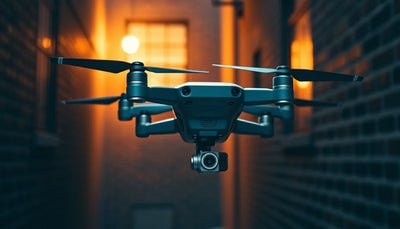
Cal Fire Puts Seneca’s Self-Launching Drone Foam Team to the Test
Cal Fire field-tested Seneca’s five-drone autonomous foam strike team in California on July 15. We examine what this means for agency procurement, fleet operators, and the pre-owned drone market.

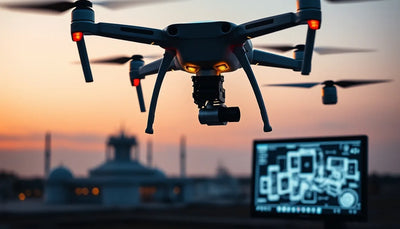
On July 15, 2026, Cal Fire conducted a field test of Seneca’s autonomous firefighting drone packs in California, marking the clearest public validation yet for the nine-month-old startup’s concept. The test, carried out with FireWERX, involved a five-drone foam strike team designed to launch themselves and operate without direct human piloting. For commercial UAV operators, fleet managers, and anyone tracking how government agencies are buying drones, this is more than a demonstration — it’s a signal about where the market for aerial firefighting and autonomous systems is heading.
The Seneca concept: self-launching foam strike teams
Seneca’s pitch is simple in theory and complex in execution: a pack of drones that can deploy from a staging area, autonomously navigate to a fire, dispense foam, and return or re-arm. The five-drone configuration tested by Cal Fire represents the company’s smallest functional strike team. According to the source report from DroneXL.co, the test was a public proving ground that gives Seneca its best chance yet to demonstrate reliability in real wildfire conditions.
For fleet operators, the operational model is worth watching. Autonomous launch eliminates the need for a pilot per aircraft, cutting labor costs and reducing the time between a fire report and aerial response. However, the same autonomy introduces new failure modes — communications loss, sensor misreads, airspace deconfliction with crewed tankers and helicopters. Cal Fire’s willingness to test the system suggests some confidence, but the source notes that Seneca still has to prove it can survive actual wildfire airspace and turn demos into contracts.
Operator checklist
Turn policy news into a safer fleet decision.
Before changing aircraft, compare repair paths, available DJI inventory, and trade-in timing against the rule change.

Commercial buyers should note that the test did not involve payload release over active human firefighters or structures — it was a controlled field exercise. That distinction matters for risk assessment. A buying decision for such a system would need to weigh the autonomy stack against existing manned and remotely piloted alternatives.
What this means for drone buyers
For anyone purchasing drones today — whether for a small fleet, a public agency, or a large industrial operation — the Seneca test does not immediately change your buying calculus. But it does add a data point to your planning horizon. If autonomous foam strike teams begin to secure contracts, they could shift procurement away from traditional single-pilot spray drones. That would increase supply of used agricultural and firefighting drones in the second-hand market, potentially lowering entry costs for operators who can repurpose those platforms for other tasks.
Specifically, if agencies like Cal Fire eventually adopt Seneca’s system or a competing autonomous foam solution, they may phase out older manually piloted units. Those units — often DJI Matrice or Agras variants — become candidates for the pre-owned market. Operators looking for affordable aerial spray or observation platforms could benefit from that inventory influx. Reboot Hub’s line of pre-owned DJI drones already serves buyers who want inspected, reliable equipment at lower capital outlay; a future wave of agency trade-ins would only broaden selection.
Reboot Hub analysis: At the same time, the complexity of autonomous systems could create new repair needs. Sensors, actuators, and foam dispensing mechanisms are more failure-prone than a simple gimbal and tank. Fleet managers should plan for either in-house technical capability or reliable professional DJI repair services that can handle non-standard damage. The aftermarket for OEM-pulled parts from retired autonomous drones may also develop, but that is years out.
For now, the commercial takeaway is to watch procurement patterns. If a major state fire agency signs a purchase agreement for autonomous packs, expect ripple effects in drone pricing, resale values, and repair service demand within 12 to 18 months.
From demonstration to contract: the regulatory and airspace hurdles
The source report emphasizes that Seneca must now prove its system can survive real wildfire airspace. That is not a trivial requirement. Wildfires are chaotic environments with low visibility, thermal updrafts, and numerous crewed aircraft operating in close proximity. An autonomous drone that fails to maintain stable communication or cannot deconflict with a DC-10 tanker poses a safety risk that could ground an entire program.
Cal Fire’s test was a step, but not a commitment. Procurement cycles for state agencies are slow, especially when the technology is unproven in operational use. The Federal Aviation Administration (FAA) will also have to approve any beyond-visual-line-of-sight operations for autonomous firefighting drones, adding regulatory layers. Operators and repair businesses should not expect a rapid rollout of autonomous foam teams in the next fire season. More likely, Seneca and its competitors will undergo additional testing, possibly with smaller pilot programs, before any large-scale purchase.
For fleet operators who currently fly DJI or other commercial drones for fire support — thermal imaging, mapping, or small payload drops — the Seneca test creates a benchmark. If autonomous systems become viable, the role of the remote pilot may shift to overseeing multiple aircraft rather than flying one. That could change training requirements and the skills needed for drone crew job postings. It also means pre-owned DJI drones will remain relevant as backup units and training platforms for years, even as the frontier moves toward autonomy.
Operational lessons and fleet planning for commercial operators
What should a buyer, pilot, repair customer, or fleet manager do differently after reading this? First, do not rush to sell or replace existing firefighting drones based on a single demo. Autonomous foam strike teams are promising, but they are not yet a proven replacement for the thousands of manually piloted drones already in operation. Second, pay attention to how Cal Fire and other agencies structure their next procurement. If they request proposals that emphasize autonomous launch and foam dispensing, that is a signal to invest in complementary skills or equipment.
For those running repair shops, the test highlights a growing market for foam-compatible maintenance. Foam residue can corrode motors, electronic speed controllers, and connectors faster than water. Repair centers that learn to clean and inspect foam system components — nozzles, pumps, tubing — may capture recurring business from early adopters of such systems. Professional DJI repair providers can start preparing now by stocking gaskets and seals compatible with foam-rated drones.
Reboot Hub analysis: Finally, operators considering a drone trade-in for newer models should consult a drone trade-in guide to understand the current market value of their equipment. The second-hand market for firefighting drones is likely to remain robust through at least two more fire seasons, as agencies continue to operate mixed fleets of piloted and semi-autonomous platforms.
Could the Seneca system replace traditional firefighting drones entirely?
Unlikely in the near term. The five-drone strike team is a narrow-use concept designed for fast attack on small fires or hot spots. Large fires require sustained drop capacity, strategic coordination with air tankers, and human judgment for complex wind and terrain scenarios. Traditional drones — especially pre-owned DJI Matrice 300 or 350 RTK units — will remain valuable for mapping, thermal scanning, and communications relay for years.
Should I buy a pre-owned DJI drone now or wait for autonomous models?
If you need aerial capabilities this fire season, buy now. Pre-owned DJI drones offer proven reliability at lower cost, and they can be resold later if autonomous systems become mainstream. Waiting for autonomous models to mature could mean missing operational windows. Reboot Hub’s inspected pre-owned inventory gives you a path to start flying today with full support.
How will autonomous foam drones affect the value of used spray drones?
If agencies adopt autonomous packs, they may retire older spray drones, increasing supply and slightly depressing resale prices. That is good for buyers looking to enter the market cheaply. Sellers may want to trade in equipment now while demand for piloted spray drones remains stable. The trade-in guide at Reboot Hub can help you assess your drone’s current worth.
Sources consulted
- DroneXL.co - primary source
- FAA UAS official guidance - official regulator source
Reboot Hub Editorial adds buyer, repair, resale, and operational analysis for drone owners. If you spot an error, contact us for correction review through our editorial policy.