Boom Supersonic’s $800K Prize – What Drone Operators Need to Know
Boom Supersonic has turned the $800K amateur supersonic RC challenge into a formal competition. But the fine print requires a legal and regulatory path that doesn't yet exist—a reality check for any commercial UAV operator or fleet buyer.

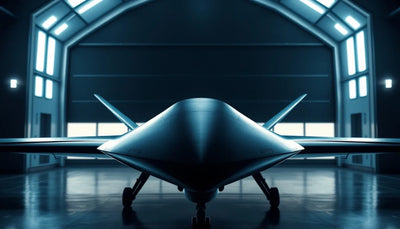
Boom Supersonic has raised the stakes on Blake Scholl’s original Mach 1 RC challenge, turning it into a formal $800,000 competition with judges, co-sponsors, and a set of published rules. Announced in July 2026, the prize targets the first amateur-built radio-controlled aircraft to break the sound barrier. But the fine print attached to the competition may be the most telling part for anyone in the commercial UAV world: entrants must "clear a legal and regulatory path that does not obviously exist today."
For drone operators, fleet managers, and buyers who track the second-hand market, this development is more than a headline. It signals how far aviation innovation has pushed ahead of existing frameworks—and why regulatory readiness matters as much as hardware performance. Even if your business revolves around pre-owned DJI drones rather than experimental supersonic models, the pattern is the same: new technology moves fast, and the compliance infrastructure often lags behind.
The Competition and Its Unusual Fine Print
The prize, now worth $800,000, formalizes what began as Blake Scholl’s informal Mach 1 RC challenge. Boom Supersonic—the company aiming to revive commercial supersonic travel—has added co-sponsors, a judging panel, and a rulebook. According to the source, the competition is open to amateur teams, meaning it sidesteps the military and established aerospace contractors. That makes it a genuine grassroots engineering push.
Market context
Turn market news into a buy, repair, or trade-in decision.
Compare pre-owned availability, resale timing, and repair economics before the market moves again.

Yet the most critical requirement appears in the fine print: competitors must secure all necessary legal and regulatory approvals before attempting a supersonic flight. As the source notes, that path "does not obviously exist today." The Federal Aviation Administration and other national aviation authorities have no standard framework for permitting a supersonic model aircraft over land or within controlled airspace. This creates a de facto barrier that is arguably harder than the technical challenge of exceeding Mach 1.
For commercial UAV operators, this detail lands close to home. The drone industry has spent years navigating Remote ID, beyond-visual-line-of-sight waivers, and altitude restrictions. The supersonic RC prize illustrates that even when the hardware is ready, the regulatory runway may be longer than the physical one.
Why Amateur Supersonic Flight Matters for the Drone Industry
At first glance, a small RC jet hitting Mach 1 seems distant from the world of DJI Phantom buyers or enterprise Matrice fleets. But the competition pushes development in high-speed aerodynamics, lightweight composite structures, and compact propulsion systems—all technologies that eventually find their way into commercial UAV products. The prize’s amateur focus also encourages open innovation, which can accelerate cost reductions and reliability improvements across the broader advanced air mobility sector.
Drone buyers and repair customers should pay attention because the materials and control algorithms tested in such challenges often migrate into mainstream airframes within a few years. For example, advances in vibration damping and thermal management used in supersonic RC aircraft can improve the durability of flight controllers and sensors in a commercial drone. While no specific specifications can be cited from the current source, the trend is clear: high-performance edge cases preview tomorrow’s standard components.
Fleet operators who invest in pre-owned DJI drones or professional DJI repair services should also note that cutting-edge competitions like this one tend to drive improvements in battery thermal regulation and airframe stiffness—factors that directly affect the long-term reliability of any used platform. A better understanding of these underlying engineering challenges can inform smarter purchasing and maintenance decisions.
Regulatory Reality Check for High-Speed UAVs
The most sobering implication of the Boom Supersonic prize is the regulatory gap exposed by its fine print. As the source emphasizes, the legal framework for supersonic RC flight does not clearly exist. This mirrors challenges that have faced the commercial drone industry since its rapid expansion: authorities are often several steps behind the technology curve.
Drone pilots already operate under a patchwork of federal, state, and local rules. For fleet managers, the lesson is that any flight beyond conventional limitations—whether supersonic speed, beyond visual line of sight, or autonomous operations—requires early engagement with regulators. Waiting for the framework to solidify after you’ve built the technology can strand assets and investments.
For repair businesses and spare parts suppliers, the regulatory uncertainty surrounding emerging airframes affects demand. If new high-speed UAVs cannot be legally flown at scale, aftermarket support for existing platforms like pre-owned DJI drones remains the backbone of the industry. That makes the pre-owned market more resilient in the near term, even as innovation accelerates on the experimental side.
What this means for drone buyers
For anyone considering a new drone purchase or evaluating a used fleet, the Boom Supersonic prize story offers a practical reminder: proven regulatory compliance often trumps raw performance. A drone that can break speed records but cannot be legally operated is of limited value. That’s why the secondary market for inspected pre-owned platforms remains strong—buyers know they are getting airframes that already operate within established rules.
Pre-owned DJI drones from reputable sources come with clear part histories and service records, giving operators confidence that their aircraft will pass compliance checks for years to come. The same logic applies to repair decisions: choosing professional DJI repair services with genuine OEM spare parts ensures that the regulatory standing of the airframe is not compromised by aftermarket modifications.
One operator-facing answer to take away: stay informed about emerging technologies and regulatory shifts, but base your current fleet decisions on platforms with a proven track record of compliance and support. Whether you are flying a single drone or managing dozens, the safest investment today is a model whose legal flying status is undisputed. Consider using a drone trade-in guide to evaluate when to upgrade or offload older equipment, balancing new capabilities against existing regulatory certainty.
What exactly is the $800,000 supersonic RC competition?
Boom Supersonic formalized Blake Scholl's Mach 1 RC challenge into a competition with judges, co-sponsors, and official rules. The prize is $800,000 for the first amateur team to fly a radio-controlled aircraft beyond the speed of sound while meeting all legal and regulatory requirements.
What difference does the fine print make for drone operators?
The fine print requires entrants to "clear a legal and regulatory path that does not obviously exist today." This highlights a critical gap between technical innovation and regulatory frameworks, a challenge that commercial drone operators already face with rules for BVLOS, altitude limits, and Remote ID.
Should I delay buying a drone because of this competition?
No. The competition is experimental and not directly tied to mainstream commercial UAV platforms. If anything, it reinforces the value of buying proven, compliant airframes—such as pre-owned DJI drones—and maintaining them with OEM parts through professional repair services, while keeping an eye on emerging technology trends for your next fleet upgrade.
Sources consulted
- Project Boom – DroneXL.co - primary source
- DJI RC – DroneXL.co - primary reporting source
- DroneXL.co - primary reporting source
- FAA UAS official guidance - official regulator source
Reboot Hub Editorial adds buyer, repair, resale, and operational analysis for drone owners. If you spot an error, contact us for correction review through our editorial policy.