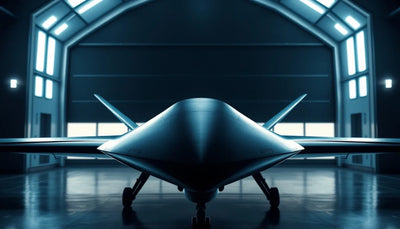
Boom Prize Offers $800K for First Amateur Supersonic RC Plane: What It Means for
The Boom Prize has ballooned to $800,000 for the first amateur-built supersonic RC airplane, with stringent rules that raise the bar. This competition signals technology trends that could influence commercial UAV development, fleet planning, and the pre-owned drone market.

The Boom Prize, a competition designed to spur amateur innovation in high-speed radio-controlled flight, has raised its purse to $800,000 for the first team to fly a supersonic RC airplane. As reported by DroneXL, the prize amount and the increasingly stringent fine print signal a serious commitment to pushing the boundaries of what hobbyists and small engineering teams can achieve. While the target is an RC airplane, not a multirotor drone, the implications for the broader unmanned aerial vehicle (UAV) market are worth examining. Commercial drone buyers, fleet operators, and repair customers can read this news as a bellwether for technology trends that may soon affect their purchasing and operational decisions.
The Prize and the Fine Print
The core detail from the source is clear: Boom Prize has increased its reward to $800,000 for the first amateur team to demonstrate a supersonic RC airplane. The "fine print" referenced in the article raises the bar, meaning the rules likely set high performance and safety standards. This is a concrete example of a private prize competition driving rapid innovation, similar to past aviation prizes like the Ansari XPRIZE. For drone professionals, the lesson is that targeted incentives can accelerate development of propulsion, aerodynamics, and avionics technologies. Even if the supersonic RC plane does not directly translate to a commercial drone, the engineering breakthroughs—such as lightweight airframe materials, high-energy power systems, and advanced flight controllers—will likely find their way into future UAV designs. Fleet operators should watch how these advances mature, as they could eventually enable faster, longer-range drones for inspection, delivery, and aerial mapping.
Technology Spillover to Commercial UAVs
The pursuit of supersonic flight in a small, amateur-built model requires solving extreme engineering challenges: managing heat, structural stress, and control at speeds exceeding Mach 1. While commercial drones today operate at much lower speeds, the materials and miniaturized electronics developed for this prize could trickle down. For example, carbon-composite airframes designed for high-speed stability might inspire more durable and efficient drone frames. Likewise, compact turbine or hybrid-electric propulsion systems could eventually be adapted for high-performance UAVs used in emergency response or long-range survey. Repair customers should note that if such advanced materials become common in future DJI or other brand drones, repair procedures may become more specialized. In that scenario, relying on professional DJI repair services that use genuine OEM parts will become even more important to maintain airworthiness and performance. Operators should also consider that as technology accelerates, the value of older, slower drones may drop, making the pre-owned DJI drones market an attractive option for budget-conscious buyers who do not need the latest speed capabilities.
Market context
Turn market news into a buy, repair, or trade-in decision.
Compare pre-owned availability, resale timing, and repair economics before the market moves again.

What this means for drone buyers
For commercial drone buyers, the Boom Prize signals that the pace of innovation in aerial vehicles is unlikely to slow. Even though the prize specifically targets an RC airplane, the competitive environment it creates encourages cross-pollination of ideas between the RC community and the drone industry. Buyers should consider that today's top-tier drone models might face quicker obsolescence as new technologies, inspired by such high-speed challenges, emerge. This does not mean buyers should wait indefinitely, but it does suggest that purchasing a slightly older, pre-owned DJI drone at a lower price point could be a smart financial move. By opting for a pre-owned DJI drone, fleet operators can free up capital for future upgrades when supersonic-inspired improvements become commercially available. Additionally, the resale value of current drones may hold up better than expected if the new technologies take years to reach mass production. Savvy buyers can use a drone trade-in guide to time their upgrades effectively, ensuring they maximize value from their existing fleet while staying prepared for next-generation UAVs.
The Pre-Owned DJI Market and Repair Outlook
The existence of a high-stakes prize like the Boom Prize reinforces a broader trend: the UAV industry benefits from rapid, competition-driven innovation. This dynamic has direct implications for the pre-owned market. As hobbyists and small teams push the envelope, professional drone operators may feel pressure to adopt newer technology to stay competitive. However, not every fleet needs supersonic speeds. Many operators perform routine inspections, surveying, or cinematography where reliability and cost-efficiency matter more than top speed. Therefore, the pre-owned DJI market remains a robust option for those who prioritize proven performance over cutting-edge specs. We expect that as the Boom Prize gains attention, more attention will also turn to the need for specialized repair capabilities. Drones that incorporate advanced materials or unique propulsion systems will require technicians trained in handling those components. For now, DJI drones are the most widely supported in the repair ecosystem, and choosing professional DJI repair services ensures that even if parts become scarce due to rapid model turnover, customers receive genuine OEM replacements. Fleet managers should factor repair lead times into their operational planning, especially as supply chains adjust to a faster innovation cycle.
Is the Boom Prize directly related to commercial drones?
No, the prize specifically targets amateur-built supersonic RC airplanes, not drones. However, the engineering challenges involved—such as high-speed aerodynamics, lightweight materials, and compact power systems—are closely related to technologies used in advanced UAVs. The competition could accelerate developments that eventually appear in commercial drones.
How should drone operators prepare for potential speed innovations inspired by this prize?
Operators should monitor technology announcements from component suppliers and drone manufacturers. Investing in a modular fleet that allows for upgrades, or purchasing pre-owned DJI drones to reduce capital exposure, can provide flexibility. Using a drone trade-in guide can help time upgrades to align with meaningful performance gains rather than every incremental improvement.
Will this prize affect the value of my current drone?
Indirectly, yes. If the prize leads to tangible advances in drone performance, older models may depreciate faster as buyers seek newer features. However, many operators do not require supersonic speeds, so the market for reliable, pre-owned drones remains strong. The key is to evaluate your specific mission needs before making any replacement decisions.
Sources consulted
- DroneXL – DroneXL.co - primary source
- DroneXL - primary reporting source
Reboot Hub Editorial adds buyer, repair, resale, and operational analysis for drone owners. If you spot an error, contact us for correction review through our editorial policy.