Axon Vision and ParaZero Introduce New ForceField Configuration forNon-Destructive
The integrated solution combines Axon Vision’s ForceField solution with ParaZero’s autonomous DefendAir anti-drone net-based interceptor,

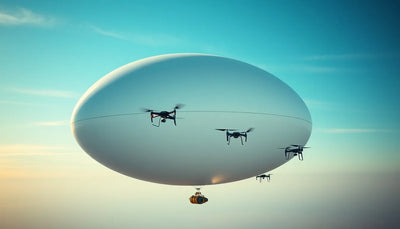
Update: Axon Vision and ParaZero have unveiled a new ForceField configuration that pairs the ForceField counter-UAS system with ParaZero’s autonomous DefendAir net-based interceptor. This marks a shift toward non-destructive interception, capturing hostile drones mid-flight without explosive warheads or kinetic projectiles. The integrated solution aims to reduce collateral damage, preserve evidence, and allow safe recovery of the intercepted drone.
For drone buyers, fleet operators, and security professionals, this announcement signals a maturation of the counter-UAS market. Non-destructive methods are becoming commercially viable, and the combination of proven sensing technology with a net-based capture drone could reshape how sensitive airspace is protected. While the system is primarily aimed at defense and security end-users, the implications ripple across the broader drone ecosystem — including the pre-owned market, repair workflows, and fleet procurement strategies.
Understanding the New ForceField Configuration
Axon Vision’s ForceField is a widely deployed counter-drone solution that uses advanced sensing and effector integration to detect, track, and neutralize unauthorized UAVs. By partnering with ParaZero, which specializes in autonomous safety systems and the DefendAir net-launched interceptor, the new configuration introduces a capture-first approach. Instead of relying on jamming, radio frequency disruption, or kinetic destruction, the system dispatches a purpose-built drone that deploys a net to physically ensnare the target.
Market context
Turn market news into a buy, repair, or trade-in decision.
Compare pre-owned availability, resale timing, and repair economics before the market moves again.

The source material emphasizes that this is a non-destructive interception method. That distinction matters operationally: facilities near civilian infrastructure, crowded urban areas, or environments where debris could cause secondary damage can now neutralize a threat without the risks associated with fragmentation or explosive charges. The DefendAir interceptor operates autonomously after launch, which reduces the cognitive load on human operators and speeds up response times. This collaborative approach between sensing and effector platforms is increasingly common in modern counter-UAS architectures.
For commercial drone operators who may fly near secured zones, the existence of such systems means the margin for error shrinks. Airspace protection technologies are escalating, and non-destructive capture offers a less destructive outcome if a rogue drone is intercepted. However, captured drones can still face forensic examination, and owners may need to prove flight authorization.
Why Non-Destructive Interception Matters for Operators
The shift toward capture-based countermeasures directly affects fleet managers and individual pilots. When drones are destroyed by kinetic counter-UAS systems, any debris left behind can complicate accident investigations, raise liability questions, and destroy evidence of potential violations. Non-destructive interception preserves the physical integrity of the target drone, which can then be examined to determine ownership, flight path, and payload.
For operators whose drones inadvertently drift into restricted airspace due to GPS loss or pilot error, a net capture could mean the difference between a manageable incident and a catastrophic collision. The ability to recover the drone intact also opens the door for professional assessment and, if the unit is undamaged, eventual return or resale. This is particularly relevant for high-value platforms such as DJI Matrice series or enterprise models used in inspections or mapping. A net capture does not guarantee zero damage — hard landings can still break components — but it eliminates explosive damage and reduces fragmentation.
For security teams evaluating counter-UAS procurement, the ForceField/DefendAir integration offers a lower-risk approach to airspace enforcement. They can deploy the system near airports, stadiums, power plants, and correctional facilities without alarming neighbors or violating regulations concerning projectile weapons. The autonomous net interceptor also allows a single operator to manage multiple airspace threats with less training overhead. For drone service providers that operate under waivers or authorizations, knowing that the local counter-UAS environment is capture-oriented rather than destructive can influence route planning and insurance requirements.
What this means for drone buyers
For buyers entering the drone market — especially those purchasing pre-owned DJI drones — this development underscores the growing importance of drone authentication and flight history. Non-destructive interception means that a captured drone can be returned to its owner or sold on the secondary market if the owner is cleared of wrongdoing. Buyers of second-hand drones should be aware that any unit might have been involved in an incursion and subsequent capture, even if it shows no external physical damage.
Fleet operators who invest in counter-drone systems for their own airspace should consider whether a non-destructive capture capability aligns with their operational risk profile. If the goal is to preserve both the airspace and the offending aircraft, the ForceField/DefendAir combination represents a commercially ready option. For those running repair services, captured drones that arrive with minor impact damage can be restored using professional DJI repair services with genuine OEM parts, provided the integrity of the battery and flight controller remains intact.
The pre-owned market also benefits from a reduction in total-loss scenarios. Each drone that survives an interception intact is a unit that can eventually re-enter the resale or trade-in pipeline. Operators looking to upgrade or consolidate fleets can use the drone trade-in guide to evaluate whether their current equipment retains value after exposure to counter-UAS environments. While no official trade-in programs currently recognize net-capture status, the underlying principle remains: less destruction means more inventory for the pre-owned market.
Strategic Implications for the Counter-UAS Market
The collaboration between Axon Vision and ParaZero reflects a broader market trend away from kinetic countermeasures and toward precision, evidence-preserving neutralization. Regulation around the world is pressuring security forces to minimize civilian risk, and non-destructive interception directly addresses that concern. The source, SUAS News, highlights the global nature of this development, indicating that the integrated solution is intended for international deployment.
For defense and procurement agencies, the value proposition is clear: fewer legal liabilities, lower environmental impact, and the ability to prosecute incidents with intact forensic data. For commercial entities like stadium operators, energy companies, and event organizers, the ForceField/DefendAir system offers a way to enforce no-fly zones without the drama of loud explosions or the risk of falling debris. This could accelerate adoption of counter-UAS technology in settings where previous kinetic solutions were deemed too risky.
Partnerships between sensor providers and effector specialists are becoming a standard pattern in the counter-UAS industry. Axon Vision brings decades of defense-grade detection and tracking experience, while ParaZero brings aviation safety heritage and autonomous capture technology. Their combined offering may set a benchmark for future procurement competitions, particularly in contracts that require a non-destructive neutralization capability. For drone manufacturers, especially DJI and other enterprise-level OEMs, this means that the installed base of counter-UAS systems will increasingly be capture-oriented. Test flights and compliance demonstrations should account for the possibility of net-based interception, and firmware updates may eventually include recognition of imminent capture.
How does the ForceField/DefendAir configuration differ from existing counter-UAS systems?
Most counter-drone systems rely on radio frequency jamming, GPS spoofing, or kinetic interceptors that destroy the target aircraft. The new ForceField configuration deploys ParaZero’s autonomous net-launching drone to physically capture and retrieve the rogue UAV without destruction, preserving the aircraft for evidence and reducing collateral damage.
What should a drone operator do if their aircraft is captured by a net-based system?
If your drone is intercepted by a net capture system, do not attempt to force recovery. Contact the airspace authority to coordinate the return process. Once returned, have the unit inspected by a certified repair service to check for internal shock or sensor damage before next flight. Keep flight logs and authorization documents accessible to prove compliant operation.
Could net-captured pre-owned drones enter the secondary market?
Potentially yes. If a drone intercepted non-destructively is cleared of any legal or security concerns, and if the airframe and electronics are intact, it may be sold on the pre-owned market. Buyers should request a complete incident log and inspection report when purchasing any second-hand drone, especially units from regions with active counter-UAS deployments. Thorough inspection by a professional DJI repair service can verify operational integrity before purchase.
Sources consulted
- SUAS News - primary source
- AeroVironment unmanned systems solutions - official company source
- DIU Blue UAS - official government source
Reboot Hub Editorial adds buyer, repair, resale, and operational analysis for drone owners. If you spot an error, contact us for correction review through our editorial policy.