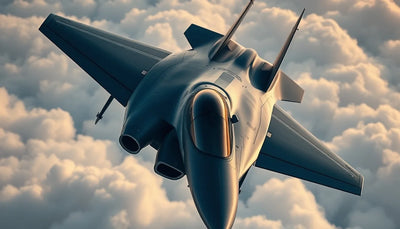
Army Laser Downs Three Cartel Drones at Texas Border
The Army's AMP-HEL laser destroyed three cartel drones at the Texas border, but USNORTHCOM has not confirmed whether the shots crossed into Mexican airspace. The disclosure gap raises questions for operators tracking counter-UAS policy and cross-border enforcement.

Quick answer
The Army's AMP-HEL laser destroyed three cartel drones at the Texas border, but USNORTHCOM has not said whether the shots crossed into Mexican airspace.
- The Army's AMP-HEL laser destroyed three cartel drones at the Texas border.
- USNORTHCOM has not confirmed whether the engagements crossed into Mexican airspace.
- The incident shows directed-energy counter-UAS systems moving into active border enforcement.
- Commercial operators should watch how cross-border counter-UAS rules are communicated.
Evidence: DroneXL.co · AeroVironment unmanned systems solutions · FAA UAS official guidance · Defense.gov official source
Fleet readiness
Keep DJI hardware available without overbuying new units.
Use defense and fleet news as a planning signal for repair support, inspected pre-owned aircraft, and replacement timing.

Verified facts
What the available evidence confirms
| Detail | Reported status |
|---|---|
| Drones destroyed | Three cartel drones |
| System used | Army AMP-HEL laser |
| Location | Texas border |
| Airspace jurisdiction disclosure | Not confirmed by USNORTHCOM |
The U.S. Army's AMP-HEL laser destroyed three cartel drones at the Texas border, according to reporting by DroneXL.co. The engagement itself is a concrete operational data point, but the more significant disclosure issue is what USNORTHCOM has not said: whether any of the laser shots crossed into Mexican airspace.
For commercial drone operators, fleet managers, and buyers tracking the counter-UAS landscape, that silence matters. Cross-border drone interdiction sits at the intersection of defense procurement, airspace sovereignty, and enforcement transparency. When a directed-energy system is used against small unmanned aircraft near an international boundary, the rules of engagement and the reporting standards become as important as the hardware itself.
What the source actually confirms
DroneXL.co reported on August 28, 2026, that the Army's AMP-HEL laser destroyed three cartel drones at the Texas border. The report attributes the operational detail to the Army system and notes that USNORTHCOM declined to say whether the shots crossed into Mexican airspace. That is the full scope of confirmed information in the source.
Reboot Hub analysis: the absence of an airspace jurisdiction statement is not a minor omission. In border counter-UAS operations, the distinction between a shot taken inside U.S. airspace and one that crosses a boundary line carries diplomatic, legal, and operational weight. For commercial operators, it also signals how much information public agencies are willing to release about counter-drone engagements, which affects risk modeling for flights near sensitive or boundary-adjacent zones.
The AMP-HEL system represents a growing category of directed-energy counter-UAS tools. Rather than relying on kinetic interception or radio frequency jamming, laser systems engage targets with concentrated energy. The source does not provide range, power, or engagement altitude details, and Reboot Hub will not speculate on those figures. What the incident does establish is that laser-based counter-drone capability is being used in live border operations, not just in testing or demonstration settings.
Why airspace disclosure matters for commercial operators
Commercial drone pilots already operate inside a dense regulatory framework. Airspace authorizations, geofencing, and temporary flight restrictions shape where and when a flight can happen. When military counter-UAS activity occurs near a border, the lack of clarity about engagement boundaries adds another layer of operational uncertainty.
For a fleet manager planning missions near the Texas border, the practical question is not whether a cartel drone will be targeted. It is whether counter-UAS activity could affect nearby commercial airspace without clear public notice. If USNORTHCOM does not confirm the airspace in which an engagement occurred, operators have less information to assess whether similar operations could overlap with authorized commercial flight corridors.
The source-limited nature of this report means Reboot Hub cannot state that any specific commercial airspace was affected, restricted, or closed. No temporary flight restriction tied to this incident is confirmed in the source. But the disclosure gap itself is a signal. Operators who fly near border regions should monitor NOTAMs and agency statements more closely when counter-UAS incidents are reported, because public confirmation may lag behind operational reality.
What this means for drone owners and the market
The counter-UAS market is expanding as defense and security agencies confront small drone threats. Incidents like this one reinforce that directed-energy systems are moving from procurement programs into field use. For commercial drone buyers, that shift has indirect but real consequences. As counter-drone technology becomes more common in security and border enforcement, regulators may face pressure to clarify where and how those systems can operate relative to civilian airspace.
For owners of pre-owned DJI drones and other consumer or enterprise platforms, the immediate impact is not a product change or a firmware update. It is a policy environment that is becoming more layered. A pilot flying a pre-owned DJI Mavic or Mini near a border area already contends with geofencing and airspace rules. The addition of active military counter-UAS operations, with unclear airspace boundaries, raises the stakes for situational awareness. Reboot Hub's Drone Wiki is one reference point for operators working through airspace, maintenance, and ownership questions as the regulatory picture evolves.
Fleet managers and procurement leads should treat this incident as a reminder that counter-UAS enforcement is not abstract. It is happening on U.S. territory, near civilian flight activity, with systems that may not follow the same public reporting cadence as traditional aviation enforcement. The practical step is to build border-adjacent mission planning around conservative airspace assumptions and to verify current notices before every flight.
The pre-owned DJI market is unlikely to see direct price movement from one border laser engagement. But sustained counter-UAS activity can influence buyer sentiment in regions where operators worry about flight restrictions or enforcement ambiguity. If pilots perceive that certain areas carry elevated operational risk, demand for drones used in those areas may soften, while demand for platforms with strong geofencing and compliance features may hold steadier. That is a market trend worth watching, not a short-term price signal. For owners evaluating service and lifecycle risk, Drone Wiki explains the relevant repair, parts, resale, or operational path.
What buyers and fleet managers should watch next
The most important follow-up is whether USNORTHCOM or another agency clarifies the airspace in which the laser engagement occurred. A clear statement would help operators understand whether cross-border counter-UAS actions are being treated as routine or exceptional. Continued silence would suggest that public transparency around directed-energy counter-drone operations is still being worked out.
Operators should also watch for any temporary flight restrictions, border-area airspace notices, or policy statements from the FAA or defense agencies following this incident. The source does not confirm any such notices, but the pattern of counter-UAS activity near civilian airspace is relevant to flight planning. Reboot Hub analysis suggests that border-adjacent operators should treat counter-UAS activity as a standing risk factor rather than a one-off event.
For repair customers and pre-owned drone buyers, the incident does not change hardware service needs. A laser engagement against cartel drones does not affect DJI spare parts availability, firmware, or repair workflows. The commercial relevance is in risk planning and policy awareness, not in equipment maintenance. That distinction is important: this is a defense and airspace story with indirect market implications, not a product or repair story.
FAQ
Frequently asked questions
Did the Army confirm the drones were destroyed by the AMP-HEL laser?
According to DroneXL.co, the Army's AMP-HEL laser destroyed three cartel drones at the Texas border. The report attributes the engagement to that system.
Did USNORTHCOM say whether the laser shots crossed into Mexican airspace?
No. DroneXL.co reported that USNORTHCOM would not say whether the shots crossed into Mexican airspace. That disclosure gap is the central unresolved question in the story.
Should commercial drone operators near the border change their flight planning?
Operators should monitor NOTAMs and agency statements closely after counter-UAS incidents. The source does not confirm any specific airspace restriction, but the lack of airspace clarity around military counter-drone activity supports conservative mission planning near border zones.
Which sources support this update?
The visible evidence links identify DroneXL.co and AeroVironment unmanned systems solutions and FAA UAS official guidance and Defense.gov official source; each source is used only for the claim it directly supports.
What remains subject to change?
Retail pricing, availability, product bundles and regulatory timelines can change. Readers should verify the latest terms with the named retailer, manufacturer or regulator before acting.
How should buyers or operators use this analysis?
Use the verified facts as a starting point, then compare mission fit, lifecycle support, maintenance needs and current procurement terms before making a purchase or fleet decision.
Sources consulted
- DroneXL.co - primary source
- AeroVironment unmanned systems solutions - official company source
- FAA UAS official guidance - official regulator source
- Defense.gov official source - official government source
Reboot Hub Editorial adds buyer, repair, resale, and operational analysis for drone owners. If you spot an error, contact us for correction review through our editorial policy.