Archer Aviation Defense Deal Lifts Stock – What Drone Buyers Should Watch
Archer Aviation shares surged nearly 20% after announcing an autonomous VTOL defense platform. The move signals growing crossover between commercial eVTOL and military procurement, offering fleet operators and buyers clues about future certification and demand shifts.

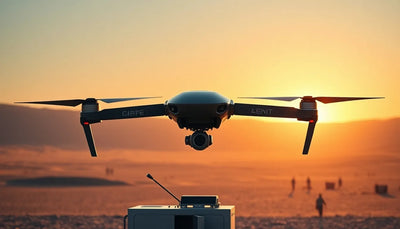
On July 21, 2026, Archer Aviation stock closed 19.6% higher at $5.31 after the eVTOL developer unveiled plans to develop an autonomous vertical takeoff and landing platform for defense and commercial applications. The announcement, which came alongside a broad market dip of 0.2%, caught the attention of investors and operators alike. While Archer is best known for its passenger air taxi designs, the defense-oriented “Thunder” platform signals that the line between commercial drone technology and military autonomy is blurring faster than many expected.
For buyers and fleet managers in the commercial drone space—whether they fly DJI Matrice platforms, work with inspected pre-owned DJI drones, or run enterprise repair shops—this news offers a valuable lens into where the industry is headed. Defense dollars often accelerate certification, component reliability, and production scale, all of which eventually filter into the broader UAV market. Here is what happened, why it matters, and how you should adjust your planning.
Why Archer’s Defense Announcement Matters
Archer’s stock move was driven by more than a headline. The company stated it will develop “an autonomous vertical takeoff and landing platform” aimed at both defense and commercial roles. Shane Arnott, Archer’s Senior Vice President, explained that “from raw performance to producibility, harnessing the best technologies from the commercial eVTOL market for defense is central to how Thunder will deliver operational value.” That language matters: it confirms that Archer intends to leverage its existing commercial eVTOL engineering for a military variant, rather than starting from scratch.
Market context
Turn market news into a buy, repair, or trade-in decision.
Compare pre-owned availability, resale timing, and repair economics before the market moves again.

This is a significant shift for a company traditionally associated with passenger air taxis. By creating a dedicated defense platform, Archer positions itself alongside established defense UAV contractors while retaining a foot in commercial aviation. The announcement did not include specific technical specifications, range figures, or production timelines, so operators should treat the news as a directional signal rather than a concrete product launch. Still, the market reaction—nearly a 20% single-day gain—reflects investor belief that defense contracts can provide the revenue stability that commercial eVTOL has yet to deliver.
For drone buyers, the takeaway is that large-scale defense interest in autonomous VTOL can accelerate the development of components, sensors, and flight controllers that eventually trickle down to commercial platforms. When military programs mature, the supply chain for motors, batteries, and avionics often becomes more cost-effective and reliable, benefiting the entire UAV ecosystem.
The Defense-Commercial Crossover and Fleet Strategy
Defense agencies have long been a primary customer for heavy-lift and long-endurance drones, but the eVTOL sector has historically been focused on urban air mobility for passengers. Archer’s move bridges that gap. The Thunder platform will need to meet military requirements for ruggedness, cybersecurity, and autonomous operations—standards that are often more stringent than commercial ones. If Archer succeeds, the technologies validated under defense contracts could become de facto benchmarks for commercial drone reliability.
Fleet operators should note a parallel with the DJI ecosystem. When DJI developed the Matrice 300 and 350 RTK, their primary enterprise customers included public safety and inspection operators with demanding uptime and safety requirements. Similar forces are now at play in the eVTOL world. The growing availability of professional DJI repair services and genuine OEM spare parts for existing commercial drones is partly a result of increased demand for certified reliability. Defense contracts for autonomous platforms could accelerate that trend across a wider range of airframes.
What should a buyer or fleet manager do differently after reading this? First, monitor how Archer and similar companies translate their defense work into commercial product roadmaps. If the Thunder platform leads to a commercial variant, it could introduce new autonomous flight modes, redundant avionics, or sensor fusion architectures that later become available on smaller UAVs. Second, consider the implications for your existing fleet. If defense procurement creates a surge in demand for certain components like high-density batteries or secure datalinks, prices for those items may rise, and lead times may lengthen. Planning spare parts procurement ahead of time becomes more important. Finally, keep an eye on certification progress. Military certification is not the same as FAA or EASA type certification, but a successful defense program can demonstrate system-level safety that eases the path for commercial approval.
What this means for drone buyers
This news matters directly to anyone purchasing or planning to purchase UAV equipment, including pre-owned DJI drones. The commercial drone market is still dominated by DJI platforms, but the eVTOL defense push signals that the industry is maturing beyond consumer and enterprise quadcopters. For drone buyers, the implications are practical and near-term.
Reboot Hub analysis: First, watch for price movements in the pre-owned market. When a major defense announcement like this boosts investor confidence in the broader VTOL sector, it can temporarily shift demand away from existing commercial drones as institutional buyers wait for new products. That could create a window of more attractive pricing on pre-owned DJI drones as fleet operators update equipment to remain competitive. If you are in the market for a Matrice 350 RTK or a Mavic 3 Enterprise, now may be a good time to lock in pricing before defense orders tighten component supply chains.
Second, repair and maintenance strategies may need to adjust. As defense contracts drive higher volumes of autonomous VTOL production, parts commonality between military and commercial platforms could increase. That means OEM-pulled parts for existing drones might become scarcer if factories prioritize defense orders. Working with a repair partner that stocks professional DJI repair services and genuine OEM spare parts can help insulate your fleet from supply hiccups.
Third, consider the resale value of your current fleet. If defense-driven advances make autonomous landing, collision avoidance, or beyond-visual-line-of-sight (BVLOS) capabilities standard on new platforms, older drones without those features may depreciate faster. The drone trade-in guide at Reboot Hub can help you evaluate whether trading up now makes sense versus holding for another cycle.
One operator-facing answer that stands out: reevaluate your drone lifecycle planning. With defense investment pouring into autonomous VTOL, the gap between military-grade reliability and commercial-grade affordability is narrowing. Buyers should prioritize platforms that offer upgrade paths, modular component designs, and strong aftermarket support. The days of buying a drone and flying it for five years with minimal changes may be ending, as each defense deal accelerates the pace of commercial innovation.
Navigating Supply, Certification, and Second-Hand Trends
Archer’s defense deal also highlights a broader trend: governments are increasingly willing to fund autonomous flight development outside traditional fixed-wing drones. This has direct implications for supply chains. When a company like Archer announces a defense platform, it signals to suppliers that volume orders for motors, batteries, flight controllers, and composite airframes are coming. Those suppliers may reallocate capacity from consumer drone parts to military-grade components, creating temporary shortages or longer lead times for commercial drone spares.
For operators of pre-owned DJI drones, this is a double-edged sword. On one hand, rising demand for new autonomous platforms can depress prices for older commercial models as fleet managers sell off equipment to fund upgrades. On the other hand, if component factories prioritize defense contracts, replacement parts for aging commercial drones could become harder to source. Operators who hold onto older platforms for training or secondary missions should consider building a small inventory of critical spares now.
The second-hand market may also see a shift in buyer preferences. Pristine pre-owned drones with autonomous capabilities—such as waypoint navigation, obstacle avoidance, and RTK positioning—will hold value better than basic models. If defense programs set higher expectations for autonomy, commercial buyers will start demanding those features as table stakes. Sellers should highlight any autonomous features when listing their drone for resale, and buyers should be prepared to pay a premium for units that can support modern mission planning.
Finally, certification timelines remain uncertain. Archer did not provide a launch date for Thunder, and the military procurement process typically takes years. However, the fact that a leading eVTOL company is publicly committing to a defense platform suggests that regulatory frameworks for autonomous VTOL may be further along than many assume. Commercial drone operators should stay engaged with FAA and EASA rulemakings for BVLOS and autonomous flight, as any breakthroughs from defense programs could be quickly adapted for civil use.
Frequently Asked Questions
How does Archer’s defense deal affect the commercial drone market today?
The immediate effect is on investor sentiment and strategic positioning. In the near term, no direct changes to commercial drone availability or pricing are expected. However, the deal signals that defense agencies are committed to autonomous VTOL, which may accelerate certification efforts and component standardization, eventually benefiting commercial operators.
Should I sell my current drone and wait for new eVTOL platforms?
Probably not. eVTOL platforms designed for defense applications are unlikely to be available for commercial purchase within the next two years. Your current drone, especially if it is a well-maintained pre-owned DJI model, remains a productive asset. Focus on keeping it flight-ready with genuine OEM spare parts and professional repair support, and reassess your upgrade timeline based on concrete product announcements rather than speculation.
Will pre-owned drone prices drop because of this news?
There is no immediate evidence of a price drop. However, if major defense contracts stimulate production of new autonomous platforms, some fleet operators may sell older equipment to raise capital. This could increase supply in the pre-owned market, possibly lowering prices for basic drones while keeping premium autonomous models stable. Buyers should monitor listings for opportunities but not rush to sell unless they have a clear upgrade plan.
Sources consulted
- Yahoo Finance market report - primary source
- Archer Aviation investor relations - company investor information
Reboot Hub Editorial adds buyer, repair, resale, and operational analysis for drone owners. If you spot an error, contact us for correction review through our editorial policy.
This article is market commentary for drone operators and buyers, not investment advice. Reboot Hub does not provide financial advice or recommend securities transactions.