Anduril’s Thunder Tiltrotor Attack Drone: What Autonomy Means for Buyers
Anduril revealed Thunder, an autonomous tiltrotor attack drone designed as a wingman for Apache helicopters. The concept signals rising autonomy in military drones, with broader implications for commercial fleet operators, repair services, and the pre-owned market.

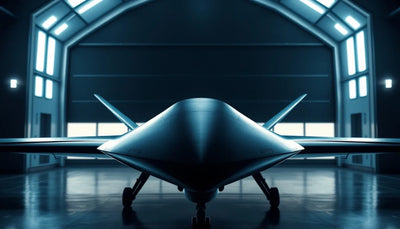
Anduril Industries has unveiled the Thunder, a tiltrotor drone concept designed to operate as a highly autonomous wingman for crewed attack helicopters. According to a report from The War Zone, the Thunder is intended to fly deep into hostile airspace at low altitude alongside AH-64 Apaches and MV-75 Cheyennes. While the initial application is purely military, the design choices and autonomy profile carry meaningful signals for the commercial drone industry — from tiltrotor efficiency to manned-unmanned teaming logic that may eventually influence enterprise platforms and repair practices.
Thunder in context: a new generation of autonomous wingmen
The War Zone report describes Thunder as a “highly autonomous” tiltrotor that can operate in contested environments as an extension of a manned helicopter crew. The concept leverages Anduril’s existing autonomy stack, Lattice, to coordinate flight paths and threat responses without constant human input. By flying low and fast, Thunder aims to reduce the exposure of its human counterparts while delivering reconnaissance, electronic warfare, or strike payloads.
For commercial fleet operators, the emphasis on autonomy is not a distant military curiosity. The same underlying sensor fusion and decision-making algorithms that enable Thunder to avoid terrain and threats are being adapted for inspection, surveying, and logistics drones. When a defense contractor invests heavily in low-level autonomous navigation, the risk and development cost for civilian equivalents declines over time. Buyers evaluating long-term fleet strategy should note that autonomy features now proven in military flight test environments may reach commercial products within three to five years.
Fleet readiness
Keep DJI hardware available without overbuying new units.
Use defense and fleet news as a planning signal for repair support, inspected pre-owned aircraft, and replacement timing.

The tiltrotor configuration itself is significant. Thunder’s ability to take off and land vertically while transitioning to efficient forward flight directly addresses a persistent gap in the commercial drone market: endurance versus site accessibility. Most popular multirotor platforms offer convenience but limited range, while fixed-wing drones require runways or catapults. A commercial tiltrotor drone, informed by concepts like Thunder, could unlock longer-duration missions for pipeline patrol, power line inspection, and agricultural monitoring — segments that currently rely on a mix of platforms.
Technology implications for commercial drone systems
Thunder’s architecture reveals several technology trends that commercial buyers should watch. First, the integration of autonomous decision-making with a mechanically complex airframe suggests that reliability demands are rising. The War Zone report underscores that the drone is intended to operate “deep into hostile airspace,” which imposes stringent requirements for sensor redundancy, jam-resistant communications, and failsafe behaviours. These same requirements increasingly matter in commercial settings where drones fly beyond visual line of sight (BVLOS) in congested airspace or over critical infrastructure.
Second, the tiltrotor mechanism itself introduces maintenance challenges that parallel those seen in high-end multirotor and VTOL fixed-wing hybrids. For repair customers, this means that expertise in gearboxes, pivot actuators, and propellor pitch control becomes more valuable. Professional repair services that invest in training for tiltrotor systems today will be positioned to capture work as the technology spreads. The pre-owned market for conventional quadcopters may remain strong for years, but fleet operators expanding into long-range autonomy should factor in higher maintenance complexity and the need for OEM-pulled spare parts.
Third, the military’s embrace of open-architecture software — Anduril’s Lattice, for example — hints at a shift toward platform-agnostic autonomy. Commercial drone buyers currently face closed ecosystems where firmware updates and feature unlocks are controlled by manufacturers. If defense-driven software standards begin to influence civilian certification, operators may gain the ability to mix hardware from different OEMs while running a common autonomy engine. That could reshape purchasing decisions, making the pre-owned market more attractive as platforms become interoperable.
What this means for drone buyers
For anyone purchasing a drone in 2026 — whether new or pre-owned DJI drones — the Thunder concept is a useful reference point, not a reason to pause. The commercial drone market moves on a different timeline and budget than defense programs. However, buyers should consider three concrete implications:
- Autonomy expectations. The baseline for what a “smart” drone can do is rising. If you plan to keep a drone in service for three to five years, choose a platform that supports future autonomy upgrades through software rather than requiring a hardware swap. Enterprise operators should prioritize models with SDK access or open API support.
- Resale value horizon. As tiltrotor and high-autonomy platforms enter the mid-tier commercial segment, older fixed-pitch multirotors may depreciate faster. Fleet managers rotating equipment should time pre-owned disposals before the new generation reaches price parity. A professional drone trade-in program can help lock in value early.
- Repair readiness. Tiltrotor mechanisms add failure points. For operators considering long-range VTOL hybrids, it is prudent to establish a relationship with a repair provider that stocks genuine OEM spare parts and has experience with gear-driven propulsion systems. This avoids extended downtime when a pivot actuator or motor bearing fails.
The most immediate takeaway for buyers is to treat autonomy not as a luxury feature but as a core spec that will influence operational cost and residual value. Thunder may be years from production, but the engineering choices it represents — low-altitude navigation, tiltrotor efficiency, high autonomy — are already informing the commercial roadmaps of sensor and airframe suppliers.
Operational and repair market outlook
The War Zone report does not discuss maintenance or supply chain, but the design requirements for a penetrator drone imply a high level of modularity and maintainability in field conditions. For the repair ecosystem, this suggests that defense contracts will drive development of standardised diagnostic interfaces and quick-change component packs. Those standards could migrate into commercial repair workflows, making it easier for third-party services to perform structural repairs on complex airframes without needing an OEM engineer on site.
For the pre-owned DJI market, the indirect effect of concepts like Thunder is incremental rather than disruptive. DJI’s dominance in the sub-25 kg category rests on production scale, software polish, and a vast repair network. A military tiltrotor concept will not displace that overnight. However, as defense primes like Anduril begin to compete for commercial contracts — especially in enterprise security and infrastructure inspection — the component supply chain may tighten. High-quality servos, composite propellers, and flight controllers used in both military and high-end commercial drones could see price increases or longer lead times. Buyers who rely on inspected pre-owned equipment may benefit from the secondary market as early adopters trade up to new tiltrotor platforms, flooding the pre-owned channel with well-maintained quadcopters.
Fleet operators and repair customers should monitor the fastener, bearing, and motor specifications used in emerging tilting designs. Standardisation has been slow in commercial drone hardware, but the defense sector’s demand for common logistics could accelerate the creation of a true aftermarket parts ecosystem. When that happens, repair turnaround times drop and the total cost of ownership for advanced drones becomes more predictable.
Will Thunder ever be available for civilian purchase or use?
No. The concept is designed for the U.S. military and its allies, and Anduril has not announced any commercial variant. However, the underlying autonomy and tiltrotor technology may influence civilian products from other manufacturers within three to five years.
How does a tiltrotor drone compare to a quadcopter for commercial work?
Quadcopters offer simplicity, low cost, and ease of repair. Tiltrotors provide longer range and higher cruise speed with vertical takeoff and landing. For most routine inspections up to 5 km, quadcopters remain the practical choice. For linear infrastructure or large-area surveys, tiltrotor advantages become compelling.
Should I delay buying a drone because of the Thunder announcement?
No. The commercial market evolves separately from military prototypes. Continue selecting drones based on current mission requirements. But when evaluating a new purchase, consider whether the platform supports programmable autonomy and whether a tiltrotor upgrade path might be available from the manufacturer in the next generation.
Sources consulted
- The War Zone - primary source
Additional official documentation was not available at publication time.
Reboot Hub Editorial adds buyer, repair, resale, and operational analysis for drone owners. If you spot an error, contact us for correction review through our editorial policy.