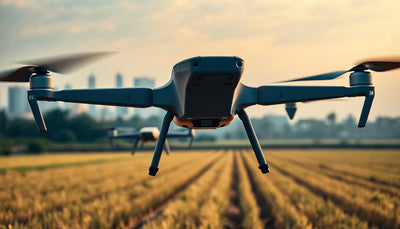
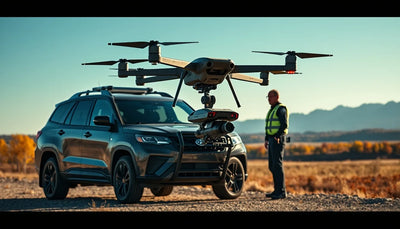
Agricultural Drone Growth Confirmed by New White Paper
A new white paper from China Daily highlights the rapid global expansion of agricultural drones. We analyze the implications for fleet operators, buyers, and the pre-owned DJI market, and what it means for commercial planning in 2026.

A newly published white paper from China Daily has brought fresh attention to the accelerating global adoption of agricultural drones. The report, which aggregates data from multiple industry sources, paints a picture of a sector moving from early experimentation to mainstream commercial deployment. For drone buyers and fleet operators, the findings carry practical implications for procurement strategies, maintenance planning, and future market positioning.
The white paper’s central message is clear: agricultural drones are no longer a niche tool. Their use has expanded rapidly across Asia, the Americas, and parts of Europe, driven by labor shortages, the need for precision farming, and regulatory frameworks that increasingly accommodate unmanned aerial vehicles for crop management. While the source does not specify exact growth percentages or regional breakdowns, the tone of the report suggests a step-change in commercial acceptance.
The scale of agricultural drone adoption
The China Daily white paper describes agricultural drone adoption as “rapid” and “global.” This characterization aligns with observable trends in the commercial drone market over the past two years. Drone operators who previously focused on aerial photography or surveying are now pivoting to agricultural applications, drawn by recurring revenue from crop spraying, seeding, and mapping contracts. The white paper notes that both established drone manufacturers and new entrants are investing heavily in purpose-built agricultural platforms.
Market context
Turn market news into a buy, repair, or trade-in decision.
Compare pre-owned availability, resale timing, and repair economics before the market moves again.

For fleet operators, this growth signals a maturing ecosystem. Parts availability, training programs, and service networks are expanding to support the increased number of units in the field. However, it also means that competition for skilled repair professionals and OEM components is intensifying. Operators who rely on pre-owned DJI drones for agricultural work should factor in longer lead times for certain spare parts as demand surges.
One practical takeaway from this report concerns the importance of proactive maintenance. As more drones fly over crops each season, the strain on motors, pumps, and spray systems increases. The white paper’s emphasis on rapid growth indirectly underscores the need for reliable repair services. Fleet managers would be wise to establish relationships with professional DJI repair services before the busiest spraying months arrive.
Regional growth drivers
The white paper highlights that agricultural drone adoption is not uniform. Certain regions are advancing faster due to supportive policies, large-scale farming operations, or pressing agricultural challenges. In China, for example, government subsidies and training initiatives have accelerated uptake. In the United States and Brazil, labor shortages and the need for precise chemical application are pushing growers toward drone-based solutions. Europe, while more fragmented in terms of regulation, is seeing steady growth in countries like Spain and Italy.
For the pre-owned drone market, these regional differences matter. A drone that was popular for agricultural work in one region may become available as a trade-in or second-hand unit when farmers upgrade to newer models. Buyers looking for pre-owned DJI drones should consider the origin and usage history of a unit, as agricultural drones often face harsher operating conditions than those used for aerial photography. The white paper does not name specific models, but the trend toward larger, more durable agricultural platforms is clear.
Another implication concerns the supply chain for OEM-pulled parts. As the installed base of agricultural drones grows, so does the demand for genuine replacement components. Operators who invest in pre-owned DJI drones for their fleets benefit from the availability of professional DJI repair options that use OEM parts, ensuring longer service life and better resale value.
What this means for drone buyers
For anyone considering entering the agricultural drone space or expanding an existing fleet, the white paper’s findings reinforce several strategic decisions. First, timing matters. The window for acquiring pre-owned DJI drones at favorable prices may narrow as demand from agricultural operators increases. Buyers should act sooner rather than later to secure units that meet their operational requirements.
Second, buyers should prioritize drones with proven durability and strong aftermarket support. Agricultural work exposes drones to chemicals, dust, and high moisture levels. A drone that appears cheap upfront may require costly repairs after a few seasons. The white paper’s emphasis on global growth suggests that repair networks are improving, but availability of certified service centers still varies by region. Checking the condition and repair history of a pre-owned unit before purchase is essential.
Third, fleet operators should factor in the trade-in cycle. As agricultural drones evolve, older models lose value but remain perfectly capable for many tasks. Using a drone trade-in guide can help owners maximize the value of their current equipment when upgrading to more advanced platforms. The white paper does not mention trade-in programs, but the secondary market will inevitably grow as the primary market matures.
Finally, buyers should consider total cost of ownership, not just purchase price. Repairs, spare parts, and downtime all affect the bottom line. The white paper’s optimistic view of agricultural drone growth does not mean every operator will succeed. Those who plan for maintenance and repairs from day one will have a clear advantage.
Implications for the pre-owned DJI market and repair services
The rapid growth highlighted in the China Daily white paper has direct consequences for the secondary drone market. As more agricultural drones enter service, the volume of trade-ins and retired units will increase. This creates opportunities for buyers seeking inspected pre-owned DJI drones at lower entry points, but it also requires careful evaluation of each unit’s history.
Agricultural drones often accumulate high flight hours and exposure to corrosive substances. A pre-owned DJI drone that was used for a single season of crop spraying may have less wear than one used for multiple seasons, but the condition of the spray system, batteries, and motors should be verified. Sellers who provide transparent maintenance logs and inspection reports will command premium prices, and buyers should favor those who offer such documentation.
Repair services will play a critical role in sustaining the agricultural drone ecosystem. The white paper does not specify the growth of third-party repair networks, but the sheer number of drones in operation points to an increasing need for specialized maintenance. Operators who rely on professional DJI repair services benefit from technicians who understand agricultural-specific failure modes, such as clogged nozzles, pump degradation, and corrosion in electrical connectors.
For those managing multiple drones, having a repair partner that stocks genuine OEM spare parts is crucial. The white paper’s global perspective suggests that supply chains for agricultural drone components will tighten during peak seasons. Planning ahead and establishing a repair relationship now can prevent costly downtime later.
What drone model is best for agricultural work?
The white paper does not name specific models. However, based on global usage trends, drones with higher payload capacity, weather resistance, and modular spray systems are preferred. Buyers should research the support ecosystem for any model they consider, including parts availability and repair expertise.
Is it safe to buy a pre-owned agricultural drone?
Yes, provided you perform due diligence. Ask for flight logs, inspect for chemical residue, and verify that all components function properly. Buying from a source that offers inspected pre-owned DJI drones with a repair history reduces risk. The white paper’s growth data implies that more used units will enter the market, giving buyers more choices.
How can I lower repair costs for an agricultural drone fleet?
Preventive maintenance is key. Regularly clean spray systems, check for corrosion, and keep firmware updated. Establish a relationship with a professional repair service that uses genuine OEM parts. Using a trade-in guide when upgrading can also offset the cost of newer equipment. The white paper’s findings support investing in maintenance as a way to maximize fleet longevity in a growing market.