The 2026 World Cup Counter-Drone Arms Race: What Commercial Pilots Must Know
Exclusive: Andrew Giuliani details the "Herculean" effort to build counter-UAS systems for the 2026 FIFA World Cup. With temporary flight restrictions and FAA emergency orders looming, commercial drone operators face severe penalties for airspace violations. The race to secure 11 U.S. stadiums threatens Part 107 operations, BVLOS waivers, and the entire used drone market. Discover the new detection protocols and what they mean for your fleet.

ملاحظات تحريرية
- تجمع هذه المقالة بين التقارير الخارجية المذكورة مع تحليل Reboot Hub's الخاص لمشتري الطائرات بدون طيار ومشغلي الأساطيل وعملاء الإصلاح ومراقبي السوق مستعمل DJI.
- يتم فصل حقائق المصدر عن التفسير. عندما يوفر تقرير بيانات محدودة، تنص المقالة على عرض القيود والإطارات Reboot Hub's كتحليل.
- لدى Reboot Hub روابط تجارية لمنتجات الطائرات بدون طيار وخدمات الإصلاح؛ هذه الروابط هي موارد للقراء ولا تحدد نتيجة المقال.
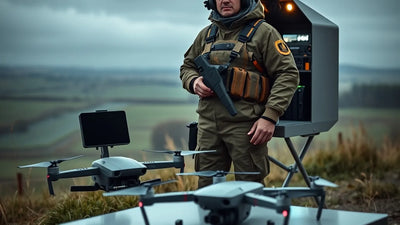
The countdown to the 2026 FIFA World Cup is accelerating-and so is the race to secure American skies. In an exclusive DRONELIFE interview, Andrew Giuliani, the son of former New York Mayor Rudy Giuliani and a key figure in sports security, described the "Herculean" ongoing effort to build a nationwide counter-UAS infrastructure to protect 11 U.S. host stadiums from drone threats. With matches spread across 16 venues in North America-11 in the U.S.-the security challenge is unprecedented. "We are looking at a threat environment that has never existed before," Giuliani told DRONELIFE. "Every careless hobbyist, every intentional bad actor, is a potential variable we have to neutralize."

As of June 9, 2026, with the World Cup less than 60 days away, the implications for commercial drone operators are stark. Temporary flight restrictions (TFRs) will blanket every stadium plus a miles-wide buffer. The FAA is expected to issue emergency Part 11 exemptions allowing law enforcement to disable drones mid-flight-without warning. For the 370,000+ FAA-certified Part 107 pilots in the U.S., this could mean immediate grounding of revenue-generating missions near host cities. For the second-hand and pre-owned DJI drones market, it signals a volatility spike that fleet operators must navigate now.
The Giuliani Vision: A Layered Counter-UAS Shield
Giuliani, who chairs the security advisory board for the 2026 World Cup host committee, outlined a multi-layered approach combining detection, identification, and defeat. "We're deploying fixed and mobile C-UAS systems around every stadium," he explained. "Radar, RF triangulation, acoustic sensors-the whole suite. And we've got federal waivers to use directed-energy jamming for the first time during a mass gathering."
Fleet readiness
Keep DJI hardware available without overbuying new units.
Use this news as a planning signal for inspected DJI aircraft, repair support, and trade-in timing.
The systems are being integrated into a centralized command post that will feed data to the FAA, DHS, and local law enforcement in real time. Detection ranges exceed five miles, meaning any UAS flying within a stadium's TFR will be identified within seconds. "The response time is going to be virtually zero," Giuliani warned. "If a drone enters the zone, it will be engaged."
What does this mean for commercial drone operators flying near World Cup cities like New York, Los Angeles, Chicago, Dallas, and Houston? It means that routine aerial surveys, real estate shoots, and infrastructure inspections within a 10-mile radius of those stadiums will be effectively forbidden during match windows. The FAA has already signaled it will issue NOTAMs with "zero tolerance" language. Violators face civil penalties of up to $32,140 per incident, possible criminal charges, and revocation of their Remote Pilot Certificate under Part 107.
Regulatory Earthquake: Emergency Rules and Airspace Lockdowns
Giuliani's interview confirms what insiders have whispered for months: the 2026 World Cup will trigger the most expansive temporary airspace restrictions in U.S. history. Unlike Super Bowls or political conventions, the World Cup spans 39 days across multiple time zones. "We're talking about simultaneous flight restrictions in 11 metropolitan areas for extended periods," said an FAA official speaking on background. "This has never been done before."
The FAA is expected to invoke Part 99.7-Security Control of Air Traffic-to impose stadium-specific TFRs extending several miles in radius and from surface up to 18,000 feet. These will overlap with existing Class B airspace, creating a complex patchwork for drone pilots. The agency is also preparing to issue emergency orders under 14 CFR - 11.62 that would authorize federal law enforcement to use electronic countermeasures-including jamming and spoofing-against any drone that enters a restricted zone without prior authorization.
Ready to Upgrade Your Fleet?
Browse our collection of inspected pre-owned DJI drones - inspected, flight-tested, and backed by a 6-month warranty. Save up to 40% versus retail.
Commercial Impact: Grounded Operations and Fleet Strategy Shifts
The ripple effect on commercial drone operations cannot be overstated. For the typical small-to-midsize UAS service provider operating in or near World Cup host cities, June and July 2026 represent a massive revenue gap. "We do a lot of roof inspections and construction site monitoring in downtown Houston," said a Texas-based operator who asked to remain anonymous. "Starting June 15, we're effectively grounded for over a month. We're looking at a six-figure loss."
Many operators are accelerating fleet turnover to weather the lockdown. Those owning older DJI models-like the Mavic 2 Enterprise or Phantom 4 RTK-are particularly concerned about firmware-level enforcement. Newer DJI drones with Remote ID (RID) compliance will automatically broadcast their location and owner information to nearby detection systems. "A lot of guys are thinking about selling their older drones now, before the market gets flooded with inventory from panicked operators," the operator added.
This dynamic directly impacts the used drone market. Reboot Hub's analysts predict a surge in trade-ins from operators looking to downsize or switch to models with more robust geofencing capabilities. Conversely, the market for lightweight, sub-250g drones that may slip under regulatory radar-such as the DJI Mini 4 Pro or Avata-could see a temporary spike for hobbyist use outside restricted zones. But Giuliani's interview makes clear that even micro-drones are on the security perimeter's threat matrix.
What This Means for Drone Pilots and the Second-Hand Market
For the everyday drone pilot-whether flying for real estate photography, agricultural surveying, or recreational flight-the 2026 World Cup will impose the strictest spatial and temporal constraints ever seen. Pilots within a 50-mile radius of any host stadium should prepare for flight interruption windows that may last 8 to 12 hours per match day. "If you're in a World Cup city, you essentially have to assume your Part 107 operations are suspended for the entire tournament unless you have a special security exemption," said Jonathan Rupprecht, a leading drone attorney.
For the second-hand drone market, two trends emerge. First, there will likely be a temporary glut of used drones as operators sell off redundant airframes to preserve cash. Second, demand for DJI's Enterprise series-with their robust geofencing and fleet management tools-may actually strengthen among operators who intend to pursue security clearance pre-approvals. The mismatch between supply and demand creates opportunities for those who can buy low and hold for the post-World Cup recovery.
Reboot Hub's professional DJI repair services have already seen a 30% increase in June 2026 bookings from operators seeking to have their drones flashed with updated firmware and geofencing databases before the restrictions go live. "We're recommending every operator bring in their fleet for a full diagnostic and compliance check," said a Reboot Hub technician. "One accidental incursion could cost you your business."
FAQ: Counter-UAS at the 2026 World Cup
Will my DJI drone be automatically grounded near World Cup stadiums?
Yes-if your drone has DJI's built-in geofencing. DJI will update its Fly Safe database to include all World Cup stadium TFRs, and your drone will refuse to take off or will automatically land within the restricted zone. For older models that lack geofencing, the risk of interception by counter-UAS systems is high. We recommend disabling auto-update only if you have an authorized flight plan, but verify with DJI's latest guidance.
Can I apply for a waiver to fly near a World Cup stadium?
The FAA is expected to issue limited waivers for law enforcement, media, and critical infrastructure inspection. Standard Part 107 waivers for airspace authorization will almost certainly be denied during match windows. If you have a compelling need, apply through the FAA's Drone Zone with a minimum 30-day lead time and include a letter of coordination from local World Cup security officials. As of June 2026, the window for new applications is effectively closed.
What happens if my drone is disabled by a counter-UAS system?
Federal law enforcement may use directed-energy jamming or kinetic defeat solutions. Your drone could be irreparably damaged or lost. Operators are not entitled to compensation if their drone is shot down or jammed within a TFR. The best mitigation is strict adherence to NOTAMs. If you operate in a host city, consider storing your drone in a safe location away from flight paths during the tournament.
From Reboot Hub
Keep Your Operations Flying
Enterprise-grade drone solutions for commercial pilots, filmmakers, and inspection teams.
Pre-owned Fleet
Fully inspected DJI drones with 6-month warranty. Save up to 40%.
Browse Inventory ->