Skydio Takes Flight: Dallas PD Launches Drone as First Responder Program with Eight Aircraft
Dallas PD just activated 8 Skydio drones for Drone as First Responder (DFR) coverage, bypassing ground units to reach 911 calls in minutes. This is a paradigm shift for police aviation and commercial drone operators alike. We analyze the implications for BVLOS waivers, airspace integration under Part 107, and the skyrocketing demand for used drones as agencies rush to emulate this model. Miss this analysis and you will miss the biggest trend reshaping the second-hand drone market.

ملاحظات تحريرية
- تجمع هذه المقالة بين التقارير الخارجية المذكورة مع تحليل Reboot Hub's الخاص لمشتري الطائرات بدون طيار ومشغلي الأساطيل وعملاء الإصلاح ومراقبي السوق مستعمل DJI.
- يتم فصل حقائق المصدر عن التفسير. عندما يوفر تقرير بيانات محدودة، تنص المقالة على عرض القيود والإطارات Reboot Hub's كتحليل.
- لدى Reboot Hub روابط تجارية لمنتجات الطائرات بدون طيار وخدمات الإصلاح؛ هذه الروابط هي موارد للقراء ولا تحدد نتيجة المقال.
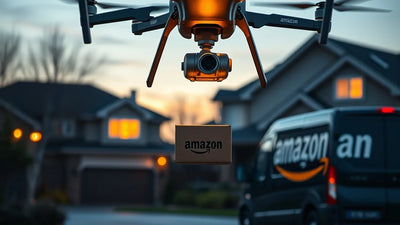
On May 20, 2026, the Dallas Police Department (DPD) officially launched a pioneering Drone as First Responder (DFR) program, deploying eight remotely piloted Skydio aircraft from Dallas Fire-Rescue stations across the city. This program, operated from the department's Fusion/Real Time Crime Center, places a drone in the air above a 911 call within moments, covering a two-mile radius from each of its eight bases. The first operational deployment has already occurred, signaling a new era for police aviation and a seismic shift for the commercial and second-hand drone markets.
This is not a pilot program or a limited trial. This is a fully operational, city-wide deployment of public safety drones that will respond to emergency calls as the primary initial responder. For commercial drone operators, defense contractors, and investors in the unmanned aerial vehicle (UAV) space, the Dallas DFR program is a watershed moment. It validates the concept of Remote ID, BVLOS (Beyond Visual Line of Sight) operations, and the integration of drones into the critical fabric of municipal emergency response.

The Dallas DFR Program: A Technical and Operational Breakdown
The DPD program utilizes the Skydio X2D and X10D platforms, known for their advanced obstacle avoidance and autonomous flight capabilities. Each drone is stationed at a Dallas Fire-Rescue station, ensuring rapid launch times. The operators are not on scene; they work remotely from the Fusion/Real Time Crime Center, a centralized hub that coordinates real-time intelligence for the department. This setup is crucial: it means a single operator can theoretically manage multiple drones, or switch between drones as calls come in, maximizing efficiency.
Fleet readiness
Keep DJI hardware available without overbuying new units.
Use this news as a planning signal for inspected DJI aircraft, repair support, and trade-in timing.
The two-mile radius per drone is a strategic choice. It balances the drone's battery life (typically 20-35 minutes for the Skydio X10D) with the need to arrive on scene before a ground unit. In a congested urban environment like Dallas, a drone can fly over traffic and arrive in under two minutes, compared to a patrol car that might take eight to ten minutes. This "golden hour" advantage for aerial situational awareness is the core value proposition of DFR.

From a regulatory standpoint, this program operates under a complex web of FAA authorizations. While the exact waiver details are not public, such a program almost certainly requires a Part 107 waiver for BVLOS flight, as the drones are operating beyond the visual line of sight of their remote pilots. Additionally, the drones must be equipped with Remote ID broadcasting, and the entire operation must be compliant with the FAA's UAS Integration Pilot Program (IPP) or similar streamlined approval processes. The success of Dallas will set a precedent for how the FAA handles future municipal DFR applications.
For the defense and public safety industry, the message is clear: the era of the "drone in a box" for first response has arrived. Companies like Skydio, DJI (with the Matrice 30 series and Dock), and Autel (with the Dragonfish series) are now competing to provide the hardware, software, and docking infrastructure for these programs. The Dallas deployment is a massive validation of the Skydio ecosystem, particularly its autonomy software, which allows the drone to navigate complex urban canyons without constant human input.

Ready to Upgrade Your Fleet?
Browse our collection of inspected pre-owned DJI drones - inspected, flight-tested, and backed by a 6-month warranty. Save up to 40% versus retail.
What Does the Dallas DFR Program Mean for Commercial Drone Pilots and the Second-Hand Market?
Ready to Upgrade Your Fleet?
Browse our collection of inspected pre-owned DJI drones - inspected, flight-tested, and backed by a 6-month warranty. Save up to 40% versus retail.
For the thousands of commercial drone pilots operating under Part 107, the Dallas DFR program is both an opportunity and a competitive threat. The opportunity lies in the ripple effect: as more police departments see the success of Dallas, they will scramble to launch their own DFR programs. This will create a surge in demand for drone hardware, software, and, critically, for experienced pilots. Agencies will need to hire or contract with certified Part 107 pilots to staff their Real Time Crime Centers. This is a new, high-paying career path for commercial pilots who can demonstrate proficiency in autonomous flight systems and emergency response protocols.
The threat is more subtle. As public safety agencies consume the best drone hardware and the most advanced BVLOS waivers, the commercial sector may face increased regulatory scrutiny. The FAA is likely to prioritize public safety applications for BVLOS authorizations, potentially slowing down approvals for commercial operations like pipeline inspection or agricultural surveying. Pilots in these sectors must be proactive in documenting their safety cases and engaging with the FAA's BVLOS ARC (Aviation Rulemaking Committee).
This brings us to the second-hand and refurbished drone market, which is directly impacted by the Dallas deployment. The immediate effect is a tightening of supply for high-end enterprise drones. Agencies like the Dallas PD typically purchase new hardware, but as they upgrade or expand their fleets, they will offload older models. This creates a wave of supply for the used drone market. However, the more significant impact is on demand. As smaller police departments, fire departments, and search-and-rescue teams see the Dallas model, they will want to emulate it but often lack the budget for pre-owned Skydio or DJI enterprise systems. They will turn to the refurbished market to acquire capable platforms like the DJI Matrice 300 RTK or the Autel EVO II Pro at a fraction of the cost. This is a massive tailwind for the inspected pre-owned drone sector.
For the individual commercial operator, this means that your current fleet of drones may hold its value better than expected, especially if you own enterprise-grade hardware. Conversely, if you are looking to upgrade, now is the time to consider pre-owned DJI drones from a trusted marketplace like Reboot Hub. The influx of agency-grade hardware into the refurbished channel will offer unprecedented access to top-tier technology at prices that make sense for a small business.
The Broader Defense and Public Safety Implications
The Dallas DFR program is not an isolated event. It is part of a larger national and global trend toward the militarization and mass adoption of drones for public safety. In 2025 alone, the number of DFR programs in the United States tripled, with major deployments in cities like Chula Vista, California, and Arlington, Texas. The Dallas program, however, is notable for its scale: eight drones covering a major metropolitan area is a significant commitment of resources and political capital.
From a defense perspective, this program demonstrates the viability of "drone swarms" for urban operations. While the eight Skydio drones are not operating as a coordinated swarm in the military sense, the concept of multiple autonomous aircraft responding to disparate calls simultaneously is a direct analog to military concepts for base defense and perimeter security. The command and control software developed for this program will likely be adapted for military use, creating a lucrative crossover market for companies like Skydio, which already has defense contracts.
For the drone industry as a whole, the Dallas program validates the business case for high-end, autonomous, and ruggedized drones. It proves that municipalities are willing to spend significant sums-often in the hundreds of thousands of dollars-for a comprehensive DFR solution. This will attract more investment into the sector, driving innovation in battery technology, docking stations, and AI-driven object detection. We can expect to see a flurry of new products aimed at the public safety market over the next 12 to 18 months.
Regulatory and Policy Landscape: The FAA's Role
The success of the Dallas DFR program hinges on the FAA's willingness to grant and maintain BVLOS waivers. Currently, such waivers are granted on a case-by-case basis, often requiring extensive safety justifications, airspace analysis, and community engagement. The Dallas program likely operates under a waiver that specifies the exact flight paths, altitudes, and operational limitations. Any deviation from these parameters could result in severe penalties, including the revocation of the waiver and fines of up to $27,500 per violation.
This regulatory framework creates a barrier to entry for smaller agencies. However, the FAA is under increasing pressure to streamline the BVLOS approval process. The Dallas program could serve as a template for a "standardized" DFR waiver, which would dramatically lower the barrier to entry and accelerate the adoption of DFR across the country. For commercial operators, this is a double-edged sword: easier BVLOS approvals for public safety could pave the way for easier approvals for commercial operations, but it could also lead to increased airspace congestion and competition for frequency bands.
It is also worth noting the political dimension. The use of drones for police surveillance is a contentious issue. Dallas has implemented robust privacy policies, including restrictions on data retention and a prohibition on using drones for random surveillance. These policies are critical for public acceptance and legal compliance. Any violation of these policies could trigger a public backlash and stricter regulations, which would impact all drone operators. The industry must self-police to maintain the social license to operate.
Q&A: What Does the Dallas DFR Program Mean for Different Stakeholders?
Q: What does this mean for a commercial real estate photographer using a DJI Mini 4 Pro?
A: In the short term, very little. Your operations are unlikely to conflict with the Dallas DFR flights, as they will be operating at higher altitudes and in response to specific emergencies. However, you should be aware of Temporary Flight Restrictions (TFRs) that may be issued around active crime scenes or major incidents. Always check the B4UFLY app before flying. In the long term, the normalization of drones in urban airspace could lead to more public acceptance of drones, which is good for the industry, but also to more stringent noise and privacy regulations.
Q: What does this mean for a county sheriff's office looking to start a drone program?
A: This is a blueprint for success. You should study the Dallas model closely, particularly their operational structure (drones based at fire stations, operators in a real-time crime center), their choice of hardware (Skydio for autonomy), and their privacy policies. You can likely replicate this model at a lower cost by purchasing pre-owned DJI drones or used Skydio units. The key is to invest in the software and training, not just the hardware.
Q: What does this mean for an investor in drone technology?
A: This is a strong buy signal for companies in the DFR ecosystem: Skydio (if you can find private shares), DJI (through secondary markets), and any company making docking stations (e.g., Hextronics, Fotokite). The Dallas program proves that the market for DFR is real and scalable. Expect to see increased M&A activity as larger defense contractors acquire these capabilities.
Conclusion: The Future of Drone as First Responder
The launch of the Skydio DFR program in Dallas on May 20, 2026, is more than a local news story. It is a landmark event that will be studied by public safety agencies, commercial operators, and defense contractors for years to come. It proves that the technology is ready, the regulatory path is viable, and the public is willing to accept drones in their skies for emergency response.
For the commercial drone pilot, the message is clear: the industry is evolving beyond simple aerial photography and inspection. The future is autonomous, integrated, and public safety-focused. To stay relevant, you must upskill, invest in enterprise-grade hardware, and understand the regulatory landscape. And when you need to upgrade your fleet without breaking the bank, remember that Reboot Hub offers a curated selection of pre-owned DJI drones and professional DJI repair services to keep your operations running smoothly. The drones are flying over Dallas. Will you be ready when they fly over your city?
FAQ: Skydio and the Dallas DFR Program
1. How does the Dallas DFR program affect FAA Part 107 operations?
The Dallas program operates under a specific BVLOS waiver, which is separate from standard Part 107 rules. However, the success of this program may influence the FAA to create a more streamlined path for all BVLOS operations, which would be a positive development for commercial pilots. In the meantime, pilots must continue to operate within their existing waiver or under standard VLOS rules.
2. What is the battery life of the Skydio drones used in the program?
The Skydio X10D, which is likely the primary platform, has a flight time of approximately 20-35 minutes under ideal conditions. This is sufficient for the two-mile radius of operation, as the drone can reach a call in under two minutes and loiter for the remainder of the battery. Hot-swappable batteries at the fire stations ensure continuous coverage.
3. Can I buy a used Skydio drone for my own DFR program?
Yes, but with caveats. Skydio drones are tightly integrated with their cloud software, and some features may require a subscription or specific enterprise licensing. However, as agencies upgrade, they will sell used units. Reboot Hub monitors the used drone market closely and can help you find a inspected pre-owned Skydio or DJI platform suitable for your needs.
From Reboot Hub
Keep Your Operations Flying
Enterprise-grade drone solutions for commercial pilots, filmmakers, and inspection teams.
Pre-owned Fleet
Fully inspected DJI drones with 6-month warranty. Save up to 40%.
Browse Inventory ->