FCC Grants DJI and Autel a Lifeline: Firmware Updates Secured Until 2029
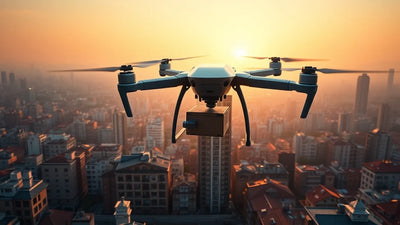
The FCC has quietly granted permission for DJI and Autel drones to continue receiving firmware updates until 2029, averting a potential cybersecurity and operational crisis for thousands of US drone operators. The decision, announced earlier this month, provides critical clarity for commercial and government users reliant on these widely used systems.

ملاحظات تحريرية
- تجمع هذه المقالة بين التقارير الخارجية المذكورة مع تحليل Reboot Hub's الخاص لمشتري الطائرات بدون طيار ومشغلي الأساطيل وعملاء الإصلاح ومراقبي السوق مستعمل DJI.
- يتم فصل حقائق المصدر عن التفسير. عندما يوفر تقرير بيانات محدودة، تنص المقالة على عرض القيود والإطارات Reboot Hub's كتحليل.
- لدى Reboot Hub روابط تجارية لمنتجات الطائرات بدون طيار وخدمات الإصلاح؛ هذه الروابط هي موارد للقراء ولا تحدد نتيجة المقال.
When the Federal Communications Commission (FCC) first added DJI and Autel Robotics equipment to its Covered List in 2025, the US drone industry braced for impact. Operators of tens of thousands of commercial, public-safety, and agricultural drones feared that their aircraft would be cut off from essential firmware updates, effectively turning them into expensive bricks vulnerable to cyber threats and incapable of complying with evolving FAA regulations. But in a quiet decision released earlier this month on May 3, 2026, the FCC reversed course—at least temporarily. The agency formally authorized firmware updates for all existing DJI and Autel drones already deployed in the United States to continue through January 1, 2029.
The move represents a dramatic and unexpected pause on what could have been the single most disruptive regulatory action to hit the drone sector in a decade. Today, on May 19, 2026, Reboot Hub examines the details behind the ruling, its immediate impact on operators and the broader market, and the strategic decisions every drone owner should be making now.

The Covered List Crisis That Almost Was
The FCC’s Covered List is a catalog of communications equipment deemed to pose an unacceptable risk to US national security. Originally implemented under the Secure Networks Act and expanded via the Secure and Trusted Communications Networks Act of 2019, the list targets companies linked to Chinese government influence—with DJI and Autel being the most prominent drone manufacturers named. For months, the drone industry lived with a Sword of Damocles: if the FCC denied waivers or extensions for firmware updates, every DJI and Autel drone in America—from a tiny Mini 4 Pro to a $30,000 Matrice 350 RTK—would slowly become obsolete as security patches ceased and software features degraded.
Operator checklist
Turn policy news into a safer fleet decision.
Before changing aircraft, compare repair paths, available DJI inventory, and trade-in timing against the rule change.
The fear was not unfounded. The FCC initially indicated that as of 2026, no new authorizations would be granted for equipment listed, which many interpreted to include firmware servers. Operators in public safety, energy infrastructure inspection, and precision agriculture began contingency planning. Some vendors on the Reboot Hub marketplace reported a 35% spike in inquiries about Skydio and Parrot drones as operators hedge their bets.

“It was a massive uncertainty for the entire ecosystem,” says a former FAA official who spoke on background. “Thousands of drones, millions of dollars of investment, and zero clear guidance. This decision buys everybody time, but it also kicks the can down the road.”

What the FCC Actually Decided
Ready to Upgrade Your Fleet?
Browse our collection of inspected pre-owned DJI drones — inspected, flight-tested, and backed by a 6-month warranty. Save up to 40% versus retail.
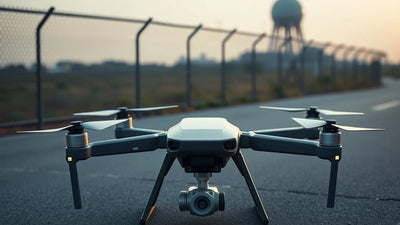
In a public notice dated May 3, 2026, the FCC’s Office of Engineering and Technology issued a limited waiver that permits “the transmission of firmware update data to existing authorized equipment manufactured by DJI and Autel Robotics that is already in the US market.” The waiver explicitly covers over-the-air and tethered firmware deliveries, including security patches, flight controller updates, and geofencing database revisions. The authorization expires at 11:59 PM Eastern on December 31, 2028—essentially through the end of 2028.
Importantly, the waiver does not authorize the import, sale, or new authorization of new DJI or Autel equipment. Any drone not already sold to an end user as of the waiver’s effective date cannot be legally marketed or registered for first use. In other words, the installed base gets support until 2029, but the aftermarket for new DJI/Autel drones inside the US is now effectively closed unless the FCC later extends that exemption—or Congress changes the law.
This nuance is critical for operators and investors. Users with existing DJI and Autel fleets can continue to fly, update, and maintain their aircraft with full legal cover for the next 30 months. But if they intend to expand their fleet, they will have to look at alternative manufacturers or wait for possible policy shifts.
Cybersecurity and Operational Impact
Without access to firmware updates, drones quickly become insecure. Manufacturers push patches to address vulnerabilities in the flight controller, GNSS receivers, camera interfaces, and cloud connectivity. The DJI Matrice 350 RTK, for example, received 23 firmware updates between 2023 and 2025, including critical security fixes for its remote ID module and encrypted payload API. Autel’s EVO Max 4T similarly relies on regular tunings to maintain RTK positioning accuracy and obstacle avoidance performance.
The FCC’s decision eliminates the immediate cybersecurity headache. According to a brief published by the Center for Drone Cybersecurity earlier this week, “Without this waiver, hundreds of thousands of drones would have been stuck with known vulnerabilities, potentially allowing attackers to hijack flight paths or extract sensitive data from onboard sensors.” The waiver thus serves a dual purpose: it preserves economic value in the existing fleet and protects the broader critical infrastructure that relies on drone data.
On the operational side, the waiver also preserves compatibility with FAA systems. Many DJI and Autel drones are Remote ID compliant out of the box, and their firmware updates include updates to Remote ID broadcast protocols, airspace integration APIs, and even battery safety parameters. The Reboot Hub industry tracker shows that drone operators in pipeline inspection, electric utility monitoring, and public safety have already issued statements of relief—though privately, several expressed concern about the finite timeline.
Market Dynamics and the Competitive Landscape
The ruling sends powerful signals to US drone manufacturers. Skydio, Teal, and Parrot have invested heavily in capturing market share from DJI, particularly in defense and critical infrastructure segments. Yet with firmware support now assured for existing DJI/Autel drones until 2029, many operator replacement cycles may be delayed. “Why would we spend $25,000 to replace a Matrice that still works perfectly when we know it will be supported for three more years?” one Midwest utility drone program manager told Reboot Hub on condition of anonymity.
That calculus could blunt the growth momentum of DJI’s competitors. However, it also gives those companies a clear window to refine their offerings. The US Department of Defense has already mandated the phasing out of DJI equipment by 2027 under the NDAA, and the new FCC waiver does not change that timeline. For Skydio, the waiver might actually help—by keeping the installed base operational, it reduces immediate pressure for emergency replacements and allows military and federal clients to plan more deliberative transitions.
Meanwhile, Autel Robotics—which has aggressively marketed itself as a less restricted alternative to DJI—faces its own paradox. The waiver treats Autel identically to DJI, erasing the “safe choice” differentiator. Autel’s US market share, which had grown from 6% in 2023 to an estimated 14% in early 2026, may now plateau as the differentiation evaporates.
What Happens After 2029? The Unanswered Question
The 30-month horizon invites both relief and strategic anxiety. The FCC’s waiver explicitly states that it does not prejudge any future extension or modification of the Covered List rules. Congress could amend the Secure Networks Act to exclude drones or impose alternative certification schemes. Alternatively, the Biden administration—or its successor—could push for a more permanent exemption for firmware on security-approved drones.
But there is also the possibility that 2029 becomes a hard deadline. Operators should treat this grace period not as a return to normalcy but as a transition window. Reboot Hub recommends that any organization operating DJI or Autel drones should now have a documented migration roadmap. That includes identifying critical mission profiles that cannot easily switch brands, establishing relationships with alternative manufacturers, and budgeting for eventual fleet turnover. Firms that delay may find themselves scrambling in late 2028 when update servers suddenly go dark.
The decision also places a spotlight on the broader US drone supply chain policy. The White House’s Drone Innovation Initiative, announced in 2025, has so far produced only modest grants for domestic R&D. The 2029 cutoff could serve as a forcing function to accelerate domestic production, or it could trigger a massive secondhand market re-export scenario if operators sell their drones abroad.
Industry Voices and Reboot Hub’s Take
Commercial drone owners across multiple verticals have cautiously welcomed the announcement. The Agricultural Drone Alliance, which represents more than 400 spraying operators, praised the FCC for “recognizing the critical role of firmware updates in sustaining the safety and data integrity of existing equipment.” The Association for Unmanned Vehicle Systems International (AUVSI) issued a statement urging the FCC to “continue working with industry to find a long-term framework that does not penalize the millions of safe drone flights conducted every year.”
At Reboot Hub, we see this as a classic regulatory compromise—short-term pragmatism layered over long-term uncertainty. The FCC is correct that abruptly cutting off firmware updates would have caused chaos. But by setting a 2029 expiration, the agency has essentially created a deadline for the entire drone industry to either prove it can operate without DJI/Autel or force a policy rethink.
For now, the immediate crisis is averted. Drone operators can breathe easier, update their firmware, and keep their aircraft in the sky. But the countdown has begun. Over the next 30 months, the industry must decide whether to transform itself or risk a second—and possibly final—countdown.
Frequently Asked Questions
What does the FCC waiver mean for current DJI or Autel drone owners?
If you own a DJI or Autel drone that was legally purchased and operated in the US before May 2026, you can continue to receive and install firmware updates through December 31, 2028. This includes security patches, flight performance improvements, and geofencing updates. The waiver does not allow the sale of new units, so you cannot buy new DJI or Autel drones from retailers after the waiver’s effective date unless the FCC extends it.
Will the waivers be extended past 2029?
There is no guarantee. The FCC explicitly states that this is a limited waiver and does not set a precedent. However, given the industry’s dependence on these platforms and the difficulty of transitioning entire fleets within 30 months, a strong lobbying effort is likely. Congress could also intervene with legislation. We recommend planning for the 2029 deadline as real.
Can I still buy a new DJI drone today?
Sales of new DJI and Autel drones for use in the US are not explicitly banned by the waiver itself—the new-equipment sales ban stems from the original Covered List ruling. However, most major retailers have voluntarily stopped stocking new DJI and Autel drones since early 2026. Some smaller resellers may still have inventory, but buyers assume legal risk. If you purchase a new unit now, be aware that it may not be eligible for warranty support and you cannot register it as a new user under the waiver.
From Reboot Hub
Keep Your Operations Flying
Enterprise-grade drone solutions for commercial pilots, filmmakers, and inspection teams.
Pre-owned Fleet
Fully inspected DJI drones with 6-month warranty. Save up to 40%.
Browse Inventory ->