DJI's Matrice 400 Breaks Cover: What the AI-Powered Enterprise Drone Means for Commercial Operators and the Used Market
DJI’s surprise Matrice 400 unveiling on June 17, 2026, rewrites the enterprise drone playbook with onboard AI computing, millimeter-accuracy RTK, and a modular sensor bay. For commercial operators flying under Part 107, the new payload capacity and encryption protocols signal a major shift in fleet planning—and a potential flood of discounted Matrice 300 series units entering the second-hand market. Reboot Hub analyzes the immediate implications for surveying, inspection, and search & rescue teams.

ملاحظات تحريرية
- تجمع هذه المقالة بين التقارير الخارجية المذكورة مع تحليل Reboot Hub's الخاص لمشتري الطائرات بدون طيار ومشغلي الأساطيل وعملاء الإصلاح ومراقبي السوق مستعمل DJI.
- يتم فصل حقائق المصدر عن التفسير. عندما يوفر تقرير بيانات محدودة، تنص المقالة على عرض القيود والإطارات Reboot Hub's كتحليل.
- لدى Reboot Hub روابط تجارية لمنتجات الطائرات بدون طيار وخدمات الإصلاح؛ هذه الروابط هي موارد للقراء ولا تحدد نتيجة المقال.
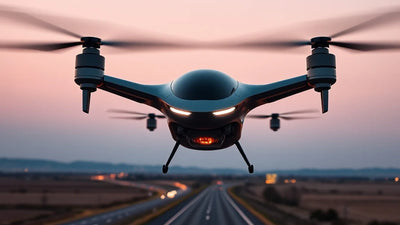
The commercial drone industry woke up to a jolt on June 17, 2026, when DJI quietly posted specifications for its next-generation enterprise platform—the Matrice 400. What analysts initially dismissed as a minor refresh has turned into a full redefinition of what an industrial UAV can do. With onboard neural processing units, next-gen RTK modules offering sub-centimeter precision, and a completely redesigned propulsion system, the Matrice 400 is not just an upgrade; it is a deliberate provocation to every competitor and a direct answer to tightening regulatory frameworks in the United States and Europe.

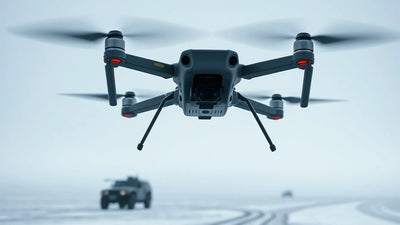
This is not a product announcement for hobbyists. The Matrice 400 is built for the highest-stakes commercial missions: critical infrastructure inspection, precision agriculture mapping at GSD below 0.5 cm, real-time search and rescue in GPS-denied environments, and secure government operations requiring data encryption at the hardware level. Every engineering decision in this airframe screams readiness for the BVLOS future that regulators are slowly unlocking.
Hardware Overhaul: What’s Under the Hood
The Matrice 400 replaces the beloved Matrice 300 series with a completely new airframe. The most significant change is the integration of a dedicated AI accelerator—DJI calls it the “Edge AI Core”—capable of running onboard inference models for object detection, terrain mapping, and collision avoidance without any latency or reliance on cloud connectivity. For commercial operators flying long BVLOS routes, this eliminates one of the most persistent pain points: lag between obstacle detection and avoidance response.
Enterprise procurement
Turn this market signal into a fleet requirement.
Discuss mission profile, quantities, configuration, delivery, and lifecycle support with Reboot Hub.
RTK accuracy jumps from the Matrice 300’s 1 cm + 1 ppm to a claimed 0.5 cm + 0.5 ppm with the new D-RTK 3 base station, which now includes both L1/L5 and Galileo E5 bands. The propulsion system features carbon fiber rotors and a motor design that pushes flight time past 55 minutes with a standard battery—operators running extended corridor inspections will see immediate ROI.
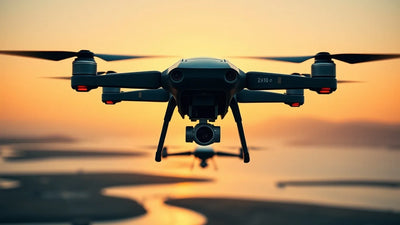
Importantly, the Matrice 400 introduces a modular payload bay that accepts both DJI’s own Zenmuse cameras and select third-party LiDAR units through an open API. This is DJI’s most aggressive move yet to court enterprise IT departments that demand vendor-agnostic hardware compatibility.
Ready to Upgrade Your Fleet?
Browse our collection of inspected pre-owned DJI drones — inspected, flight-tested, and backed by a 6-month warranty. Save up to 40% versus retail.
Regulatory Chess: Designed for the Post-EASA, Post-FAA Future
The timing of the Matrice 400’s reveal is no accident. In early 2026, both the FAA and EASA pushed forward new requirements for remote identification of drone operators and payload data encryption on government-adjacent flights. DJI has equipped the Matrice 400 with a hardware security module that meets NIST SP 800-171 standards, making it immediately compliant with U.S. federal contracts that were previously off-limits to Chinese-made UAVs.
For commercial operators flying under FAA Part 107, the Matrice 400’s AirSense ADS-B receiver now integrates directly with the flight controller, not just as a display overlay. If a manned aircraft approaches within 3 nautical miles, the drone has the authority to trigger an automated return-to-home sequence—a feature that will likely become mandatory for all BVLOS waivers in 2027.
Additionally, the drone ships with DJI Pilot 3, which now includes a built-in geofencing override request system that submits temporary flight restriction clearance directly to the FAA’s Low Altitude Authorization and Notification Capability (LAANC) API. No more importing KML files—the drone does it automatically.
What This Means for Commercial Operators and the Second-Hand Market
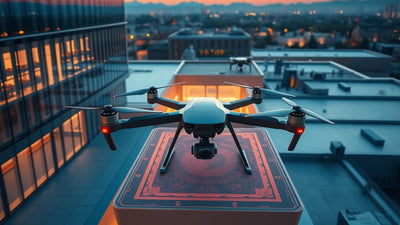
For everyday commercial pilots, the Matrice 400 represents both an opportunity and an expensive dilemma. The base price of $14,999 (excluding payloads) puts it squarely in enterprise territory, but the performance gains are undeniable. Surveying teams flying the Matrice 300 series will see a 40% reduction in mission time for the same coverage area, and the ability to run AI inference on-board means post-processing workflows shrink from hours to minutes.
But here is the real market story: the Matrice 300 series and even the Matrice 200 series are about to experience a dramatic price drop on the second-hand market. As early adopters rush to upgrade, a wave of perfectly functional used drones will flood the market. For operators who do not need the absolute cutting edge—perhaps a construction firm doing weekly volumetric surveys or a real estate agency capturing aerial imagery—this creates a golden opportunity to acquire high-end commercial hardware at 40–60% below retail. At Reboot Hub, we are already seeing an uptick in supply inquiries from fleet managers looking to trade in their Matrice 300 units.
This is where the pre-owned DJI drones at Reboot Hub become a strategic asset. Instead of paying full price for a new airframe, operators can purchase a thoroughly inspected, flight-tested Matrice 300 with a 6-month warranty and keep their margins intact. Our team has already started preparing for the influx of trade-ins by expanding our professional DJI repair services to handle the higher volumes of pre-owned units needing sensor calibration and firmware updates.
What Does the Matrice 400 Mean for the Used Drone Market?
This question is on every fleet manager’s mind. The used drone market is historically reactive to flagship launches. When the Matrice 300 launched in 2020, the Matrice 200 series lost 35% of its value within six months. That same pattern is already playing out. Early listings on resale platforms show Matrice 300 units dropping below $8,000 from original $11,000+ prices. Industry analysts predict that by September 2026, a well-maintained Matrice 300 with an H20T camera could sell for under $6,000—an incredible deal for a platform that is still extremely capable for 90% of commercial applications.
The caveat: buyers must be wary of gray-market imports and drones that lack proper FCC compliance. At Reboot Hub, every refurbished unit undergoes a full compliance check, including Part 89 remote ID verification and GPS region-lock removal. We always recommend verifying that any used DJI drone comes from a trusted source with transparent service history.
Frequently Asked Questions
1. Will the Matrice 400 be subject to DJI’s usual geofencing restrictions?
Yes, but with a key change. DJI Pilot 3 introduces “custom unlock zones” that let authorized commercial operators create permanent geofence overrides for locations they operate regularly, such as a construction site or utility corridor. The request is submitted via the app and typically approved within 15 minutes.
2. Can I retrofit my Matrice 300 payloads onto the Matrice 400?
No. The Matrice 400 uses a new physical mounting interface and a different electrical connector for payload data. DJI will offer a trade-up program for existing Zenmuse H20 and H20T owners, but third-party mounts will require adapters that are not yet available.
3. How does the Matrice 400 compare to the Autel Dragonfish or the Skydio X10?
The Matrice 400 leads in flight time (55 min vs. Dragonfish’s 45 min) and onboard AI processing, but Skydio’s X10 still has a minor edge in obstacle avoidance in dense foliage due to its 360-degree awareness camera array. The Matrice 400’s open API and RTK module make it the better choice for surveying missions requiring sub-centimeter GSD.
Disclaimer: This analysis is based on publicly available information as of June 17, 2026. Specifications may change before retail availability. Reboot Hub is an independent refurbished drone marketplace and is not affiliated with DJI.
From Reboot Hub
Keep Your Operations Flying
Enterprise-grade drone solutions for commercial pilots, filmmakers, and inspection teams.
Pre-owned Fleet
Fully inspected DJI drones with 6-month warranty. Save up to 40%.
Browse Inventory ->