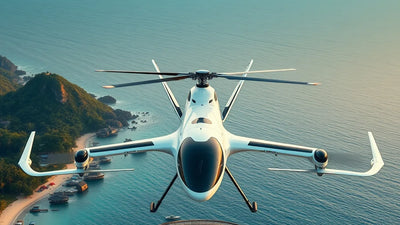
Armored Eyes in the Sky: AVNL Seeks Partners for Tank-Mounted Drone Systems
India's Armoured Vehicles Nigam Limited (AVNL) has launched a formal solicitation for industry partners to develop a specialized drone system for main battle tanks, signaling a major shift in armored reconnaissance doctrine. This program demands ruggedized UAVs capable of vertical takeoff, high-speed pursuit, and seamless integration with tank fire control systems. For commercial operators and defense contractors, this represents a multi-million dollar opportunity in military-grade drone swarms and sensor fusion—but also signals a tightening market for specialized, high-endurance UAVs. Immediate action is required to understand the technical specifications and supply chain implications for the global defense drone sector.

ملاحظات تحريرية
- تجمع هذه المقالة بين التقارير الخارجية المذكورة مع تحليل Reboot Hub's الخاص لمشتري الطائرات بدون طيار ومشغلي الأساطيل وعملاء الإصلاح ومراقبي السوق مستعمل DJI.
- يتم فصل حقائق المصدر عن التفسير. عندما يوفر تقرير بيانات محدودة، تنص المقالة على عرض القيود والإطارات Reboot Hub's كتحليل.
- لدى Reboot Hub روابط تجارية لمنتجات الطائرات بدون طيار وخدمات الإصلاح؛ هذه الروابط هي موارد للقراء ولا تحدد نتيجة المقال.
In a move that signals a fundamental shift in armored warfare tactics, Armoured Vehicles Nigam Limited (AVNL) has officially issued a call for industry partners to develop an integrated drone system for main battle tanks (MBTs). The announcement, published on May 30, 2026, by India Sentinels, outlines a requirement for a ruggedized, high-performance UAV that can launch directly from a tank platform, providing real-time aerial reconnaissance, target acquisition, and battle damage assessment. This is not a simple add-on; it is a deep integration of unmanned aerial systems into the core combat loop of India's armored corps.
For analysts tracking the global defense drone market, this development is a watershed moment. The AVNL program demands a level of engineering resilience-shock resistance, electromagnetic compatibility, and secure data links-that far exceeds commercial standards. The move also creates immediate opportunities and challenges for drone manufacturers, subsystem suppliers, and even the second-hand market for high-endurance UAVs. At Reboot Hub, we are monitoring how this demand for militarized hardware will ripple through the broader ecosystem of pre-owned DJI drones and professional-grade platforms.
The AVNL Requirement: A Technical Deep Dive
While the full Request for Proposal (RFP) details remain confidential, the public announcement reveals several critical technical parameters. The drone system must be capable of vertical takeoff and landing (VTOL) from a moving or stationary tank platform, operate in extreme temperatures (from the deserts of Rajasthan to the high altitudes of the Siachen Glacier), and provide a real-time video feed directly to the tank commander's display. The system must also be resistant to electronic warfare (EW) countermeasures, a growing threat on modern battlefields.
Enterprise procurement
Turn this market signal into a fleet requirement.
Discuss mission profile, quantities, configuration, delivery, and lifecycle support with Reboot Hub.
This is a significant leap from current battlefield reconnaissance methods. Traditionally, tanks rely on ground-level optics, scout vehicles, or dismounted infantry for situational awareness. A tank-mounted drone offers a persistent "tower view," allowing the crew to see over ridges, around buildings, and into defilade positions without exposing themselves to enemy fire. The integration requirement is particularly challenging: the drone's data must be fused with the tank's fire control system (FCS) to allow for indirect fire missions and rapid target engagement.
Ready to Upgrade Your Fleet?
Browse our collection of inspected pre-owned DJI drones - inspected, flight-tested, and backed by a 6-month warranty. Save up to 40% versus retail.
What This Means for the Drone Industry and Second-Hand Market
The AVNL program is a powerful signal to the global drone industry. It validates the concept of "organic ISR" (Intelligence, Surveillance, Reconnaissance) for armored units, a trend that is likely to be adopted by other militaries worldwide, including the US Army's own efforts with the Future Tactical Unmanned Aircraft System (FTUAS). For commercial drone operators and the second-hand market, the implications are nuanced. The demand for military-grade hardware does not directly translate to a boom for consumer drones. However, it does create a secondary market for high-endurance, heavy-lift platforms that can be retrofitted or used as testbeds.
Specifically, platforms like the DJI Matrice 350 RTK or the Autel Robotics Dragonfish, which offer modular payload bays and robust flight controllers, could see increased demand from defense contractors and research institutions. This, in turn, could tighten supply in the used drone market, driving up prices for well-maintained, high-spec units. For the everyday commercial pilot, this means that the value of their professional-grade equipment may hold or even appreciate, especially if it features RTK modules, thermal cameras, or secure data transmission capabilities. At Reboot Hub, we are already seeing increased inquiries from defense-adjacent firms looking for inspected pre-owned hardware that can be used for prototyping and concept development.
Strategic Implications for India's Defense Ecosystem
AVNL's initiative is part of a broader push by the Indian Ministry of Defence (MoD) toward "Atmanirbhar Bharat" (Self-Reliant India) in defense manufacturing. By seeking domestic industry partners, the program aims to reduce reliance on foreign OEMs and build indigenous capability in drone avionics, propulsion, and sensor integration. This creates a massive opportunity for Indian startups and established aerospace firms like ideaForge, Adani Defence, and Tata Advanced Systems.
The program also raises important questions about interoperability and doctrine. How will tank commanders be trained to operate drones while managing a traditional armored crew? What are the protocols for data sharing between the tank and higher echelons? These are not just technical challenges; they are doctrinal ones that will shape the Indian Army's combat effectiveness for the next two decades. The success of this program could lead to a cascade of similar requirements for other armored vehicles, including infantry fighting vehicles (IFVs) and self-propelled artillery.
What Does the AVNL Program Mean for Drone Pilots and Contractors?
Q: Will this create new jobs for commercial drone pilots?
Yes, but indirectly. The development phase will require test pilots and field engineers with experience in BVLOS operations and sensor integration. Once fielded, the Indian Army will need a new cadre of "drone operators" embedded within armored units. This could lead to specialized training programs and certifications.
Q: How does this affect the availability of military-grade drone components?
Expect increased demand for ruggedized gimbals, EO/IR sensors, and secure datalinks. Components that meet MIL-STD-810G standards for shock and vibration will become highly sought after. This may create supply chain bottlenecks, making it harder for commercial operators to source premium parts for their own projects.
Q: Is there a role for refurbished drones in this program?
While the final operational system will be built from scratch, the prototyping and development phase often uses commercial off-the-shelf (COTS) hardware. This is where the pre-owned DJI drones market can play a crucial role. Companies can acquire high-quality, lower-cost platforms for algorithm development, payload integration testing, and flight control software validation without the multi-million dollar price tag of a new military system.
The Broader Trend: Armored Forces Embrace the Drone Age
The AVNL announcement is not an isolated event. Globally, militaries are racing to equip their armored vehicles with organic drone capability. The US Army has experimented with the "Air Launched Effects" (ALE) program, while Russia has deployed small quadcopters from tanks in Ukraine. What sets the AVNL program apart is its explicit focus on deep integration with the tank's fire control system, moving beyond simple reconnaissance to direct combat support.
This trend has profound implications for the future of warfare. A tank platoon equipped with organic drones can see further, react faster, and engage targets with greater precision than a traditional unit. It also changes the calculus of threat detection: enemy forces can no longer assume they are hidden simply because they are behind a hill or a building. The "drone eye" from the tank is always watching.
For the drone industry, this represents a validation of the technology's maturity. The same sensors and flight controllers that power commercial mapping missions and infrastructure inspections are now being hardened for the most demanding environment imaginable: a tank battle. This convergence of commercial and military technology is driving rapid innovation, with benefits flowing both ways. Military-grade reliability improvements often trickle down to commercial products, and the cost efficiencies of the commercial market make military procurement more affordable.
Conclusion: A Call to Action for the Drone Ecosystem
The AVNL program is a landmark opportunity for the Indian drone industry and a bellwether for global defense trends. For manufacturers, it is a chance to secure a long-term, high-value contract. For operators and service providers, it is a signal to invest in skills and equipment that align with military needs. And for the second-hand market, it underscores the enduring value of high-quality, well-maintained hardware.
As the program progresses, Reboot Hub will continue to provide analysis on how these developments affect the commercial and refurbished drone landscape. For those looking to upgrade their fleet or acquire cost-effective platforms for R&D, we recommend exploring our selection of pre-owned DJI drones. Additionally, if your current equipment requires maintenance or upgrades to meet new operational demands, our professional DJI repair services can ensure your fleet is mission-ready. The future of armored warfare has a drone in it, and the time to prepare is now.
Frequently Asked Questions (FAQ)
What is the AVNL tank drone program?
Armoured Vehicles Nigam Limited (AVNL) is seeking industry partners to develop a drone system that can be mounted on and operated from main battle tanks. The system must provide real-time reconnaissance, target acquisition, and be integrated with the tank's fire control system.
How will this affect the commercial drone market?
The program increases demand for ruggedized, high-endurance drone components and platforms. This may tighten supply and increase prices for professional-grade equipment like the DJI Matrice series. It also creates opportunities for companies to provide refurbished hardware for prototyping and development.
Can I buy a tank-mounted drone for my business?
No. This is a specific military program for the Indian Army. The technology is not available for commercial purchase. However, the underlying sensors and flight controllers are similar to those used in commercial drones, which are available through markets like Reboot Hub.
--
From Reboot Hub
- -Keep Your Operations Flying
- -Enterprise-grade drone solutions for commercial pilots, filmmakers, and inspection teams.
- -Pre-owned Fleet
- - - -Fully inspected DJI drones with 6-month warranty. Save up to 40%.
- - - - Browse Inventory -> - - -Expert Repair
- - - -Professional diagnostics with genuine OEM parts. Same-day estimates.
- - - - Book a Repair -> - - -Spare Parts
- - - -Batteries, propellers, gimbals -- premium OEM components, fast shipping.
- - - - Shop Parts -> - - -