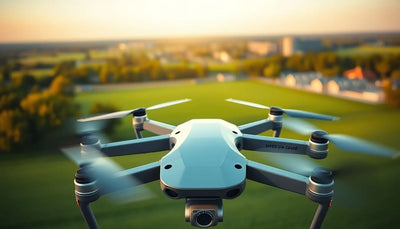
Joby Stock Falls Despite Landmark Autonomous Flight Across America
Joby Aviation completed a historic autonomous flight across the United States, yet its stock declined and the CEO sold shares. The disconnect between technical progress and market reaction offers a useful signal for commercial drone operators and fleet buyers watching the eVTOL sector.

Quick answer
Joby Aviation completed a landmark autonomous flight across the United States, but its stock fell and the CEO sold shares, according to Yahoo Finance reporting.
- Joby completed a historic autonomous U.S. flight milestone
- The stock declined despite the technical achievement
- The CEO sold shares during the same period
- The disconnect highlights market caution around eVTOL commercialization timelines
Evidence: Source material · Joby Aviation investor relations
Purchase timing
Use market shifts to buy, sell, repair, or wait with more context.
Compare trade-in timing, pre-owned DJI pricing, and repair economics before committing new capital.

Verified facts
What the available evidence confirms
| Event | Market Reaction |
|---|---|
| Landmark autonomous flight across the U.S. | Stock fell |
| CEO share sale reported | Investor caution persisted |
Joby Aviation reached a technical milestone that would normally be celebrated across the advanced air mobility sector: a landmark autonomous flight across the United States. According to reporting from Yahoo Finance, the achievement did not translate into positive market momentum. The stock fell, and attention shifted to a separate disclosure that the company's chief executive sold shares during the same period.
For commercial drone operators, repair customers, and fleet planners, the episode is a reminder that technical progress and market confidence do not always move together. The eVTOL space remains capital-intensive and heavily dependent on certification timelines, manufacturing scale, and sustained investor patience. A single flight milestone, however historic, is only one input into a much longer commercialization path.
What the source actually reported
Yahoo Finance reported that Joby Aviation completed what it described as a landmark autonomous flight across America. The flight represented a notable engineering achievement for the company, which has been working to position itself as a leader in electric vertical takeoff and landing aircraft. Yet the stock declined following the news, and the report noted that the CEO sold shares, adding another layer of scrutiny for investors trying to read the company's trajectory.
The source did not provide detailed operational specifications, flight telemetry, or certification updates tied to the flight. This matters because commercial readers should avoid overinterpreting the milestone. The report establishes that the flight happened and that the market response was negative, but it does not confirm new regulatory approvals, customer commitments, or manufacturing progress. Reboot Hub analysis suggests that investors may be weighing the long gap between demonstration flights and revenue-generating operations more heavily than any single technical event.
Why market reaction diverged from technical progress
In mature hardware sectors, a successful demonstration flight often supports a positive narrative. In the eVTOL market, however, investors have become more selective. The sector has absorbed years of capital without yet reaching consistent commercial passenger or cargo operations. A flight across the United States is a meaningful proof point, but it does not by itself resolve questions about certification, production costs, airspace integration, or demand.
The reported CEO share sale adds a psychological weight that can overshadow engineering news. Even when such sales are planned or routine, they tend to amplify investor caution. For commercial drone buyers and fleet operators, the takeaway is not that Joby's technology failed. It is that the market is now pricing eVTOL companies on execution timelines and capital discipline rather than on demonstration events alone.
What this means for drone owners and the market
The advanced air mobility sector influences the broader commercial drone market in several indirect ways. Component suppliers, battery manufacturers, and avionics providers often serve both eVTOL programs and smaller commercial drone fleets. When investor sentiment cools toward eVTOL companies, it can affect the pace of supplier investment and the availability of certain high-performance components. Operators who depend on specialized batteries, motors, or flight controllers should watch whether eVTOL capital constraints ripple into the supply chain.
For pre-owned DJI drone owners and repair customers, the immediate impact is limited but not zero. The commercial drone market remains dominated by smaller, proven platforms that do not depend on eVTOL certification. However, sustained pressure on capital-intensive air mobility programs can shift engineering talent and supplier capacity toward more near-term revenue opportunities, including inspection, mapping, and delivery drones. Reboot Hub analysis suggests that buyers evaluating long-term fleet investments should treat eVTOL milestones as sector signals rather than as direct procurement triggers. Readers tracking the broader repair support market can monitor the Drone Wiki for context on how platform changes affect parts availability and service planning. For owners evaluating service and lifecycle risk, Drone Wiki explains the relevant repair, parts, resale, or operational path.
One practical step for fleet managers is to separate demonstration news from operational readiness. A historic flight does not mean a platform is ready for commercial deployment, certified for routine operations, or supported by a mature service network. Buyers should continue to prioritize platforms with established repair channels, available spare parts, and predictable maintenance costs. The eVTOL story is worth following, but it should not distract from the day-to-day realities of operating and maintaining proven commercial drones.
The longer view for commercial aviation and drone operators
The Joby episode highlights a broader truth about emerging aviation technology: public milestones arrive long before commercial maturity. Autonomous flight across the United States is an impressive engineering statement, but the path to regular operations involves regulatory approval, manufacturing scale, pilot training frameworks, and maintenance infrastructure. Each of those steps carries cost and schedule risk.
For commercial drone operators, the lesson is familiar. New platforms and capabilities generate excitement, but fleet decisions should be grounded in serviceability, parts availability, and proven reliability. The pre-owned DJI market remains attractive precisely because it offers mature hardware with established repair ecosystems. As the eVTOL sector continues to develop, operators should watch for signals of supply chain stress or consolidation that could affect component pricing across the broader drone industry.
FAQ
Frequently asked questions
Did Joby's autonomous flight fail?
No. According to Yahoo Finance, the flight was a landmark technical achievement. The stock decline and reported CEO share sale reflect market sentiment, not a failure of the flight itself.
Why did Joby stock fall after a positive milestone?
The source reported that the stock fell despite the flight milestone and noted that the CEO sold shares. Investors may be focused on certification timelines, commercialization costs, and the gap between demonstrations and revenue.
Should commercial drone buyers change their plans based on this news?
Not directly. The eVTOL sector is distinct from the proven commercial drone platforms most operators use daily. Fleet buyers should continue to prioritize mature hardware, available spare parts, and reliable repair support rather than reacting to demonstration flights.
Which sources support this update?
The visible evidence links identify Source material and Joby Aviation investor relations; each source is used only for the claim it directly supports.
What remains subject to change?
Retail pricing, availability, product bundles and regulatory timelines can change. Readers should verify the latest terms with the named retailer, manufacturer or regulator before acting.
How should buyers or operators use this analysis?
Use the verified facts as a starting point, then compare mission fit, lifecycle support, maintenance needs and current procurement terms before making a purchase or fleet decision.
This article is market commentary for drone operators and buyers, not investment advice. Reboot Hub does not recommend securities transactions.
參考來源
- Source material - primary source
- Joby Aviation investor relations - company investor information
Reboot Hub 編輯部為無人機所有者提供購買、維修、轉售及營運分析。若發現錯誤,請根據我們的編輯政策聯絡我們進行更正審查。
本文為針對無人機營運商與買家的市場評論,不構成投資建議。Reboot Hub 不提供財務建議或推薦證券交易。