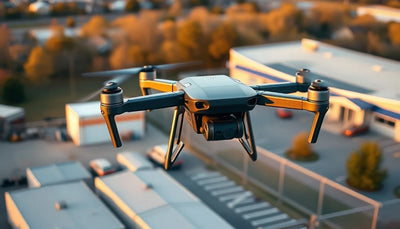
EHang Signs Low-Altitude Infrastructure Pact with CSCEC Sixth Engineering Bureau
EHang and CSCEC Sixth Engineering Bureau have signed a strategic cooperation framework on low-altitude infrastructure, with a Hainan Lingao corridor project already underway. The deal signals how advanced air mobility companies are aligning with state-owned construction capacity to build operational ground networks.

Quick answer
EHang announced a strategic cooperation framework agreement of intent with CSCEC Sixth Engineering Bureau focused on low-altitude infrastructure development and operation, with a Hainan Lingao corridor project already underway.
- EHang is an advanced air mobility technology platform company listed on Nasdaq under ticker EH.
- CSCEC Sixth Engineering Bureau is described as a top-tier state-owned infrastructure giant in China.
- The partnership intends to focus on low-altitude infrastructure development and operation.
- A Hainan Lingao corridor project is reported as underway.
- The announcement was distributed via GlobeNewswire on August 20, 2026.
Evidence: Source material
Purchase timing
Use market shifts to buy, sell, repair, or wait with more context.
Compare trade-in timing, pre-owned DJI pricing, and repair economics before committing new capital.

Verified facts
What the available evidence confirms
| Entity | Role | Reported Focus |
|---|---|---|
| EHang Holdings Limited | Advanced air mobility technology platform company, Nasdaq: EH | Low-altitude infrastructure development and operation |
| CSCEC Sixth Engineering Bureau | Top-tier state-owned infrastructure giant in China | Strategic cooperation framework agreement of intent |
| Hainan Lingao corridor project | Regional infrastructure initiative | Underway, per source report |
EHang Holdings Limited, the Nasdaq-listed advanced air mobility company trading under ticker EH, has announced a strategic cooperation framework agreement of intent with China Construction Sixth Engineering Bureau Corp., Ltd., a top-tier state-owned infrastructure builder in China. The announcement, distributed through GlobeNewswire on August 20, 2026 and reported by Yahoo Finance, frames the partnership around low-altitude infrastructure development and operation.
The report also identifies a concrete early project: a low-altitude corridor initiative in Hainan Lingao that is already underway. For commercial drone operators and fleet buyers watching advanced air mobility, the development matters less for any single aircraft and more for what it says about how ground infrastructure, vertiport-style corridors, and operational airspace access are being assembled in China.
What the reported agreement actually covers
According to the source report, the two parties signed a framework agreement of intent rather than a finalized commercial contract. The stated focus is low-altitude infrastructure development and operation. EHang brings its advanced air mobility technology platform position, while CSCEC Sixth Engineering Bureau contributes large-scale state-owned construction and infrastructure delivery capacity.
The Hainan Lingao corridor project is the only named initiative in the source data. Hainan has been a recurring testbed for low-altitude economic activity in China, and a corridor project there suggests physical route planning, ground nodes, and operational support structures rather than purely software or certification work. Reboot Hub analysis: this type of pairing, an air mobility company with a construction engineering bureau, signals that infrastructure buildout is becoming a procurement category in its own right, separate from aircraft purchases.
Why infrastructure partnerships are becoming the real bottleneck
Advanced air mobility has spent years focused on aircraft certification, battery performance, and autonomous flight control. The source report points toward a different constraint: physical ground infrastructure. Low-altitude corridors require surveyed routes, landing and charging nodes, maintenance access, weather monitoring, and integration with local airspace management. Those are civil engineering problems as much as aviation problems.
For commercial operators, the implication is that fleet planning cannot stop at aircraft selection. A drone or eVTOL unit is only as useful as the corridor it can legally and safely operate within. When a state-owned infrastructure bureau enters the picture, the pace of corridor construction, permitting alignment, and operational readiness may accelerate in ways that individual operators cannot replicate on their own.
This also matters for procurement timing. Buyers who wait until aircraft are certified may find that corridor access, ground support, and maintenance infrastructure are already allocated to early partners. The source data does not confirm any allocation terms, but the strategic alignment itself is a market signal worth tracking.
What this means for drone owners and the market
The immediate commercial impact on conventional drone owners, especially those flying DJI hardware for inspection, mapping, or agricultural work, is indirect but real. Low-altitude infrastructure investment tends to formalize airspace, which can create both new operational opportunities and new compliance expectations. Operators who currently fly in loosely managed environments should watch whether corridor projects like Hainan Lingao become templates for more structured route access elsewhere.
Reboot Hub analysis: For pre-owned DJI drone buyers and repair customers, the relevant question is whether infrastructure buildout shifts demand toward newer airframes with better integration capabilities, or whether it extends the useful life of existing units by creating more defined operational zones. Reboot Hub analysis leans toward the former: structured corridors often favor aircraft with predictable performance envelopes, current firmware, and documented maintenance histories. Buyers considering a pre-owned DJI unit should factor in whether their intended operating area is likely to see formalized low-altitude infrastructure in the next two to three years, since that can change resale value and repair economics. For operators and buyers evaluating airframe decisions, the Drone Wiki provides practical reference material on drone models and ownership considerations. For owners evaluating service and lifecycle risk, Drone Wiki explains the relevant repair, parts, resale, or operational path.
Fleet managers should also note the repair and parts angle. As corridor operations scale, uptime requirements tend to tighten. Aircraft that sit grounded waiting for spare parts become more expensive when route slots are structured and time-sensitive. That raises the value of predictable parts supply and professional repair support, even for operators who do not fly passenger-scale eVTOL aircraft.
What to watch next in the low-altitude economy
The source report describes a framework agreement of intent, which means the commercial terms, project scope, and capital commitments are not yet fully defined in the public record. Reboot Hub analysis suggests three watchpoints. First, whether the Hainan Lingao corridor project produces visible ground infrastructure, such as vertiports, charging stations, or route markers, within the next several quarters. Second, whether EHang or CSCEC Sixth Engineering Bureau announce additional corridor projects in other provinces. Third, whether the partnership expands from infrastructure into operations, maintenance, or airspace service provision.
For drone buyers, repair customers, and fleet operators, the practical takeaway is to treat low-altitude infrastructure as a planning variable, not a background trend. Corridor development can shift where commercial drone work is viable, which airframes hold value, and how quickly repair turnaround matters. The Hainan Lingao project is one early data point, but the strategic alignment behind it suggests more will follow.
This article is market commentary for drone operators and buyers, not investment advice. Reboot Hub does not recommend securities transactions.
FAQ
Frequently asked questions
What did EHang and CSCEC Sixth Engineering Bureau announce?
According to the source report, the two companies signed a strategic cooperation framework agreement of intent focused on low-altitude infrastructure development and operation, with a Hainan Lingao corridor project already underway.
Does this announcement involve DJI drones directly?
No. The announcement concerns EHang and CSCEC Sixth Engineering Bureau. However, low-altitude infrastructure development can indirectly affect airspace access, operational planning, and resale demand for conventional commercial drones, including pre-owned DJI units.
What should a commercial drone operator do differently after this news?
Operators should monitor whether structured low-altitude corridors expand beyond Hainan Lingao, since formalized routes can affect where drone work is viable, which airframes retain value, and how quickly repair and parts support become operationally critical.
Which sources support this update?
The visible evidence links identify Source material; each source is used only for the claim it directly supports.
What remains subject to change?
Retail pricing, availability, product bundles and regulatory timelines can change. Readers should verify the latest terms with the named retailer, manufacturer or regulator before acting.
How should buyers or operators use this analysis?
Use the verified facts as a starting point, then compare mission fit, lifecycle support, maintenance needs and current procurement terms before making a purchase or fleet decision.
參考來源
- Yahoo Finance market report - primary source
發佈時尚未取得其他官方文件。
Reboot Hub 編輯部為無人機所有者提供購買、維修、轉售及營運分析。若發現錯誤,請根據我們的編輯政策聯絡我們進行更正審查。
本文為針對無人機營運商與買家的市場評論,不構成投資建議。Reboot Hub 不提供財務建議或推薦證券交易。