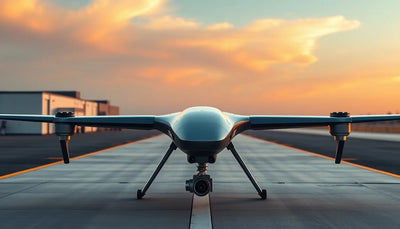
Sichuan Ship Tests Continuous Catapult Launches of Fixed-Wing UAVs
Chinese naval reporting indicates the Sichuan ship has demonstrated continuous catapult takeoffs of fixed-wing unmanned aerial vehicles. The development points to expanding carrier-based UAV roles and may influence how defense buyers and commercial operators think about launch systems, maintenance cycles, and long-term fleet planning.

Quick answer
Chinese naval reporting indicates the Sichuan ship has achieved continuous catapult takeoffs of fixed-wing unmanned aerial vehicles, signaling progress in carrier-based UAV operations.
- The reported test involved repeated catapult launches of fixed-wing UAVs from the Sichuan ship.
- The development suggests expanding roles for unmanned aircraft in naval aviation.
- Commercial operators may see indirect effects in launch system design, maintenance practices, and fleet planning.
- Source-limited reporting means operational details remain unconfirmed outside the primary Chinese report.
Evidence: Defense.gov official source
Fleet readiness
Keep DJI hardware available without overbuying new units.
Use defense and fleet news as a planning signal for repair support, inspected pre-owned aircraft, and replacement timing.

Chinese naval reporting indicates that the Sichuan ship has achieved continuous catapult takeoffs of fixed-wing unmanned aerial vehicles. The development, attributed to Sina Finance as the primary reporting source, has drawn attention from defense analysts and commercial drone observers because it suggests carrier-based UAV operations are moving beyond isolated demonstrations toward repeated, routine launch activity.
The report remains source-limited. No official Chinese navy statement, manufacturer confirmation, or independent verification is available in the source data. That means the specific aircraft type, launch cadence, payload configuration, and operational purpose are not confirmed. What can be said with confidence is that the reported event, if accurate, represents a meaningful step in naval unmanned aviation and carries implications for how defense buyers, fleet operators, and repair providers think about high-tempo UAV operations.
What the reported test involves
According to the Sina Finance report, the Sichuan ship carried out continuous catapult launches of fixed-wing UAVs. The phrase "continuous" is significant. It implies that multiple unmanned aircraft were launched in sequence, rather than a single proof-of-concept flight. For naval operations, continuous launch capability matters because it affects sortie rates, deck handling, and the ability to keep unmanned aircraft aloft for surveillance, relay, or strike support missions.
Fixed-wing UAVs differ from rotary or vertical takeoff systems in important ways. They typically require a catapult or runway assist to reach flying speed, and they generally offer longer endurance and greater range than similarly sized multirotor platforms. A shipboard catapult system that can reliably launch fixed-wing UAVs repeatedly would expand the types of missions a naval vessel can support without committing larger manned aircraft to every task.
Reboot Hub analysis: the reported test should be read as a capability signal rather than a confirmed operational deployment. The source does not specify how many launches occurred, what recovery method was used, or whether the UAVs were armed, unarmed, or configured for intelligence collection. Those gaps matter. They mean the development is best understood as an indicator of direction: Chinese naval aviation appears to be investing in carrier-based unmanned systems with the goal of routine, repeatable launch operations.
Why continuous catapult launch matters
Continuous launch capability changes the operational math for a carrier or large deck vessel. A single UAV launch demonstrates that an aircraft can leave the deck. Repeated launches demonstrate that the launch system, deck crew, and aircraft handling procedures can sustain a workflow. That distinction is similar to the difference between a prototype repair and a repeatable service process: the first proves possibility, the second proves reliability.
For defense procurement planners, the reported test suggests that future naval UAV programs may emphasize launch system durability, aircraft compatibility with high-tempo operations, and maintenance cycles designed around repeated sorties. If a catapult system must cycle dozens of times per day, wear on rails, shuttle components, and aircraft attachment points becomes a planning factor. That has direct parallels in commercial drone fleet management, where high-utilization operations shift attention from unit cost to lifecycle cost, spare parts availability, and inspection intervals.
The source does not provide technical specifications for the catapult system or the UAVs involved. No range figures, launch weights, or endurance numbers are available. Readers should avoid importing specifications from other naval programs or commercial products. The confirmed fact is narrow: Chinese naval reporting describes continuous catapult takeoffs of fixed-wing UAVs from the Sichuan ship. Everything beyond that is interpretation.
What this means for drone owners and the market
The immediate commercial impact on civilian drone buyers is indirect. The Sichuan ship test is a naval defense development, not a consumer product launch. It will not change the price of a pre-owned DJI drone tomorrow, nor will it alter firmware updates or consumer repair timelines. But the underlying trend matters for anyone who operates drones professionally or plans to hold drone assets over multiple years. Defense investment in unmanned systems tends to accelerate component development, battery and power system research, and launch-and-recovery engineering. Those advances eventually filter into adjacent commercial markets, including inspection, logistics, and public safety operations.
For fleet managers, the reported test reinforces a principle that already shapes commercial drone economics: launch and recovery are wear-intensive events. Every takeoff and landing stresses airframes, motors, gimbals, and power systems. A naval program focused on continuous launches is, at its core, a program focused on repeatability under stress. Commercial operators face the same challenge at smaller scale. That is why maintenance history, genuine OEM spare parts, and inspection discipline matter more than sticker price when acquiring used equipment. Buyers evaluating pre-owned DJI drones should ask the same questions a naval maintainer would ask: how many cycles has this airframe seen, what parts have been replaced, and is the service record documented. For operators building a repair or resale strategy, the Drone Wiki provides a reference point for understanding common failure modes and maintenance considerations across DJI platforms. For owners evaluating service and lifecycle risk, Drone Wiki explains the relevant repair, parts, resale, or operational path.
The defense angle also has a supply chain dimension. If Chinese naval UAV programs scale, they may draw on domestic component suppliers for flight controllers, datalinks, and propulsion systems. That could influence component availability and pricing in broader electronics markets, though the source data does not provide evidence of specific supply chain effects. Commercial drone buyers should monitor defense procurement signals as one input among many, not as a direct predictor of consumer pricing.
Limits of the current reporting
The source for this development is a Sina Finance article distributed through Google News. It is a single-source report from a Chinese financial and news outlet. No independent confirmation from the Chinese navy, a defense ministry, an aircraft manufacturer, or an international observer is included in the source data. That places this story in source-limited reporting mode. The central claim should be attributed clearly to the primary reporting source, and readers should treat operational specifics as unconfirmed.
This caution is not a dismissal. Chinese naval reporting has historically provided early signals about defense programs that later received broader confirmation. But the gap between a reported capability and a verified operational capability can be wide. The Sichuan ship itself is a relatively new vessel, and its aviation systems are still being exercised. Whether the reported continuous catapult launches represent a formal test milestone, a training exercise, or an early-stage evaluation is not clear from the available material.
For defense analysts and commercial observers alike, the responsible posture is to track follow-on reporting, watch for official imagery or statements, and avoid drawing conclusions about specific aircraft models or mission profiles. The trend line is real: unmanned systems are becoming more central to naval aviation. The specific event, however, remains thinly sourced.
FAQ
Frequently asked questions
Does this development affect commercial DJI drone prices?
Not directly. The reported test is a naval defense event with no confirmed link to consumer drone pricing, DJI product lines, or commercial repair costs. Indirect effects could emerge over time if defense-driven component demand shifts broader electronics supply chains, but the source data does not support a near-term pricing impact.
Should fleet operators change their maintenance planning because of this news?
No immediate change is warranted. The underlying lesson is that launch and recovery cycles drive wear, which is already a known factor in commercial drone maintenance. Operators should continue to prioritize documented service history, genuine OEM spare parts, and inspection discipline, especially for high-utilization airframes.
What should a buyer or repair customer do differently after reading this?
Treat the report as a defense trend signal rather than a commercial market event. If you are evaluating a pre-owned DJI drone, focus on cycle count, repair documentation, and part provenance. If you manage a fleet, review your launch and recovery procedures for unnecessary stress on airframes and power systems. The Sichuan ship story is a reminder that repeatable operations depend on maintenance quality, not just platform capability.
Which sources support this update?
The visible evidence links identify Defense.gov official source; each source is used only for the claim it directly supports.
What remains subject to change?
Retail pricing, availability, product bundles and regulatory timelines can change. Readers should verify the latest terms with the named retailer, manufacturer or regulator before acting.
How should buyers or operators use this analysis?
Use the verified facts as a starting point, then compare mission fit, lifecycle support, maintenance needs and current procurement terms before making a purchase or fleet decision.
Konsulterade källor
- Source material - primary source
- Defense.gov official source - official government source
Reboot Hub Editorial tillför analys gällande köp, reparation, andrahandsvärde och drift för drönarägare. Om du upptäcker ett fel, kontakta oss för granskning av rättelse via vår redaktionella policy.