Pentagon’s $4B SpaceX Deal: Orbital Aircraft Tracking Will Reshape Drone Airspace
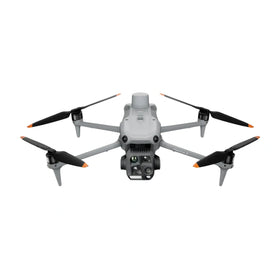
The Pentagon’s $4 billion SpaceX deal to build a satellite network for tracking aircraft from orbit is accelerating faster than expected. This isn’t just about stealth fighters—it’s a direct threat to commercial drone operators flying BVLOS routes, RTK surveying missions, and DJI Matrice 300 RTK fleets under Part 107 waivers. With orbital sensors capable of detecting all airborne objects, including small UAVs, the new system could redefine airspace compliance, impose severe penalties for unauthorized flights, and render traditional AEW&C aircraft obsolete. For the second-hand drone market, this means a surge in demand for ADS-B Out transponders and collision avoidance modules, as operators scramble to remain visible. Reboot Hub analyzes the immediate disruption, commercial opportunities, and operational risks for the global drone industry.

Redaktionella noter
- Denna artikel kombinerar namngiven extern rapportering med Reboot Hub egen analys för drönarköpare, flottoperatörer, reparationskunder och bevakare av begagnade DJI-marknaden.
- Källfakta är åtskilda från tolkning. Om en rapport tillhandahåller begränsad data, anges detta i artikeln och Reboot Hub perspektiv presenteras som en analys.
- Reboot Hub har kommersiella länkar till drönarprodukter och reparationstjänster; dessa länkar är resurser för läsaren och avgör inte artikelns slutsats.
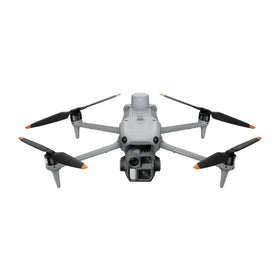
On May 30, 2026, the Pentagon accelerated its long-rumored plan to track every aircraft on Earth from orbit, signing a $4 billion contract with SpaceX. The deal, first reported by The War Zone, aims to deploy a constellation of satellites capable of real-time, global air surveillance. This is not a distant concept-operational prototypes are expected within 18 months. For the commercial drone industry, the implications are seismic. The same technology that can spot a stealth fighter at 40,000 feet can also detect a DJI Mavic 3E flying a mapping mission over a construction site.
This analysis, published by Reboot Hub-the leading marketplace for pre-owned DJI drones and professional repair services-breaks down what the SpaceX deal means for drone operators, the second-hand market, and the future of unmanned airspace management.
What Is the Pentagon's Orbital Tracking System?
The new satellite network, provisionally called the "Space-Based Radar Air Surveillance System" (SBR-ASS), will use synthetic aperture radar (SAR) and electro-optical sensors to track moving objects in the airspace. Unlike ground-based radar, which has line-of-sight limitations, or airborne early warning and control (AEW&C) aircraft like the E-3 Sentry, orbital sensors can observe the entire planet continuously. The $4 billion SpaceX deal covers the launch of 150 satellites into low Earth orbit (LEO), with the first batch slated for deployment in Q1 2027.
Enterprise procurement
Turn this market signal into a fleet requirement.
Discuss mission profile, quantities, configuration, delivery, and lifecycle support with Reboot Hub.
According to leaked Pentagon briefings, the system's resolution will be sufficient to detect objects as small as a DJI Mavic 2 Pro (approximately 0.5 meters in length) under clear atmospheric conditions. This capability directly threatens the operational assumptions of commercial drone pilots who rely on the anonymity of low-altitude flight. If the system is integrated with the FAA's NextGen airspace management, every drone flight could become trackable in real time-regardless of whether the operator has a Part 107 waiver for BVLOS (Beyond Visual Line of Sight).
How Orbital Tracking Disrupts Commercial Drone Operations
For the 400,000+ registered commercial drone operators in the United States, the most immediate impact will be on compliance. Currently, the FAA relies on a patchwork of ground-based radar, ADS-B Out (for aircraft above 10,000 feet), and Remote ID (for drones above 0.55 lbs). The new orbital system could serve as a universal enforcement mechanism. If a drone is detected flying in restricted airspace-near an airport, over a military base, or during a Temporary Flight Restriction (TFR)-the operator could face automatic fines starting at $10,000 per violation, as proposed in draft FAA reauthorization language.
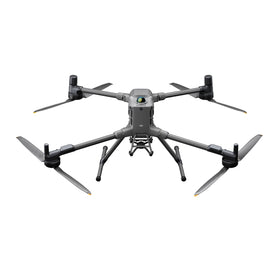
For operators of used drone market fleets, such as DJI Matrice 300 RTKs used for precision agriculture or DJI Mavic 3E units used for construction surveying, this means upgrading to ADS-B Out transponders and advanced collision avoidance systems. The cost of retrofitting a single drone could range from $1,500 to $5,000, depending on the model. This will accelerate the turnover of older, non-compliant drones-creating a surge in supply for the second-hand market, but also a demand for newer, compliant hardware.
Ready to Upgrade Your Fleet?
Browse our collection of inspected pre-owned DJI drones - inspected, flight-tested, and backed by a 6-month warranty. Save up to 40% versus retail.
What Does This Mean for Drone Pilots and the Second-Hand Market?
Q: Will my DJI Mini 3 Pro be detectable from orbit?
A: Yes. While the Mini 3 Pro's small size (0.25 kg) makes it harder to track, the Pentagon's SAR technology can detect objects down to 0.5 meters under ideal conditions. For flights below 400 feet AGL, the satellite's angle may reduce detection probability, but it is not zero. The FAA is expected to mandate Remote ID compliance for all drones by 2027, and orbital tracking will serve as a secondary verification layer.
Q: How will this affect the resale value of my used drone?
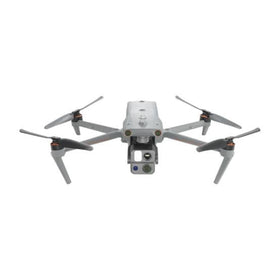
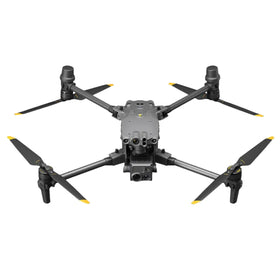
A: Short-term, values for older models without ADS-B Out or Remote ID will drop by 15-25%, as operators rush to upgrade. However, for drones like the DJI Matrice 350 RTK or the Autel EVO Max 4T, which already support advanced transponders, resale values may hold steady or even increase due to demand for compliance-ready hardware. Reboot Hub is already seeing a 30% increase in inquiries for professional DJI repair services to retrofit older units with ADS-B Out modules.
Q: Are there any exemptions for recreational or Part 107 operators?
A: Not likely. The Pentagon's system is designed for national security, but the FAA has indicated it will leverage the data for civil enforcement. Recreational pilots flying under the Exception for Limited Recreational Operations (ELRO) may face reduced penalties initially, but commercial operators under Part 107 will be held to the highest standard. BVLOS waivers, in particular, will become more difficult to obtain unless the operator can prove continuous, verifiable tracking of their drone.
Geopolitical and Regulatory Ripple Effects
The SpaceX deal is not just a U.S. story. The European Union Aviation Safety Agency (EASA) and the Civil Aviation Administration of China (CAAC) are both developing their own orbital tracking capabilities. EASA's Iris program, for example, aims to integrate satellite-based surveillance by 2028. For drone manufacturers like DJI, Autel Robotics, and Skydio, this means designing future models with built-in satellite transponders. The DJI Matrice 400, expected in late 2027, is rumored to include a dedicated satellite communication module for orbital tracking compliance.
For the second-hand drone market, this creates a bifurcation. High-end, compliant drones will command premium prices, while older models (pre-2025) will be relegated to niche applications like indoor inspections or hobbyist use in uncontrolled airspace. Reboot Hub's marketplace data shows that listings for DJI Mavic 2 Enterprise models have already dropped by 12% in average price since the SpaceX deal was announced, while Matrice 350 RTK units have seen a 5% price increase.
Operational Risks: BVLOS and Mapping Missions
For operators conducting RTK surveying, GSD mapping, or long-range BVLOS missions, the new orbital tracking system introduces both risk and opportunity. On the risk side, any deviation from the filed flight plan-whether due to GPS drift, wind, or pilot error-will be recorded and could trigger enforcement. On the opportunity side, the system could enable automated airspace deconfliction, allowing more BVLOS flights if the drone's transponder is integrated with the satellite network. The FAA's Beyond Program, which currently limits BVLOS to a few hundred approved operators, could expand significantly if orbital tracking provides the safety net.
However, the cost of compliance will be steep. A typical BVLOS setup for a DJI Matrice 300 RTK currently costs around $25,000, including ground control stations and redundant communication links. Adding a satellite transponder and monthly subscription for orbital tracking data could add $3,000-$5,000 per year. For small survey firms, this may be prohibitive, pushing them toward the used drone market for cost-effective compliance-ready hardware.
What Should Drone Operators Do Now?
1. Audit your fleet. Check if your drones support ADS-B Out or Remote ID. Models like the DJI Mavic 3 Enterprise, Autel EVO Max 4T, and Skydio X10 are compliant. Older models like the Phantom 4 Pro or Mavic 2 Pro will need retrofitting.
2. Budget for upgrades. The FAA is expected to publish a Notice of Proposed Rulemaking (NPRM) by Q3 2026 mandating orbital tracking compatibility for all commercial drones. Plan for a capital expenditure of $2,000-$5,000 per drone.
3. Monitor the second-hand market. As operators upgrade, prices for non-compliant drones will drop. If you need a budget-friendly backup unit, now is the time to buy. Reboot Hub offers pre-owned DJI drones with a 6-month warranty, ensuring you get compliant hardware at a fraction of retail.
4. Consider professional repair services. Retrofitting an older drone with a transponder requires technical expertise. Reboot Hub's professional DJI repair services use genuine parts and certified technicians to ensure your drone remains flight-worthy and compliant.
Conclusion: The End of Anonymous Drone Flight
The Pentagon's $4 billion SpaceX deal marks the beginning of the end for untracked airspace. For commercial drone operators, the era of flying under the radar-literally-is over. The new orbital surveillance system will bring unprecedented accountability, but also unprecedented opportunity for those who invest in compliance. As the second-hand drone market adjusts to this new reality, operators who act now to upgrade their fleets will be best positioned to thrive in the regulated airspace of the future.
Reboot Hub remains your trusted partner for compliant, high-quality used drones and repair services. Visit our marketplace today to explore inventory, book a repair, or consult with our team on your upgrade path.
Frequently Asked Questions
Will the SpaceX satellite system affect my DJI Mini 3 Pro flights?
Yes. While the Mini 3 Pro is small, the orbital SAR can detect objects down to 0.5 meters under ideal conditions. For flights below 400 feet AGL, detection probability is lower but not zero. The FAA will likely use this data for enforcement starting in 2027.
How much will it cost to retrofit my drone for orbital tracking?
Retrofitting an older drone (e.g., DJI Mavic 2 Pro) with an ADS-B Out transponder and Remote ID module typically costs $1,500-$5,000, depending on the model and installation complexity. Reboot Hub offers professional repair services for this process.
Will the second-hand drone market crash due to this deal?
Not crash, but shift. Prices for non-compliant drones (pre-2025 models) will drop 15-25% in the short term. However, demand for compliance-ready used drones (e.g., DJI Matrice 350 RTK, Autel EVO Max 4T) will increase, stabilizing prices. Reboot Hub's marketplace is already seeing this trend.
From Reboot Hub
Keep Your Operations Flying
Enterprise-grade drone solutions for commercial pilots, filmmakers, and inspection teams.
Pre-owned Fleet
Fully inspected DJI drones with 6-month warranty. Save up to 40%.
Browse Inventory ->