Military Drone Market Consolidation Accelerates Among Defense Suppliers
A new industry report identifies the defense contractors driving military drone innovation and procurement. The findings signal where defense budgets, component demand, and secondary market activity may concentrate in the coming procurement cycle.

Quick answer
A MarketsandMarkets industry report identifies the leading military drone companies driving defense innovation globally.
- The report names defense contractors active in military drone development and procurement.
- The findings highlight concentration among established defense suppliers.
- Procurement shifts may influence component availability and pricing across the drone supply chain.
- Commercial operators and repair buyers should monitor defense-driven demand for shared components.
Evidence: Defense.gov official source
Fleet readiness
Keep DJI hardware available without overbuying new units.
Use defense and fleet news as a planning signal for repair support, inspected pre-owned aircraft, and replacement timing.

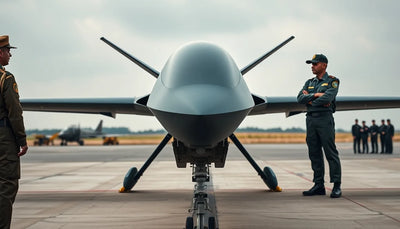
A new industry report from MarketsandMarkets, as carried by Google News, maps the military drone companies currently driving defense innovation across global procurement programs. The report frames the competitive landscape around a concentrated group of established defense contractors and emerging specialists that are shaping how military unmanned systems are developed, purchased, and sustained.
For commercial drone operators, fleet managers, and repair customers, the defense sector's procurement patterns matter more than they might appear at first glance. Military demand influences component supply, sensor pricing, and the strategic priorities of manufacturers that also serve civilian markets. Understanding which firms are consolidating influence in defense can help buyers anticipate where supply chains may tighten and where aftermarket parts availability could shift.
What the report identifies in the military drone landscape
The MarketsandMarkets analysis, as reported through Google News, identifies the top military drone market companies driving defense innovation. The report's framing suggests a market where procurement is increasingly shaped by a defined set of suppliers with deep integration into national defense programs and long-term sustainment contracts.
While the source summary does not enumerate every company named in the full report, the emphasis on "top" companies driving innovation indicates that defense buyers are consolidating around proven platforms and established integration partners. This is consistent with broader defense procurement behavior, where interoperability, security clearance, and sustainment track records weigh heavily in vendor selection.
For commercial readers, the practical takeaway is that military drone innovation does not happen in isolation. The same engineering talent, sensor supply chains, and manufacturing capacity that support defense programs often overlap with commercial drone production. When defense contracts scale, they can absorb capacity that would otherwise serve civilian buyers.
Why defense procurement signals matter for commercial supply chains
The military drone market's direction carries direct implications for component availability across the broader unmanned systems industry. Defense programs typically secure priority access to specialized sensors, thermal imaging modules, gimbal systems, and flight controllers. When those programs expand, lead times for civilian buyers can extend, and pricing for shared components can firm up.
Reboot Hub analysis suggests that commercial operators should treat defense procurement reports as early indicators of potential supply chain pressure. A concentrated defense supplier base can mean that a small number of contract awards reshape component availability for months at a time. Buyers who plan fleet expansion or repair stock around these cycles are better positioned to avoid delays.
The report's focus on companies "driving defense innovation" also points to where research and development investment is concentrating. Technologies that mature in military programs often migrate into commercial platforms over time, including improved obstacle sensing, autonomy features, and secure data links. Operators who track these defense-driven developments can better anticipate which capabilities will reach the commercial market next.
What this means for drone owners and the market
For individual drone owners and small fleet operators, the defense market's structure may seem distant, but its effects show up in parts pricing, repair turnaround times, and the availability of pre-owned equipment. When defense contractors secure large orders, they often pull from the same pool of OEM components that repair shops and resellers depend on. This can tighten the supply of genuine OEM spare parts and push more buyers toward inspected pre-owned platforms as a practical alternative. For owners evaluating service and lifecycle risk, Drone Wiki explains the relevant repair, parts, resale, or operational path.
Buyers evaluating pre-owned DJI drones should consider how defense-driven demand for shared components might affect future repair costs. A pre-owned unit purchased with a clear understanding of parts availability is a more predictable asset than one bought without considering the supply chain behind it. For those researching platform reliability and parts ecosystems, the Drone Wiki provides reference material that can support more informed purchase and maintenance decisions.
Fleet managers should also note that the report's emphasis on innovation concentration suggests a market where a small number of suppliers hold outsized influence. That concentration can be a double-edged sword: it often means more consistent platform standards, but it can also mean less flexibility when a key supplier faces production constraints or shifts capacity toward defense work.
Positioning for the next procurement cycle
Reboot Hub analysis: The military drone market report arrives at a moment when defense budgets in several regions are expanding unmanned systems programs. The companies named in the report are likely to benefit from multi-year procurement commitments that lock in production capacity and component supply for extended periods. For commercial buyers, this means the window for securing certain parts and platforms may narrow as defense orders absorb available output.
Operators who maintain their own repair stock should review their inventory of high-wear components now, before the next procurement cycle tightens availability further. This is especially true for thermal sensors, gimbal assemblies, and proprietary connectors that serve both defense and commercial platforms. A modest investment in genuine OEM spare parts today can reduce downtime later.
The report also reinforces a broader market reality: defense innovation increasingly sets the pace for unmanned systems development. Commercial operators who stay informed about defense procurement trends are better equipped to make buying, maintenance, and resale decisions that account for the full supply chain, not just the retail price of a platform.
FAQ
Frequently asked questions
Which companies does the report identify as military drone market leaders?
The source summary from MarketsandMarkets, as carried by Google News, identifies the top military drone market companies driving defense innovation, though the full list of named firms is not detailed in the available summary. The report's framing indicates a concentrated group of established defense suppliers and emerging specialists.
How does military drone procurement affect commercial drone buyers?
Military procurement can absorb shared component supply, tighten availability of sensors and flight hardware, and extend lead times for civilian buyers. This can raise parts pricing and make pre-owned platforms a more practical option for operators who need predictable access to equipment.
Should fleet operators adjust their parts strategy based on this report?
Fleet operators should review their stock of high-wear components and consider securing genuine OEM spare parts before defense-driven demand tightens availability further. Planning around procurement cycles can reduce downtime and protect operational readiness.
Which sources support this update?
The visible evidence links identify Defense.gov official source; each source is used only for the claim it directly supports.
What remains subject to change?
Retail pricing, availability, product bundles and regulatory timelines can change. Readers should verify the latest terms with the named retailer, manufacturer or regulator before acting.
How should buyers or operators use this analysis?
Use the verified facts as a starting point, then compare mission fit, lifecycle support, maintenance needs and current procurement terms before making a purchase or fleet decision.
Konsulterade källor
- MarketsandMarkets via Google News - primary source
- Defense.gov official source - official government source
Reboot Hub Editorial tillför analys gällande köp, reparation, andrahandsvärde och drift för drönarägare. Om du upptäcker ett fel, kontakta oss för granskning av rättelse via vår redaktionella policy.