Joby Aviation Stock: Can It Reach $20 by 2027? A Deep Dive
Joby Aviation (JOBY) posted a staggering 55,965% revenue surge in Q4 2025, but shares remain down 9.85% YTD at $11.90. As the eVTOL pioneer pivots from R&D to revenue, this analysis dissects the $105M-$115M 2026 guidance, the Blade acquisition's impact, and the critical FAA Part 135 certification hurdles. For commercial drone operators and investors eyeing the air taxi market, we break down the real path to a $20 stock by 2027, including the implications for second-hand UAV values and BVLOS route integration.

Redaktionella noter
- Denna artikel kombinerar namngiven extern rapportering med Reboot Hub egen analys för drönarköpare, flottoperatörer, reparationskunder och bevakare av begagnade DJI-marknaden.
- Källfakta är åtskilda från tolkning. Om en rapport tillhandahåller begränsad data, anges detta i artikeln och Reboot Hub perspektiv presenteras som en analys.
- Reboot Hub har kommersiella länkar till drönarprodukter och reparationstjänster; dessa länkar är resurser för läsaren och avgör inte artikelns slutsats.
In a market starved for tangible revenue stories, electric vertical takeoff and landing (eVTOL) pioneer Joby Aviation (NYSE:JOBY) has finally delivered a headline that stops traders in their tracks. The company's Q4 2025 earnings report, released in late May 2026, revealed quarterly sales of $30.84 million-a staggering 55,965% increase year-over-year. This explosive growth, fueled by the strategic acquisition of Blade Air Mobility, has transformed Joby from a speculative R&D play into a bona fide revenue story. Yet, Wall Street remains skeptical. As of May 29, 2026, shares closed at $11.90, down 9.85% year-to-date. Can this aviation disruptor truly soar to the coveted $20 mark by 2027?
Today, June 2, 2026, we dissect the financials, the regulatory landscape, and the commercial drone market implications of Joby's trajectory. For investors, commercial operators, and second-hand drone market participants at Reboot Hub, understanding this inflection point is critical. The narrative is no longer about if eVTOL will happen, but which operators will profit and how the ecosystem-from Part 135 certification to BVLOS route mapping-will reshape the skies.
The Revenue Inflection: From Zero to $30 Million in One Quarter
Joby's Q4 2025 revenue of $30.84 million is not just a number; it's a paradigm shift. The acquisition of Blade, a short-haul helicopter operator, immediately injected a recurring revenue stream from existing air taxi routes in markets like New York, Los Angeles, and the French Riviera. Management's guidance for full-year 2026 revenue of $105 million to $115 million implies a run rate that, if sustained, could push the company toward profitability faster than many analysts anticipated.
Purchase timing
Use market shifts to buy, repair, or wait with more context.
Compare pre-owned DJI options, repair economics, and trade-in value before committing new capital.
However, the stock's 9.85% YTD decline suggests that the market is pricing in significant execution risk. The capital-intensive nature of eVTOL certification-Joby is pursuing FAA Part 135 air carrier certification alongside its type certification for the aircraft-means that cash burn remains a primary concern. With $1.1 billion in cash and equivalents as of Q4 2025, Joby has runway, but investors are demanding a clear path to positive free cash flow.
For commercial drone operators, this revenue milestone is a bellwether. It validates that the urban air mobility (UAM) market is not just a concept; it's generating real dollars. This creates downstream opportunities for UAV service providers who can integrate with eVTOL networks for last-mile logistics, aerial survey, and infrastructure inspection.
What Does Joby's Path to $20 Mean for Commercial Operators?
This is the question that matters most to our audience at Reboot Hub. Joby's success or failure will directly impact the commercial drone ecosystem in three key areas:
1. BVLOS and Airspace Integration: Joby's aircraft will operate under FAA Part 135, which requires robust detect-and-avoid (DAA) systems and integration with air traffic control. The same technology stack-including ADS-B Out, remote ID, and UTM integration-is being mandated for commercial drone operations under Part 107 waivers and the upcoming Part 108 rules. As Joby pushes the FAA to finalize these frameworks, it paves the way for broader BVLOS approvals for drone operators.
2. Second-Hand UAV Market Dynamics: The influx of capital and attention into eVTOL is driving rapid innovation in battery technology, motor efficiency, and lightweight composites. These advancements trickle down to the consumer and prosumer drone market. As companies like Joby push for higher energy densities, the residual value of older UAV models-like the DJI Mavic 3 or Phantom 4 Pro-may depreciate faster as operators upgrade to newer, more efficient platforms. Conversely, the growing demand for aerial services could boost the used drone market, as new entrants seek affordable entry points.
3. Pilot and Operator Certification: Joby's push for commercial pilot training programs will create a new class of eVTOL pilots. For existing drone pilots, this represents an upskilling opportunity. The FAA's Part 61 and Part 135 frameworks are converging with Part 107, meaning that a commercial drone pilot with a remote pilot certificate could eventually transition to eVTOL operations with additional training.
The Blade Acquisition: A Masterstroke or a Distraction?
Joby's $125 million acquisition of Blade Air Mobility closed in late 2024, and the Q4 2025 results are the first to fully reflect its contribution. Blade operates a network of helicopter charters and short-haul flights, primarily in congested urban corridors. By acquiring Blade, Joby instantly gained access to existing infrastructure-heliports, maintenance facilities, and a customer base accustomed to paying premium prices for time savings.
The strategic logic is sound: Joby can transition Blade's helicopter routes to its eVTOL aircraft as they receive certification, reducing the time-to-market for its own service. However, the integration risk is non-trivial. Blade's operations are heavily reliant on traditional helicopter maintenance and fuel logistics, which are fundamentally different from Joby's electric propulsion system. Moreover, Blade's brand is associated with luxury travel, which may limit Joby's ability to scale into the mass market.
For the second-hand drone market, the Blade acquisition signals a consolidation trend. Larger players are acquiring existing operators to secure infrastructure and customer bases. This mirrors the consolidation seen in the drone services sector, where companies like DJI and Skydio are partnering with or acquiring smaller operators to expand their service networks.
Ready to Upgrade Your Fleet?
Browse our collection of inspected pre-owned DJI drones - inspected, flight-tested, and backed by a 6-month warranty. Save up to 40% versus retail.
Regulatory Hurdles: The FAA Certification Timeline
The single biggest variable in Joby's path to $20 is the FAA certification timeline. Joby is pursuing type certification for its aircraft under Part 21, along with production certification and Part 135 air carrier certification. The company has stated that it expects type certification in 2026, with initial commercial service beginning in 2027. However, the FAA's track record with novel aircraft types is notoriously slow. The certification of the Boeing 787 Dreamliner took over a decade, and eVTOL aircraft represent a fundamentally new category.
For commercial drone operators, the FAA's approach to Joby's certification will set precedents for future UAV type certifications. The agency's willingness to accept risk-based certification methods, such as the use of simulation data instead of physical flight tests, will directly impact how quickly new drone models can enter the market. If Joby succeeds in accelerating the certification process, it could unlock a wave of new UAV platforms designed for BVLOS operations, package delivery, and infrastructure inspection.
Furthermore, Joby's push for Part 135 certification will require the development of comprehensive maintenance and operational manuals, pilot training programs, and safety management systems. These same frameworks are being adapted for commercial drone operators under the FAA's proposed Part 108 rule, which is expected to be finalized in late 2026 or early 2027. Operators who invest in robust safety management systems now will be well-positioned to comply with the new regulations.
Market Sentiment and Valuation: Is $20 Achievable?
To reach $20 per share by 2027, Joby's market capitalization would need to rise from approximately $8.5 billion (at $11.90) to over $14 billion. This implies a forward price-to-sales (P/S) multiple of roughly 130x based on 2026 revenue guidance. While this multiple seems extreme, it is not unprecedented for high-growth aviation startups. Tesla, for example, traded at over 200x sales during its early growth phase.
However, the comparison is imperfect. Tesla had a clear path to mass production and a massive addressable market. Joby's market is initially limited to short-haul urban routes, and the total addressable market for air taxis is still uncertain. McKinsey estimates that the UAM market could be worth $1 trillion by 2040, but near-term adoption will be constrained by infrastructure, regulation, and public acceptance.
For investors, the key catalysts to watch are: (1) FAA type certification, (2) the launch of commercial service in a major city like New York or Los Angeles, (3) strategic partnerships with airlines or ride-hailing platforms, and (4) positive unit economics. Each of these milestones could drive a re-rating of the stock. Conversely, delays in certification or a failure to achieve positive unit economics could send the stock back toward $5.
Implications for the Second-Hand Drone Market
As a commercial UAV analyst at Reboot Hub, I see Joby's trajectory as a double-edged sword for the second-hand drone market. On one hand, the influx of capital and talent into the eVTOL sector is driving rapid innovation in battery technology, motor efficiency, and flight control systems. These advancements will eventually trickle down to consumer and prosumer drones, making them more capable and efficient. This could accelerate the replacement cycle for existing UAV fleets, boosting demand for pre-owned DJI drones as operators upgrade to newer platforms.
On the other hand, the eVTOL hype could divert attention and investment away from the traditional drone market. If investors and regulators focus on air taxis, they may neglect the more immediate opportunities in drone delivery, aerial surveying, and infrastructure inspection. This could slow the pace of regulatory reform for BVLOS operations, which remains the single biggest barrier to scaling commercial drone operations.
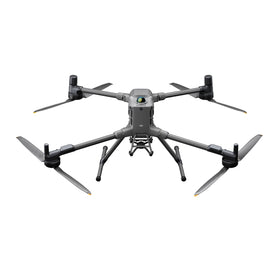
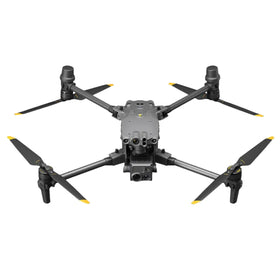
For operators looking to build or upgrade their fleets, now is the time to act. The second-hand market for drones like the DJI Mavic 3 Enterprise, Phantom 4 RTK, and Matrice 350 RTK is currently liquid, with prices stabilizing after the post-pandemic boom. By purchasing a refurbishment-labeled DJI drone from Reboot Hub, operators can acquire a high-quality platform at a fraction of the retail cost, with a 6-month warranty and professional inspection. This is a capital-efficient way to expand capacity while waiting for the next generation of UAVs to hit the market.
Additionally, as Joby and other eVTOL manufacturers push for more advanced battery management systems and thermal management solutions, these technologies will become more affordable and accessible for drone operators. Reboot Hub's professional DJI repair services are already incorporating these advancements, offering battery health diagnostics and replacement services that extend the life of existing UAVs.
Conclusion: A High-Stakes Bet on the Future of Flight
Joby Aviation's path to $20 by 2027 is not a sure thing. It requires flawless execution on certification, commercial launch, and unit economics. However, the Q4 2025 revenue inflection provides a tangible proof point that the eVTOL market is real and growing. For commercial drone operators, the implications are profound: Joby's success will accelerate regulatory reform, drive technological innovation, and create new opportunities for integration with urban air mobility networks.
At Reboot Hub, we are watching these developments closely. Whether you are an investor evaluating JOBY stock, a commercial operator planning your next fleet upgrade, or a hobbyist looking to sell your used drone, understanding the macroeconomic and regulatory trends is essential. The skies are changing, and those who prepare now will be best positioned to profit from the transformation.
Frequently Asked Questions
Is Joby Aviation stock a buy at $11.90?
Joby Aviation offers a high-risk, high-reward investment thesis. The company has demonstrated revenue growth through the Blade acquisition, but it remains pre-profit and faces significant regulatory hurdles. Investors with a long-term horizon and high risk tolerance may find the current price attractive, but near-term volatility is expected. Diversification within the eVTOL and drone sectors is recommended.
How does Joby's certification timeline affect commercial drone operators?
Joby's FAA certification process is a bellwether for the broader UAM industry. If Joby achieves type certification in 2026, it will set precedents for risk-based certification methods that could accelerate approvals for new drone models. Commercial operators should monitor the FAA's decisions on Joby's application, as they will directly impact the timeline for BVLOS waivers and Part 108 rulemaking.
What is the best way to buy a inspected pre-owned drone in 2026?
The most reliable way to purchase a inspected pre-owned drone is through a reputable marketplace like Reboot Hub. Our inventory includes DJI Mavic 3 Enterprise, Phantom 4 RTK, Matrice 350 RTK, and other professional-grade platforms, each inspected and flight-tested with a 6-month warranty. Buying inspected pre-owned can save operators up to 40% versus retail, while ensuring quality and reliability.
--
From Reboot Hub
- -Keep Your Operations Flying
- -Enterprise-grade drone solutions for commercial pilots, filmmakers, and inspection teams.
- -Pre-owned Fleet
- - - -Fully inspected DJI drones with 6-month warranty. Save up to 40%.
- - - - Browse Inventory -> - - -Expert Repair
- - - -Professional diagnostics with genuine OEM parts. Same-day estimates.
- - - - Book a Repair -> - - -Spare Parts
- - - -Batteries, propellers, gimbals -- premium OEM components, fast shipping.
- - - - Shop Parts -> - - -