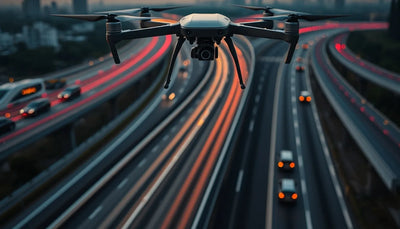
Chinese Researchers Claim Laser-Powered Drone With Unlimited Endurance
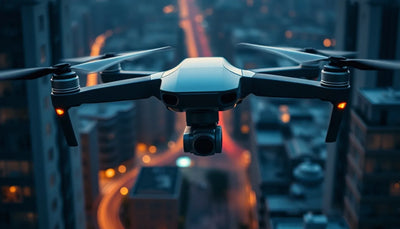
A Chinese research team has reportedly demonstrated a drone that stays airborne using laser power delivery, according to Sina Mobile. The claim points to a future where persistent aerial operations could reshape commercial drone economics, maintenance cycles, and fleet planning.

Quick answer
A Sina Mobile report says Chinese scientists have demonstrated a drone that can remain airborne without landing by receiving power from a laser, a development framed as a step toward unlimited endurance.
- The report attributes the claim to Chinese researchers and frames it as a notable endurance milestone.
- The reported approach uses laser power delivery to keep the drone airborne instead of relying only on onboard batteries.
- Commercial availability, cost, safety limits, and regulatory status are not detailed in the source.
- The development could eventually affect fleet planning, maintenance cycles, and the pre-owned drone market if it matures.
A new report from Sina Mobile claims that Chinese scientists have overcome one of the most stubborn limits in unmanned aviation: the need to land and recharge. The report, titled around the idea of a "never-landing" drone, describes a research effort in which a drone reportedly receives power through a laser link, allowing it to stay airborne far beyond what conventional battery capacity would permit.
Market context
Turn market news into a buy, repair, or trade-in decision.
Compare pre-owned availability, resale timing, and repair economics before the market moves again.

The development has drawn attention partly because of the reaction attributed to Elon Musk in the source, which frames the breakthrough as surprising to Western observers. Reboot Hub analysis should treat this as a source-limited report: the underlying technical details, test duration, power levels, and institutional affiliations are not independently verified in the available material. What matters for commercial readers is the direction of travel, not the headline claim.
The reported breakthrough and its limits
According to the Sina Mobile report, the core idea is laser-based power delivery to an airborne drone. Instead of returning to a ground station to swap batteries or plug in, the drone would receive energy continuously or at intervals from a directed laser source. The source describes this as a step toward "unlimited endurance," a phrase that should be read carefully in a commercial context.
Endurance in real-world operations is constrained by more than energy. Weather, airspace access, sensor payload limits, mechanical wear, and regulatory flight-time rules all impose practical ceilings. A drone that never needs to land for charging still needs inspection, component replacement, and software maintenance. Laser power delivery also raises questions about beam safety, line-of-sight requirements, and efficiency losses over distance. None of these operational details are addressed in the source material.
The report does not name a specific commercial product, manufacturer, or deployment timeline. It describes a research milestone rather than a market-ready platform. For fleet buyers and repair customers, that distinction matters. A laboratory demonstration can take years to translate into a certified, insurable, and maintainable aircraft.
What this means for drone owners and the market
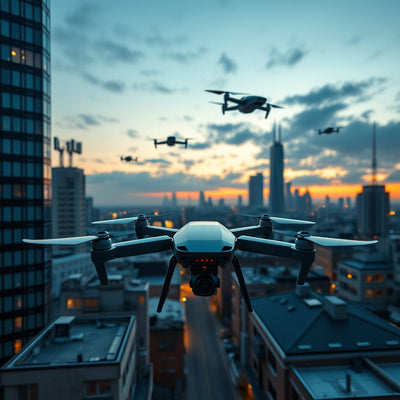
If laser-powered endurance ever reaches commercial maturity, it would change how operators think about mission planning. Persistent inspection, surveillance, and communications relay tasks currently require either multiple aircraft rotating through a site or frequent landing cycles. A platform that could stay aloft for days would reduce the number of takeoffs and landings, which are among the highest-wear phases of any drone operation.
For the pre-owned DJI market, the immediate impact is likely minimal. Current DJI platforms, from the Mavic series to the Matrice line, are not designed around laser power delivery. Buyers evaluating inspected pre-owned DJI drones should not expect this research to change the resale value or capability of existing models in the near term. The more realistic effect is on long-term fleet planning: operators watching endurance research may delay capital commitments if they believe persistent platforms are approaching commercial viability.
Repair economics would also shift. Longer flight times mean fewer charge cycles but more cumulative airframe hours. Components like motors, propellers, gimbals, and sensors would accumulate wear faster even if batteries degrade more slowly. Maintenance schedules built around flight hours rather than charge cycles would become more important. For readers tracking repair and parts availability, the Reboot Hub Drone Wiki provides a useful reference for understanding how current platforms are serviced and what wear patterns to expect. For owners evaluating service and lifecycle risk, Drone Wiki explains the relevant repair, parts, resale, or operational path.
Commercial endurance research is a competitive signal
The Sina Mobile report frames the Chinese research as a competitive milestone, with the Musk reaction used to underline its significance. Whether or not that framing is accurate, the underlying signal is real: multiple research groups and companies are investing in persistent aerial platforms. Solar-powered high-altitude drones, tethered systems, and wireless power transfer are all being explored as ways to extend mission time.
For commercial operators, this means endurance is becoming a differentiator rather than a fixed constraint. A buyer evaluating a drone today should ask not only about flight time per battery but about total mission cost per hour of useful coverage. If a persistent platform can eliminate the labor and logistics of battery swaps, its higher upfront cost may be justified even if the hardware itself is more complex.
That said, the source does not provide cost figures, efficiency data, or safety certifications. Reboot Hub analysis would caution against treating the reported demonstration as evidence that laser-powered commercial drones are imminent. The path from research to reliable field operations is long, and regulatory frameworks for persistent unmanned flight are still developing in most markets.
What operators should watch next
The practical takeaway for drone buyers, fleet managers, and repair customers is to monitor endurance research without overreacting to it. The reported Chinese laser-powered drone is a research signal, not a product announcement. Existing procurement decisions should still be based on verified flight time, payload capability, serviceability, and parts availability.
Operators with long-duration inspection or monitoring needs should track three things: whether the research team publishes peer-reviewed results, whether any commercial entity licenses or productizes the approach, and whether regulators begin drafting rules for persistent unmanned operations. Until those signals appear, the pre-owned DJI market and the broader commercial drone repair ecosystem will continue to operate on the same fundamentals: flight hours, wear cycles, and component availability.
For now, the most defensible response is to keep maintenance and resale value in focus. A drone that flies longer still needs genuine OEM spare parts, professional repair, and careful lifecycle management. The reported breakthrough does not change that reality; it simply adds a new variable to long-term planning.
FAQ
Frequently asked questions
Is the laser-powered drone commercially available?
No. The Sina Mobile report describes a research demonstration, not a commercial product. No manufacturer, price, or availability date is provided in the source.
Will this affect the value of pre-owned DJI drones?
Not in the near term. Existing DJI platforms are not designed for laser power delivery, and the research is not tied to any current DJI model or resale program.
What should fleet operators do differently after this report?
Treat it as a long-term signal rather than a buying trigger. Continue evaluating drones on verified endurance, serviceability, and parts availability, and watch for peer-reviewed results or regulatory movement before changing procurement plans.
Which sources support this update?
The article distinguishes reported information from analysis and does not present an unverified source as official confirmation.
What remains subject to change?
Retail pricing, availability, product bundles and regulatory timelines can change. Readers should verify the latest terms with the named retailer, manufacturer or regulator before acting.
How should buyers or operators use this analysis?
Use the verified facts as a starting point, then compare mission fit, lifecycle support, maintenance needs and current procurement terms before making a purchase or fleet decision.
Konsulterade källor
- Source material - primary source
Ytterligare officiell dokumentation var inte tillgänglig vid publiceringstillfället.
Reboot Hub Editorial tillför analys gällande köp, reparation, andrahandsvärde och drift för drönarägare. Om du upptäcker ett fel, kontakta oss för granskning av rättelse via vår redaktionella policy.