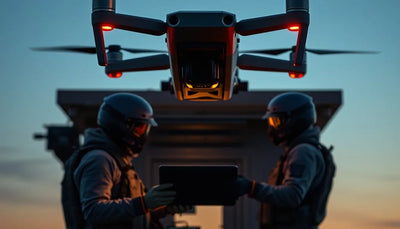
Chinese and Korean Drone Experts Face Off at Qingdao Competition
More than 800 participants gathered in Qingdao for a cross-border drone competition between Chinese and Korean specialists. The event highlights rising commercial drone activity, operator skill development, and growing demand for reliable equipment across East Asian markets.

Quick answer
More than 800 people participated in a drone competition in Qingdao where Chinese and Korean drone experts competed against each other, according to Qingdao Daily reporting.
- The event took place in Qingdao, China
- Over 800 participants were involved
- Chinese and Korean drone specialists competed
- Qingdao Daily reported the development
More than 800 people gathered in Qingdao for a cross-border drone competition that brought together Chinese and Korean drone specialists, according to reporting from Qingdao Daily. The event, described as an aerial face-off between experts from both countries, points to a growing appetite for competitive drone operations and professional skill development in East Asia.
Market context
Turn market news into a buy, repair, or trade-in decision.
Compare pre-owned availability, resale timing, and repair economics before the market moves again.

The scale of participation matters for commercial observers. When a single regional event attracts hundreds of operators, technicians, and support staff, it suggests that drone activity is moving beyond hobbyist circles and into more structured, professionally oriented communities. For buyers and fleet operators, that shift has practical consequences for equipment demand, spare parts availability, and the second-hand market.
What the Qingdao event signals about operator activity
Qingdao Daily framed the gathering as a direct competition between Chinese and Korean drone experts. The phrase "compete in the air" in the source report underscores that the event centered on active flight performance rather than static demonstration. That distinction matters because competitive flight environments place real stress on airframes, batteries, gimbals, and propulsion systems.
For commercial operators watching from outside China, the event offers a useful signal. Cross-border competitions of this size typically require standardized equipment, repeatable flight profiles, and rapid turnaround between rounds. Those conditions mirror the operational demands of inspection, mapping, and agricultural drone work, where downtime directly affects revenue. Reboot Hub analysis suggests that events like this can foreshadow stronger regional demand for genuine OEM spare parts and professional repair capacity, as competitive operators push hardware harder than casual users do.
Why cross-border drone events matter for equipment demand
The Chinese-Korean format is notable because it implies coordination between two distinct commercial drone ecosystems. China remains the dominant manufacturing base for consumer and enterprise multirotor platforms, while South Korea has developed a strong domestic operator base across agriculture, logistics, and public safety applications. When specialists from both countries meet in a competitive setting, the exchange tends to accelerate adoption of shared operational practices and equipment preferences.
That dynamic can influence the pre-owned DJI market in practical ways. Competitive operators often cycle through airframes more quickly than casual pilots, creating a steady flow of inspected pre-owned units into regional resale channels. At the same time, competition-level use increases demand for OEM-pulled parts such as motor arms, gimbal assemblies, and electronic speed controllers. Buyers who understand this pattern can make more informed decisions about when to purchase pre-owned equipment and when to prioritize units with documented maintenance histories.
What this means for drone owners and the market
For individual owners and small fleet managers, the Qingdao event is a reminder that drone utilization rates are rising across East Asia. Higher utilization generally translates into faster component wear and more frequent repair cycles. A drone flown in structured competition or intensive commercial work will require more proactive maintenance than a unit used for occasional recreational flights. Operators should pay closer attention to battery health, motor bearing wear, and gimbal calibration intervals as their flight hours increase.
The broader market implication is that professional repair and genuine parts supply are becoming more valuable as operational intensity grows. As more pilots move into competitive or semi-professional use, the demand for reliable service channels increases in parallel. For readers evaluating maintenance options or replacement components, the Reboot Hub Drone Wiki provides reference material that can help clarify common repair and ownership questions. Buyers in the pre-owned market should also recognize that competition-season activity can create short-term supply fluctuations, as operators offload older airframes to fund upgrades. For owners evaluating service and lifecycle risk, Drone Wiki explains the relevant repair, parts, resale, or operational path.
Regional momentum and the second-hand equipment outlook
Qingdao Daily's reporting does not provide detailed technical specifications, event rules, or commercial agreements, so Reboot Hub cannot verify specific equipment models or performance benchmarks from this source. However, the reported participation figure of more than 800 people is a concrete data point that supports a broader observation: East Asian drone communities are scaling up their organized activity.
That scaling has implications for the pre-owned DJI market. As more operators enter structured flying, the pool of used airframes grows, but so does the share of units with meaningful flight history. Buyers should approach the second-hand market with a sharper focus on maintenance records, crash history, and component provenance. Pristine pre-owned units with verified service backgrounds will likely hold value better than heavily flown competition airframes, even when both appear cosmetically similar. Fleet managers planning equipment refreshes should monitor regional event calendars, since competition cycles can influence both new unit sales and the availability of used inventory.
FAQ
Frequently asked questions
What happened at the Qingdao drone event?
More than 800 people participated in a drone competition in Qingdao where Chinese and Korean drone experts competed against each other, according to Qingdao Daily.
Why should drone buyers pay attention to this event?
The event signals rising commercial and competitive drone activity in East Asia, which can affect equipment demand, spare parts availability, and the supply of pre-owned units entering the market.
Does this event affect the pre-owned DJI market?
Competitive flying tends to accelerate hardware wear and increase the flow of used airframes into resale channels, making maintenance history and component condition more important for buyers evaluating pre-owned drones.
Which sources support this update?
The article distinguishes reported information from analysis and does not present an unverified source as official confirmation.
What remains subject to change?
Retail pricing, availability, product bundles and regulatory timelines can change. Readers should verify the latest terms with the named retailer, manufacturer or regulator before acting.
How should buyers or operators use this analysis?
Use the verified facts as a starting point, then compare mission fit, lifecycle support, maintenance needs and current procurement terms before making a purchase or fleet decision.
Konsulterade källor
- Source material - primary source
Ytterligare officiell dokumentation var inte tillgänglig vid publiceringstillfället.
Reboot Hub Editorial tillför analys gällande köp, reparation, andrahandsvärde och drift för drönarägare. Om du upptäcker ett fel, kontakta oss för granskning av rättelse via vår redaktionella policy.