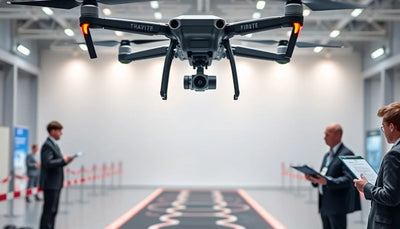
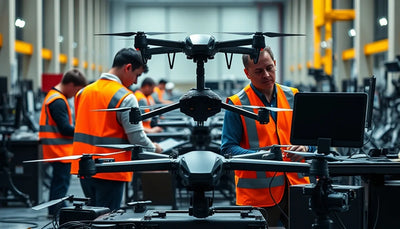
China State Media Profiles Low-Altitude Logistics Workers as Delivery Drones Scale
A Chinese state media feature on low-altitude logistics workers signals that drone delivery is moving from pilot projects toward routine commercial operations, with direct implications for fleet planning, maintenance capacity, and the pre-owned DJI market.

Quick answer
China Workers' Network published a feature profiling low-altitude logistics workers as a new profession, indicating that drone delivery operations are becoming a recognized commercial workforce category in China.
- The report frames low-altitude logistics as an emerging profession, not a temporary pilot program
- The coverage signals that drone delivery is scaling into routine commercial operations in China
- Workforce recognition suggests growing demand for fleet maintenance and repair infrastructure
- Commercial operators should monitor how this labor trend affects drone utilization and resale supply
China Workers' Network has published a feature profiling low-altitude logistics workers as one of the country's emerging professions, framing drone delivery not as a speculative technology demonstration but as a recognized occupational category. The report, carried through Google News RSS syndication, describes a worker whose daily routine now includes coordinating package delivery by low-altitude aircraft, with the headline greeting customers by noting that their package is "flying at low altitude."
Market context
Turn market news into a buy, repair, or trade-in decision.
Compare pre-owned availability, resale timing, and repair economics before the market moves again.

The significance here is less about any single delivery flight and more about the institutional signal. When state-aligned labor media begins cataloging drone logistics as a profession, it suggests that the underlying commercial activity has reached a scale where stable job roles, training pathways, and operational expectations are forming. For drone buyers, fleet operators, and repair customers outside China, this is a forward indicator worth watching closely.
What the report actually tells us
The source material is limited in scope. China Workers' Network, the publication behind the feature, presents the low-altitude logistics worker as part of a series on new professions. The report does not include specific fleet sizes, delivery volumes, aircraft models, or regulatory filings. It does, however, establish that the role exists in practice and is being documented as a distinct occupation rather than an ad hoc task assigned to existing couriers or warehouse staff.
Reboot Hub analysis: the absence of technical detail in the report is itself informative. When a labor publication can describe low-altitude logistics work without needing to explain what a delivery drone is, it implies that the readership is expected to have baseline familiarity with the technology. That is a meaningful threshold. Drone delivery has moved from novelty coverage to occupational reporting, which typically happens only after the underlying activity has become routine enough to generate stable employment patterns.
For commercial operators, the practical takeaway is that drone logistics is maturing in at least one major market. The question is no longer whether delivery drones can function, but how the workforce around them is organized, trained, and supported. That workforce includes pilots, ground coordinators, maintenance technicians, and logistics planners, all of whom require equipment that is reliable, repairable, and available.
What this means for drone owners and the market
The emergence of low-altitude logistics as a recognized profession has direct implications for equipment demand and maintenance economics. As delivery operations scale, fleet operators typically shift from purchasing new aircraft for every route to managing larger inventories of airframes, batteries, and spare parts. This creates a secondary market for inspected pre-owned units and OEM-pulled components, particularly for operators who need to expand capacity without absorbing the full depreciation cost of new equipment on every airframe.
For individual drone owners and smaller commercial operators, the trend matters in a different way. When large logistics fleets enter a market, they compete for the same pool of qualified technicians, genuine OEM spare parts, and repair capacity. That can extend service lead times and push up maintenance costs for everyone else. Buyers who are evaluating pre-owned DJI drones or planning fleet expansion should consider whether their maintenance strategy accounts for this kind of demand pressure. For operators researching repair options and equipment planning, the Drone Wiki provides reference material on maintenance considerations across common commercial platforms. For owners evaluating service and lifecycle risk, Drone Wiki explains the relevant repair, parts, resale, or operational path.
The report also suggests that workforce formalization will eventually bring standardized training and certification requirements. When a job category becomes official, regulators and employers typically begin codifying the skills and credentials required to perform it. For drone buyers, this means that the equipment purchased today may need to meet future operational standards that are still being defined. Choosing airframes and components with strong parts availability and documented service histories becomes more important as those standards take shape.
Why China's logistics drone labor trend matters globally
China has been the most aggressive market for low-altitude logistics experimentation, with multiple companies running delivery routes in urban and peri-urban areas. The state media decision to profile logistics workers as a new profession suggests that these operations have moved beyond pilot phases and into sustained commercial activity. That transition has historically been followed by increased demand for maintenance infrastructure, parts supply chains, and secondary market liquidity.
For operators outside China, the pattern is worth tracking even if the specific regulatory environment differs. Drone logistics in one large market tends to accelerate component standardization, battery technology improvements, and repair methodology development that eventually benefits operators everywhere. The pre-owned DJI market is particularly sensitive to these dynamics, since DJI airframes are widely used in commercial logistics trials and the availability of OEM-pulled parts depends on how many units are in active service.
The source does not provide data on which aircraft models are being used in the profiled operations, and Reboot Hub does not have verified spec context for this report. Operators should avoid drawing conclusions about specific DJI models or compatibility based on this coverage. What the report does establish is the broader market direction: low-altitude logistics is becoming an employment category, which means the equipment supporting it is becoming a durable commercial asset class rather than an experimental tool.
What operators should watch next
The most useful follow-up signals will come from labor market data, training program announcements, and maintenance infrastructure investment in the regions where low-altitude logistics is scaling. If the profession formalizes, expect to see certification programs, apprenticeship structures, and employer-sponsored training pipelines emerge. Each of those developments will create demand for reliable airframes, spare parts, and repair services.
For a buyer or fleet manager evaluating equipment today, the practical step is to prioritize platforms with established parts availability and documented service histories. The growth of logistics fleets will likely tighten the supply of genuine OEM components, particularly batteries and propulsion parts that wear predictably under high-cycle delivery operations. Pre-owned units with verifiable maintenance records may become more valuable as fleet operators seek to standardize their equipment and reduce per-airframe costs.
Reboot Hub will continue monitoring how this occupational trend translates into equipment demand, parts pricing, and repair capacity in both Chinese and international markets. The source is limited, but the signal is clear: drone delivery is becoming a job, and jobs require equipment that can be maintained at scale.
FAQ
Frequently asked questions
What did the China Workers' Network report actually announce?
The report profiled low-altitude logistics workers as one of China's emerging professions, describing a role in which workers coordinate package delivery by low-altitude aircraft. It did not include specific fleet data, aircraft models, or regulatory details.
How does this affect pre-owned DJI drone buyers?
Reboot Hub analysis: As drone logistics scales, demand for inspected pre-owned airframes and OEM-pulled parts is likely to increase, particularly for platforms with strong parts availability. Buyers should prioritize units with documented service histories and consider maintenance capacity when planning purchases.
Should commercial operators outside China change their fleet planning based on this report?
Not immediately, but the trend is worth tracking. Workforce formalization in China's logistics drone sector suggests that equipment standardization and maintenance infrastructure investment will follow, which could influence parts availability and pricing globally over time.
Which sources support this update?
The article distinguishes reported information from analysis and does not present an unverified source as official confirmation.
What remains subject to change?
Retail pricing, availability, product bundles and regulatory timelines can change. Readers should verify the latest terms with the named retailer, manufacturer or regulator before acting.
How should buyers or operators use this analysis?
Use the verified facts as a starting point, then compare mission fit, lifecycle support, maintenance needs and current procurement terms before making a purchase or fleet decision.
Konsulterade källor
- Source material - primary source
Ytterligare officiell dokumentation var inte tillgänglig vid publiceringstillfället.
Reboot Hub Editorial tillför analys gällande köp, reparation, andrahandsvärde och drift för drönarägare. Om du upptäcker ett fel, kontakta oss för granskning av rättelse via vår redaktionella policy.