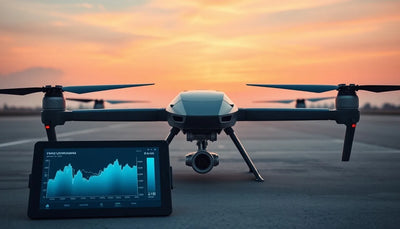
Anyang's Low-Altitude Economy Moves From Mountains to Operating Rooms
A new Sina Finance report describes how Anyang's low-altitude economy is expanding from mountainous logistics into medical and everyday services. The shift signals broader regional demand for commercial drone operations, maintenance capacity, and pre-owned fleet planning.

Quick answer
A Sina Finance report describes how Anyang's low-altitude economy is expanding from the Taihang Mountains into operating rooms and daily life, signaling broader regional commercial drone adoption.
- Anyang's low-altitude economy now spans mountainous logistics and medical service use cases.
- The report frames the shift as a move into everyday operational demand, not a single pilot program.
- Commercial operators should watch regional service expansion for fleet and maintenance planning signals.
Verified facts
Market context
Turn market news into a buy, repair, or trade-in decision.
Compare pre-owned availability, resale timing, and repair economics before the market moves again.

What the available evidence confirms
| Reported area | Reported use shift | Commercial relevance |
|---|---|---|
| Taihang Mountains region | Mountain logistics and low-altitude operations | Rugged terrain operations and logistics demand |
| Operating room and daily life | Medical and everyday service applications | Expanded service models and maintenance needs |
A new industry report from Sina Finance describes how Anyang's low-altitude economy is moving from the Taihang Mountains into operating rooms and everyday life. The report frames the development as a broadening of regional drone activity beyond isolated logistics projects and into medical, municipal, and daily service applications. For commercial operators, repair customers, and pre-owned DJI market readers, the signal is not a single product launch but a shift in how regional demand is being organized.
The source is a market-trend report rather than a technical specification release. It does not list specific drone models, payload figures, flight ranges, or certification details. Reboot Hub analysis therefore focuses on the commercial pattern the report describes: a regional low-altitude economy maturing from terrain-driven logistics into routine service delivery. That maturation tends to change fleet composition, maintenance frequency, and the value of inspected pre-owned equipment.
What the Sina Finance report actually describes
The report, published by finance.sina.com.cn, describes Anyang's low-altitude economy as extending from the Taihang Mountains into operating rooms and daily life. The Taihang range is a mountainous area in central China, and the framing suggests that drone operations initially associated with difficult terrain are now being applied to medical environments and ordinary urban or municipal services. The report does not provide specific flight counts, revenue figures, or named operating companies in the available source summary.
That source-limited detail matters. Without verified operational data, the report should be read as a directional indicator rather than a confirmed procurement announcement. The central verifiable development is that a major Chinese financial outlet is treating Anyang's low-altitude economy as a story about everyday adoption, not a niche pilot. For fleet planners, that kind of coverage often precedes or accompanies expanded service contracts, repair volume, and secondary-market activity.
Why regional service expansion changes fleet planning
When a low-altitude economy moves from mountain logistics into medical and daily services, the operational profile changes. Mountain logistics tends to favor longer flight segments, fewer daily cycles, and equipment selected for range and terrain handling. Medical and everyday service use cases typically involve more frequent takeoffs, shorter missions, tighter scheduling, and greater pressure on turnaround time. That shift increases the importance of spare parts availability, inspection discipline, and predictable maintenance intervals.
For commercial buyers, the implication is that regional service expansion can make pre-owned DJI drones more attractive as secondary or backup units. A fleet that adds daily medical or municipal routes often needs additional airframes to cover maintenance downtime without pausing service. Inspected pre-owned equipment can fill that role when procurement budgets are tied to new service contracts rather than new hardware purchases. The report does not confirm any specific DJI model being used, so this remains a market-level inference rather than a product claim.
What this means for drone owners and the market
The Anyang report suggests that low-altitude service demand is becoming more routine in at least one Chinese region. For owners and operators outside China, the relevant lesson is not about Anyang itself but about the pattern of regional drone economies maturing from demonstration projects into daily service infrastructure. That transition typically raises demand for professional repair, genuine OEM spare parts, and faster inspection cycles because downtime becomes operationally expensive. For owners evaluating service and lifecycle risk, Drone Wiki explains the relevant repair, parts, resale, or operational path.
Buyers and fleet managers should treat this as a prompt to review their maintenance readiness before service volume grows. A regional operator moving into medical or daily delivery work cannot afford long repair queues. For readers evaluating pre-owned DJI drones or professional DJI repair options, the Drone Wiki provides a reference point for understanding how maintenance, parts, and pre-owned equipment fit into a maturing commercial market.
The pre-owned DJI market tends to respond to exactly this kind of regional expansion. As more operators add routine service routes, demand for reliable secondary airframes and OEM-pulled parts increases. The Sina Finance report does not provide pricing data or resale figures, so any specific market movement should be treated as analysis rather than confirmed fact. Still, the directional signal is consistent with a market where service reliability matters more than owning the newest airframe.
What operators should watch next
The most useful follow-up is whether Anyang's reported expansion produces concrete procurement, regulatory, or service announcements. If regional authorities or operating companies publish flight volume data, approved use cases, or maintenance requirements, those details would give commercial buyers a clearer picture of the operational standards involved. Until then, the report should be read as evidence that everyday drone services are becoming a normal part of at least one regional economy.
Operators should also watch whether similar coverage appears for other Chinese regions or for medical logistics networks elsewhere. The pattern of moving from terrain-specific logistics into operating rooms and daily services is not unique to Anyang, but the public framing matters. When financial media begin treating low-altitude services as ordinary infrastructure, procurement and repair demand tend to follow. For now, the practical step is to keep maintenance capacity and spare parts planning aligned with the possibility of more frequent, time-sensitive missions.
FAQ
Frequently asked questions
What did the Sina Finance report say about Anyang's drone economy?
The report describes Anyang's low-altitude economy as moving from the Taihang Mountains into operating rooms and daily life, indicating an expansion from mountain logistics into medical and everyday service applications.
Does the report confirm specific drone models or technical specifications?
No. The available source summary does not list specific drone models, payload figures, flight ranges, or certification details. The report is a market-trend account rather than a technical product release.
What should a commercial drone operator do after reading this?
Operators should review maintenance readiness and spare parts planning for more frequent, time-sensitive missions. Regional service expansion tends to increase demand for reliable backup airframes, professional repair, and inspected pre-owned equipment.
Which sources support this update?
The article distinguishes reported information from analysis and does not present an unverified source as official confirmation.
What remains subject to change?
Retail pricing, availability, product bundles and regulatory timelines can change. Readers should verify the latest terms with the named retailer, manufacturer or regulator before acting.
How should buyers or operators use this analysis?
Use the verified facts as a starting point, then compare mission fit, lifecycle support, maintenance needs and current procurement terms before making a purchase or fleet decision.
Konsulterade källor
- finance.sina.com.cn - primary source
Ytterligare officiell dokumentation var inte tillgänglig vid publiceringstillfället.
Reboot Hub Editorial tillför analys gällande köp, reparation, andrahandsvärde och drift för drönarägare. Om du upptäcker ett fel, kontakta oss för granskning av rättelse via vår redaktionella policy.