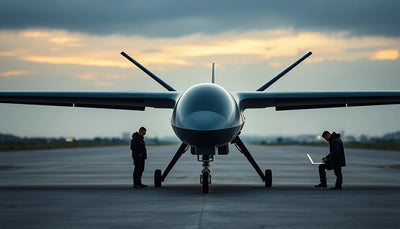
Survey Drone Strikes Manchester Crane, Raising Site Risk Questions
A survey drone struck a crane in Manchester, according to a Google News DJI report. The incident highlights collision risk in dense construction airspace and raises practical questions for commercial operators, fleet managers, and buyers evaluating drone reliability and repair exposure.

Quick answer
A survey drone struck a crane in Manchester, according to a Google News DJI report, highlighting collision risk in construction airspace.
- The incident was reported by Google News DJI as a survey drone striking a Manchester crane
- The report points to operational risk in dense construction environments
- Commercial operators may need to review site-specific flight planning and obstacle awareness
- The event could influence repair demand and pre-owned drone market confidence
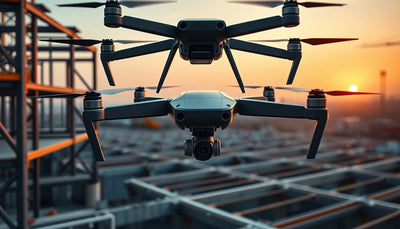
A survey drone struck a crane in Manchester, according to a Google News DJI report published under the heading “Survey drone strikes Manchester crane” and grouped within sustainable construction coverage. The report is brief, but the event itself is commercially significant because it sits at the intersection of construction site operations, drone reliability, and the cost of airborne incidents. For operators flying near large vertical structures, cranes remain one of the most common and most damaging collision hazards in urban and industrial airspace.
Market context
Turn market news into a buy, repair, or trade-in decision.
Compare pre-owned availability, resale timing, and repair economics before the market moves again.

Reboot Hub analysis treats this as a market-trend signal rather than an isolated accident. When a survey drone collides with a crane, the immediate questions are not only about pilot error or mechanical failure. They extend to how fleets are planned, how repair costs are absorbed, and how the pre-owned DJI market prices machines that have been exposed to impact risk. The source does not provide model details, operator identity, damage extent, or regulatory follow-up, so this report stays deliberately narrow on verified facts and focuses on what the incident implies for commercial buyers and operators.
The reported incident and its source context
The central verified development is that a survey drone struck a crane in Manchester, as reported by Google News DJI. The source title frames the event within “Trending Now Sustainable Construction,” which suggests the incident was picked up because construction technology and site monitoring are increasingly visible in sustainability and efficiency coverage. Survey drones are used on construction projects for mapping, progress tracking, volumetric measurement, and inspection. That operational role places them close to cranes, scaffolding, partially completed structures, and other obstacles that are not always fully represented in pre-flight planning.
The source does not state whether the collision caused injury, property damage, or regulatory action. It also does not identify the drone model, the operator, the flight mode, or whether obstacle sensing was active. Reboot Hub analysis therefore does not assume a specific cause. What the report does establish is that a commercial survey operation in a major UK city ended in a collision with a fixed structure. For fleet managers, that is enough to justify a fresh look at site risk assessment and incident cost planning.
Collision risk in construction airspace
Construction sites present a specific collision profile. Cranes are tall, narrow, and often move horizontally or vertically during the workday. A drone mapping a site may be flown on a pre-planned grid that was designed before a crane changed position, or the operator may be working in conditions where visual line of sight is partially obstructed. The Manchester report does not confirm any of these factors, but the broader pattern is well understood by commercial operators: fixed and moving vertical structures are a leading source of survey drone incidents in urban environments.
The practical implication is that operators should treat crane proximity as a dynamic risk rather than a static waypoint issue. A flight plan that is safe at 8 a.m. may be unsafe by mid-morning if lifting operations have begun or if the crane boom has rotated. For buyers evaluating drones for construction work, the incident reinforces the value of machines that support reliable obstacle awareness and conservative return-to-home behavior. It also reinforces the value of operator training that emphasizes manual override readiness when automated flight paths approach active lifting zones.
What this means for drone owners and the market
For drone owners, the Manchester crane strike is a reminder that impact damage is a normal part of commercial fleet life, not an exceptional event. Survey drones operate in demanding environments, and even careful operators face elevated collision exposure around construction infrastructure. That reality shapes repair demand. A machine that strikes a crane may need gimbal repair, propeller replacement, arm or frame work, or camera recalibration. In the pre-owned DJI market, buyers increasingly ask about impact history, repair documentation, and whether replacement parts were genuine OEM components. A reported collision in a major city can reinforce that caution. For owners evaluating service and lifecycle risk, Drone Wiki explains the relevant repair, parts, resale, or operational path.
Fleet managers should review whether their current repair and replacement strategy accounts for construction-site collision frequency. If a survey drone is down for repair, the cost is not only the repair itself but also lost mapping time, rescheduled site visits, and potential contract delays. For operators running multiple units, having access to professional DJI repair and genuine OEM spare parts can shorten downtime and preserve resale value. Reboot Hub maintains a Drone Wiki resource for operators navigating repair decisions and pre-owned equipment considerations, and incidents like this one make that kind of reference material more relevant for commercial teams.
The pre-owned DJI market may also feel a subtle effect. When collision incidents are reported publicly, buyers become more attentive to structural integrity, previous repair work, and the quality of replacement parts. Sellers who can document inspected pre-owned condition and OEM-pulled parts are better positioned than sellers who cannot. The Manchester report does not identify a DJI model, so no specific resale pricing conclusion is possible. But the incident reinforces a market behavior that is already visible: commercial buyers are treating impact history as a material factor in pre-owned drone valuation.
Operator response and planning adjustments
The operator-facing question is what to do differently after reading this report. The most defensible response is to treat crane proximity as a trigger for manual review, not automated acceptance. Before launching a survey mission near active lifting equipment, operators should confirm crane position, lifting schedule, and any temporary obstructions that may not appear in the mapping software. If the site has changed since the flight plan was created, the plan should be rebuilt or the mission should be flown with closer manual supervision.
For buyers and repair customers, the incident supports a practical checklist: know the machine’s impact history, confirm that any prior repairs used genuine OEM parts, and understand whether the drone’s obstacle sensing and positioning systems were maintained to commercial standard. The source does not provide enough detail to say whether obstacle sensing failed, was absent, or was overridden. That uncertainty is itself a planning point. Automated systems reduce risk but do not eliminate it, especially around tall structures with complex geometry and moving components.
Finally, the Manchester report is a useful data point for insurance and incident budgeting. Commercial operators who fly survey missions in construction environments should assume that collision exposure is higher than in open agricultural or rural mapping work. Budgeting for occasional impact repair, maintaining a spare unit where practical, and building a relationship with a repair provider that uses genuine OEM spare parts are all reasonable steps. The report does not quantify the cost of this incident, but it does confirm that the risk is real and that it occurs in ordinary commercial operations.
FAQ
Frequently asked questions
What happened in Manchester?
A survey drone struck a crane in Manchester, according to a Google News DJI report. The source did not provide model details, operator identity, damage extent, or regulatory follow-up.
Does this affect pre-owned DJI drone values?
The report does not identify a specific DJI model, so no direct pricing conclusion is possible. However, public collision reports tend to make commercial buyers more attentive to impact history, repair documentation, and the use of genuine OEM parts when evaluating pre-owned drones.
What should commercial operators do differently?
Operators should treat crane proximity as a dynamic risk, confirm lifting schedules and crane position before launch, and review whether their repair and spare parts strategy can handle construction-site collision downtime without disrupting contracts.
Which sources support this update?
The article distinguishes reported information from analysis and does not present an unverified source as official confirmation.
What remains subject to change?
Retail pricing, availability, product bundles and regulatory timelines can change. Readers should verify the latest terms with the named retailer, manufacturer or regulator before acting.
How should buyers or operators use this analysis?
Use the verified facts as a starting point, then compare mission fit, lifecycle support, maintenance needs and current procurement terms before making a purchase or fleet decision.
Использованные источники
- Trending Now Sustainable Construction via Google News - primary source
На момент публикации дополнительная официальная документация отсутствовала.
Редакция Reboot Hub предоставляет анализ по вопросам покупки, ремонта, перепродажи и эксплуатации БПЛА для их владельцев. Если вы заметили ошибку, свяжитесь с нами для ее исправления в соответствии с нашей редакционной политикой.