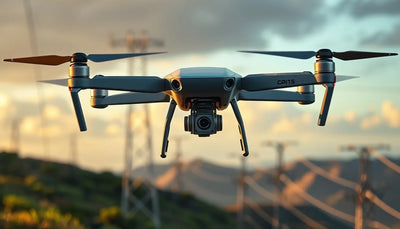
Ring Drone Cam Signals New Home Security Drone Race
Ring's flying security camera concept is moving from patent to product reality, according to industry reporting. The development points to a new consumer drone category that could reshape home monitoring demand, repair workflows, and pre-owned hardware expectations for operators and buyers.

Quick answer
Ring's Drone Cam, a flying home security camera, is now a real product development according to Joe's Daily reporting, signaling a new consumer drone category focused on automated property monitoring.
- Ring is developing a flying security camera drone for home monitoring
- The report confirms the concept has moved beyond patent stage
- The development signals a new consumer drone category
- Commercial drone operators and buyers should watch how this shapes demand for compact camera drones
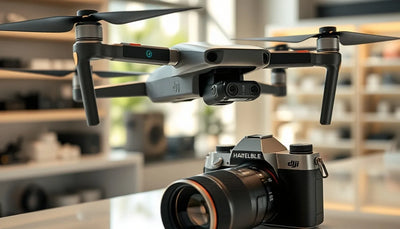
The consumer drone market has spent years chasing better cameras, longer flight times, and smarter obstacle avoidance. Now, according to a report from Joe's Daily, Ring is pushing the category in a different direction entirely: a flying security camera designed to patrol and monitor residential property. The report, aggregated through Google News DJI channels, indicates the Ring Drone Cam is no longer just a patent filing or concept rendering. It is a real product development that could reshape how consumers think about home surveillance and how the broader drone market allocates attention, parts, and service capacity.
Market context
Turn market news into a buy, repair, or trade-in decision.
Compare pre-owned availability, resale timing, and repair economics before the market moves again.

For commercial drone operators, fleet managers, and repair customers, the Ring Drone Cam story matters less as a direct competitor to DJI's enterprise lineup and more as a signal of where consumer drone demand is heading. Automated, security-first flight profiles, indoor navigation, and always-ready deployment represent a different engineering challenge than cinematic camera drones. If the category gains traction, it could pull component supply, repair expertise, and buyer attention toward a new class of hardware.
What the Ring Drone Cam report actually says
The central development, as reported by Joe's Daily, is that Ring's flying security camera is real and moving forward as a product. The report frames the device as a drone-based home monitoring tool, distinct from Ring's established doorbell and fixed camera ecosystem. While the source does not provide detailed technical specifications, flight endurance figures, or pricing, the core takeaway is clear: a major consumer electronics brand is investing in a drone product built specifically for automated property surveillance rather than recreational flight or content creation.
This matters because Ring's parent company brings substantial retail distribution, brand recognition, and smart home integration experience to the drone space. A security-focused flying camera from a household name could introduce drone ownership to buyers who never considered a Mavic or Mini. That expansion of the addressable market is significant, but it also introduces new support and repair dynamics. Security drones are expected to work on demand, often at night, in tight residential spaces, and with minimal pilot input. Those operational demands create different failure modes and maintenance needs than weekend aerial photography.
How a security drone category changes buyer behavior
Consumer drone buyers have historically prioritized image quality, portability, and flight time. A flying security camera shifts the priority list toward reliability, autonomous navigation, obstacle sensing in cluttered environments, and integration with existing home security systems. If Ring's Drone Cam succeeds, it could normalize the idea of a drone as an appliance rather than a hobby device. That shift has downstream effects on how buyers evaluate hardware, how long they expect devices to remain serviceable, and what they do when a unit fails.
For the pre-owned DJI market, the Ring Drone Cam development introduces a new competitive dynamic. Buyers comparing a used DJI Mini or Mavic against a purpose-built security drone may weigh very different factors. The DJI hardware offers proven camera performance and a mature accessory ecosystem. A security drone offers automated monitoring but likely sacrifices imaging versatility. Reboot Hub analysis suggests that pre-owned DJI drones could retain strong appeal for buyers who want a general-purpose camera platform, while security-focused buyers may gravitate toward dedicated surveillance hardware. The key is understanding which use case actually drives the purchase decision.
What this means for drone owners and the market
Drone owners and prospective buyers should treat the Ring Drone Cam report as an early signal rather than an immediate market disruption. The product's availability, pricing, and real-world performance remain unconfirmed in the source data. However, the strategic direction is clear enough to inform planning. Fleet operators and commercial users who rely on compact camera drones for inspection, mapping, or site documentation are unlikely to see direct competition from a home security drone. The more relevant impact is on component supply chains and service capacity. If Ring scales production of a consumer drone with advanced indoor navigation sensors, it could compete for the same motors, gimbals, imaging modules, and battery cells that support the broader drone repair ecosystem. For owners evaluating service and lifecycle risk, Drone Wiki explains the relevant repair, parts, resale, or operational path.
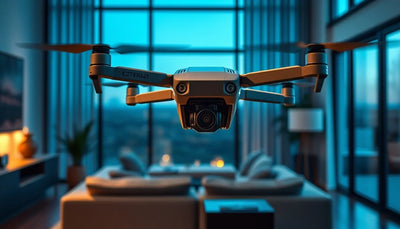
For repair customers, this is a reminder that drone hardware is diversifying. A security drone that flies indoors, navigates furniture, and deploys from a docking station presents repair challenges that differ from outdoor camera drones. Shops that build expertise in sensor calibration, gimbal alignment, and flight controller diagnostics may find that skillset transfers well to security-focused hardware. Buyers considering a pre-owned DJI drone should also weigh long-term serviceability. Established DJI platforms benefit from a mature parts network and repair knowledge base, which is a meaningful advantage when evaluating newer or less proven categories. Operators and owners can use resources like the Drone Wiki to understand platform-specific maintenance and repair considerations before committing to a purchase.
The Ring Drone Cam also raises questions about airspace and privacy norms. A drone that flies autonomously around a residential property operates in a very different regulatory and social context than a manually piloted camera drone. Homeowners may embrace the convenience, but neighbors, regulators, and local authorities will likely scrutinize how these devices capture footage beyond property lines. Commercial operators already familiar with airspace rules and privacy constraints may find their expertise increasingly relevant as consumer security drones enter more neighborhoods.
What to watch next in the security drone segment
The most important developments to track are whether Ring announces formal availability, pricing, or technical specifications for the Drone Cam. Those details will determine whether the product competes directly with entry-level camera drones or occupies a distinct niche. Also worth watching is how DJI and other established drone manufacturers respond. DJI has invested heavily in consumer camera drones, enterprise platforms, and agricultural hardware. A credible security drone competitor could prompt new product positioning, accessory bundles, or service offerings aimed at home monitoring use cases.
For buyers and operators, the practical takeaway is to avoid overreacting to a single report. The Ring Drone Cam is real as a development effort, but its market impact depends on execution, pricing, and reliability. In the meantime, proven camera drones continue to offer the most versatile value for aerial imaging, inspection, and creative work. The pre-owned market for DJI hardware remains a practical entry point for buyers who want established performance without paying full retail. The security drone category may expand the overall market, but it does not erase the value of general-purpose camera platforms.
FAQ
Frequently asked questions
Is the Ring Drone Cam actually available to buy?
No. The Joe's Daily report confirms the flying security camera is a real product development, but it does not provide availability, pricing, or launch timing. Buyers should treat it as an emerging product category, not an immediate purchase option.
Will the Ring Drone Cam compete with DJI camera drones?
It targets a different use case. Ring's device is designed for automated home security monitoring, while DJI's consumer drones focus on aerial photography, videography, and creative flight. Some buyer overlap is possible, but the core value propositions are distinct.
Should drone owners wait for security drones before buying a camera drone?
Not necessarily. If your primary need is aerial imaging, mapping, or creative work, a proven camera drone remains the better fit. Security drones address a narrower monitoring use case, and their long-term reliability and serviceability are still unproven.
Which sources support this update?
The article distinguishes reported information from analysis and does not present an unverified source as official confirmation.
What remains subject to change?
Retail pricing, availability, product bundles and regulatory timelines can change. Readers should verify the latest terms with the named retailer, manufacturer or regulator before acting.
How should buyers or operators use this analysis?
Use the verified facts as a starting point, then compare mission fit, lifecycle support, maintenance needs and current procurement terms before making a purchase or fleet decision.
Использованные источники
- Joe's Daily via Google News - primary source
На момент публикации дополнительная официальная документация отсутствовала.
Редакция Reboot Hub предоставляет анализ по вопросам покупки, ремонта, перепродажи и эксплуатации БПЛА для их владельцев. Если вы заметили ошибку, свяжитесь с нами для ее исправления в соответствии с нашей редакционной политикой.