MQ-58 Valkyrie Unit Cost Rises to $6M-$8M, Kratos Says
Kratos reports the MQ-58 Valkyrie now costs $6 million to $8 million per airframe. The company still frames that price as affordable relative to competing Collaborative Combat Aircraft designs, but the shift matters for defense procurement planning and cost-per-effect calculations.

Quick answer
Kratos reports the MQ-58 Valkyrie Collaborative Combat Aircraft now costs $6 million to $8 million per airframe, and the company still positions that price as relatively affordable against competing CCA designs.
- Reported unit cost is $6M-$8M per MQ-58 Valkyrie
- Kratos frames the price as competitive within the CCA field
- The development signals rising cost pressure in attritable drone programs
Evidence: The War Zone · Defense.gov official source
Fleet readiness
Keep DJI hardware available without overbuying new units.
Use defense and fleet news as a planning signal for repair support, inspected pre-owned aircraft, and replacement timing.

Verified facts
What the available evidence confirms
| Item | Reported figure | Source context |
|---|---|---|
| MQ-58 Valkyrie unit cost | $6M-$8M | The War Zone reporting on Kratos statements |
| Kratos positioning | Relatively affordable | Compared with competing CCA drone designs |
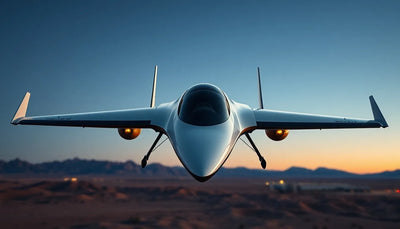
The MQ-58 Valkyrie, one of the most closely watched Collaborative Combat Aircraft programs in the U.S. defense market, now carries a reported unit cost of $6 million to $8 million per airframe, according to reporting by The War Zone. Kratos, the company behind the Valkyrie, still describes that price as relatively affordable when measured against a growing field of competing CCA drone designs.
The figure matters because the Valkyrie was originally discussed in terms of attritable, lower-cost mass. A shift toward a $6 million to $8 million unit price does not make the platform expensive by crewed fighter standards, but it does change how defense buyers, program analysts, and fleet planners should think about cost-per-effect, attrition tolerance, and long-term sustainment budgets.
What the reported cost shift means
The War Zone reports that Kratos now cites a $6 million to $8 million unit cost for the MQ-58 Valkyrie. That is a concrete data point in a defense segment where precise pricing is often obscured by development contracts, mission-system add-ons, and classified payload integration. The reporting frames the number as a current company reference point rather than a one-time historical figure.
For defense procurement teams, the practical implication is straightforward: even so-called attritable drones now carry meaningful acquisition costs. A fleet of 50 Valkyrie-class airframes would represent a $300 million to $400 million investment before spares, ground equipment, training, and sustainment. That is still far below an equivalent crewed fighter fleet, but it is no longer a disposable, low-stakes line item.
Reboot Hub analysis suggests the cost curve also affects how operators think about repair, reuse, and airframe recovery. When a platform costs several million dollars per unit, the economics of recovering, repairing, and returning damaged airframes to service become more compelling than they would be for a sub-$1 million munition-style drone.
How the Valkyrie fits the broader CCA market
The War Zone notes that Kratos sees the Valkyrie's relative affordability as key to staying ahead of a growing field of competing Collaborative Combat Aircraft designs. That competitive framing is important because multiple defense contractors are now pursuing CCA concepts, each with different cost, payload, range, and autonomy trade-offs.
The $6 million to $8 million figure gives procurement analysts a useful benchmark. It sits in a middle band between small, short-range loitering systems and larger, more survivable uncrewed combat platforms. Buyers evaluating CCA options will likely weigh that price against mission endurance, payload flexibility, and the ability to operate alongside crewed fighters in contested airspace.
For defense suppliers and aftermarket service providers, the Valkyrie's reported price also signals where sustainment revenue may concentrate. Higher-value airframes justify more sophisticated depot-level repair, component overhaul, and obsolescence management. That is a different support model from the rapid replacement logic applied to very low-cost one-way systems.
What this means for drone owners and the market
The Valkyrie is a defense program, but its reported cost shift carries broader signals for the commercial and adjacent drone market. First, it shows that even military programs marketed around affordability are experiencing upward unit-cost pressure as capabilities expand. That pattern often repeats in commercial enterprise fleets, where sensor packages, autonomy stacks, and reliability requirements push acquisition costs above initial estimates.
Second, the Valkyrie example reinforces why total lifecycle cost, not sticker price, should anchor fleet planning. A $6 million to $8 million airframe may still be the right choice if it reduces crewed sortie demand, lowers personnel exposure, and delivers reusable mission capability. But the decision only makes sense when buyers model spares, repair turnaround, software updates, and airframe attrition over a multi-year horizon.
For operators in the pre-owned DJI market, the lesson is similar in structure even if the price scale is different. A drone that costs more to replace tends to hold more residual value, and repair economics become more attractive relative to disposal. Reboot Hub analysis suggests that as drone acquisition costs rise across both defense and commercial segments, buyers increasingly look for inspected pre-owned airframes and genuine OEM spare parts to extend fleet life. Readers tracking these cost dynamics can find repair and ownership context in the Drone Wiki. For owners evaluating service and lifecycle risk, Drone Wiki explains the relevant repair, parts, resale, or operational path.
The operator-facing takeaway is to treat reported unit costs as a starting point, not a final budget number. Whether evaluating a defense CCA program or a commercial fleet expansion, the smarter move is to build a lifecycle model that includes recovery, repair, parts availability, and realistic attrition assumptions before committing to a procurement plan.
What buyers and fleet planners should watch next
The War Zone's reporting does not specify whether the $6 million to $8 million figure reflects a bare airframe, a mission-equipped configuration, or a specific production lot. That distinction matters. Defense pricing often shifts dramatically depending on whether the number includes sensors, autonomy hardware, secure communications, and integration labor.
Fleet planners should watch for future Kratos disclosures or contract awards that clarify configuration assumptions. A unit cost tied to a fully missionized Valkyrie would be a different signal than a bare-airframe price. The same logic applies to commercial procurement: buyers should always ask whether a quoted drone price includes batteries, payload, software licenses, and support.
The Valkyrie's reported price also raises a question about production scale. Kratos has long argued that higher volumes would lower unit costs. If the current $6 million to $8 million range reflects limited production quantities, future orders could bend the curve downward. Conversely, if capability upgrades continue to add cost, the platform may drift further from its original low-cost positioning.
For now, the clearest signal is that the CCA market is maturing into a real procurement category with real cost benchmarks. The Valkyrie's reported price gives defense analysts, competitors, and adjacent market observers a concrete number to anchor comparisons, even as configuration details remain incomplete.
FAQ
Frequently asked questions
Why does the MQ-58 Valkyrie cost $6 million to $8 million now?
The War Zone reports that Kratos now cites a $6 million to $8 million unit cost for the Valkyrie. The reporting does not specify whether the figure includes mission systems, sensors, or specific production lot assumptions, so the exact configuration behind the number remains unclear.
Is the Valkyrie still considered affordable for a combat drone?
Kratos still frames the Valkyrie as relatively affordable compared with competing Collaborative Combat Aircraft designs. The company sees that cost position as important for staying competitive in a growing field of CCA concepts.
What should fleet planners do differently after this cost update?
Fleet planners should model total lifecycle cost rather than relying on a single unit price. That means accounting for spares, repair turnaround, airframe recovery, software updates, and attrition before comparing the Valkyrie against alternative CCA or commercial drone options.
Which sources support this update?
The visible evidence links identify The War Zone and Defense.gov official source; each source is used only for the claim it directly supports.
What remains subject to change?
Retail pricing, availability, product bundles and regulatory timelines can change. Readers should verify the latest terms with the named retailer, manufacturer or regulator before acting.
How should buyers or operators use this analysis?
Use the verified facts as a starting point, then compare mission fit, lifecycle support, maintenance needs and current procurement terms before making a purchase or fleet decision.
Использованные источники
- The War Zone - primary source
- Defense.gov official source - official government source
Редакция Reboot Hub предоставляет анализ по вопросам покупки, ремонта, перепродажи и эксплуатации БПЛА для их владельцев. Если вы заметили ошибку, свяжитесь с нами для ее исправления в соответствии с нашей редакционной политикой.