KONGSBERG Picks Echodyne MESA Radar for Counter-UAS Weapon Systems
KONGSBERG will integrate Echodyne MESA radar into its PROTECTOR RS4 and RS6 remote weapon stations, tightening the detection-to-defeat chain against small drones. The reported move signals continued defense demand for low-SWaP counter-UAS sensing and may shape adjacent commercial security procurement.

Quick answer
KONGSBERG selected Echodyne MESA radar for integration with its PROTECTOR RS4 and RS6 remote weapon stations to strengthen counter-UAS detection-to-defeat capability, according to SUAS News.
- KONGSBERG is integrating Echodyne MESA radar into PROTECTOR RS4 and RS6 remote weapon stations.
- The reported goal is a stronger detection-to-defeat chain against small drones.
- SUAS News describes the MESA radar as a low-SWaP, precision-tracking sensor.
- The development points to continued defense demand for compact counter-UAS radar.
Evidence: SUAS News · AeroVironment unmanned systems solutions · Defense.gov official source · DIU Blue UAS
Fleet readiness
Keep DJI hardware available without overbuying new units.
Use defense and fleet news as a planning signal for repair support, inspected pre-owned aircraft, and replacement timing.

Verified facts
What the available evidence confirms
| Element | Reported detail |
|---|---|
| Company | KONGSBERG |
| Radar supplier | Echodyne |
| Radar type | MESA radar |
| Platforms | PROTECTOR RS4 and RS6 remote weapon stations |
| Stated purpose | Strengthen detection-to-defeat against counter-UAS threats |
| Source | SUAS News |
KONGSBERG has selected Echodyne MESA radar for integration with its PROTECTOR RS4 and RS6 remote weapon stations, according to a report published by SUAS News. The reported integration is framed as a way to strengthen the detection-to-defeat chain for counter-UAS operations, pairing a compact precision-tracking radar with remotely operated weapon stations.
The announcement matters beyond the defense procurement cycle. It is another signal that counter-UAS buyers are prioritizing sensors that can be deployed on existing platforms without heavy power, cooling, or integration burdens. For commercial drone operators, fleet managers, and repair customers watching the security market, the development shows where counter-drone investment is flowing and how small unmanned aircraft are being treated as a persistent operational risk.
What the reported KONGSBERG-Echodyne integration involves
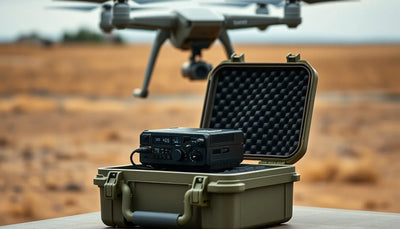
SUAS News reports that KONGSBERG selected Echodyne MESA radar for use with the PROTECTOR RS4 and RS6 remote weapon stations. The source describes the MESA radar as a low-SWaP sensor, meaning low size, weight, and power, with precision-tracking capability. The stated purpose is to improve detection-to-defeat performance in counter-UAS scenarios.
Remote weapon stations are typically vehicle-mounted or fixed-position systems that allow an operator to engage targets from a protected position. Adding a radar sensor to those stations can shorten the time between detecting a small drone and responding to it. Because the source material is limited, Reboot Hub is not treating the integration as evidence of a specific production timeline, order volume, or deployment contract. The central verified development is the selection itself and the platforms named.
The practical implication is straightforward: defense integrators are looking for radar that can be added to existing kinetic systems without requiring a separate sensor trailer or major vehicle redesign. That preference tends to favor flat-panel, electronically scanned radar designs that can be mounted directly on a weapon station or nearby mast.
Why low-SWaP radar keeps appearing in counter-UAS programs
Small drones are difficult to detect because they move slowly, fly low, and often present a limited radar cross-section. Traditional air defense radars may be overbuilt for that mission, expensive to operate, and difficult to place close to the assets being protected. A low-SWaP radar changes that calculation by allowing more distributed sensing at lower integration cost.
The SUAS News report identifies the MESA radar as a precision-tracking sensor, which suggests an emphasis on track quality rather than simple detection. In counter-UAS work, track quality matters because a weapon station operator needs enough confidence in the target position to act quickly without wasting ammunition or engaging the wrong object. The reported KONGSBERG selection therefore points to a procurement preference for sensors that can support a faster decision loop.
For commercial readers, the takeaway is not that every drone operator will face a KONGSBERG weapon station. The takeaway is that counter-UAS sensing is becoming more compact, more common, and more tightly coupled to response systems. That trend can influence where drones are permitted to fly, how sensitive sites are protected, and how security buyers evaluate detection technology.
What this means for drone owners and the market
The reported integration is a defense story, but it has secondary effects for commercial drone owners and buyers. When counter-UAS systems become easier to deploy, more venues and infrastructure operators may adopt them. Airports, energy sites, stadiums, and logistics hubs already evaluate drone detection tools, and defense-derived sensor approaches often inform those commercial decisions over time.
Reboot Hub analysis: For fleet operators, the practical response is to keep flight planning and compliance records strong. A drone that is operating legally and predictably is less likely to create confusion for security teams using detection systems. For buyers considering used or pre-owned DJI drones, the counter-UAS trend does not change the core value of a well-maintained aircraft, but it does reinforce the importance of understanding local flight restrictions and sensitive-site boundaries before purchasing. Operators who want to avoid downtime and repair risk should also pay attention to how security environments around their usual job sites are evolving.
Reboot Hub analysis suggests that defense procurement signals like this one can eventually shape commercial security budgets, but the path is indirect. A radar selected for a remote weapon station is not the same as a commercial drone detection product. Still, the underlying demand for compact, low-power, precision-tracking sensors is shared across both markets. For repair customers and fleet planners, the relevant lesson is that counter-UAS infrastructure is becoming more capable and more distributed, which raises the value of predictable, documented drone operations. Readers researching drone ownership and maintenance implications can find additional context in the Drone Wiki. For owners evaluating service and lifecycle risk, Drone Wiki explains the relevant repair, parts, resale, or operational path.
Reading the announcement without overstating it
The SOURCE DATA for this story is limited to a single SUAS News report. Reboot Hub is not aware of an official KONGSBERG or Echodyne press release confirming the selection, and no contract value, delivery schedule, or deployment customer was identified in the source material. Readers should treat the selection as reported rather than as a fully verified procurement award.
That distinction matters because defense announcements often move through stages. A supplier selection can precede formal contracting, integration testing, or fielding by months or years. The reported platforms, PROTECTOR RS4 and RS6, are named in the source, but the source does not provide performance figures, radar range, or integration status. Reboot Hub has not added technical specifications beyond what SUAS News reported.
For commercial readers, the appropriate posture is awareness rather than action. The announcement reinforces a known direction in counter-UAS technology: smaller sensors, tighter integration with response systems, and continued investment in defending against small drones. Drone buyers and operators should watch whether similar sensing approaches appear in commercial security products, because that would be the clearest signal that the technology is crossing from defense into everyday operating environments.
FAQ
Frequently asked questions
What did KONGSBERG reportedly select?
According to SUAS News, KONGSBERG selected Echodyne MESA radar for integration with its PROTECTOR RS4 and RS6 remote weapon stations to strengthen counter-UAS detection-to-defeat capability.
Why does low-SWaP radar matter for counter-UAS work?
Low-SWaP radar is smaller, lighter, and less power-hungry than traditional air defense radar, which makes it easier to place close to protected assets and integrate with existing weapon stations or vehicles.
Should commercial drone operators change anything after this report?
No immediate operational change is required, but fleet managers and buyers should note that counter-UAS sensing is becoming more compact and widely deployable, which may influence security practices at sensitive commercial sites over time.
Which sources support this update?
The visible evidence links identify SUAS News and AeroVironment unmanned systems solutions and Defense.gov official source and DIU Blue UAS; each source is used only for the claim it directly supports.
What remains subject to change?
Retail pricing, availability, product bundles and regulatory timelines can change. Readers should verify the latest terms with the named retailer, manufacturer or regulator before acting.
How should buyers or operators use this analysis?
Use the verified facts as a starting point, then compare mission fit, lifecycle support, maintenance needs and current procurement terms before making a purchase or fleet decision.
Использованные источники
- SUAS News - primary source
На момент публикации дополнительная официальная документация отсутствовала.
Редакция Reboot Hub предоставляет анализ по вопросам покупки, ремонта, перепродажи и эксплуатации БПЛА для их владельцев. Если вы заметили ошибку, свяжитесь с нами для ее исправления в соответствии с нашей редакционной политикой.