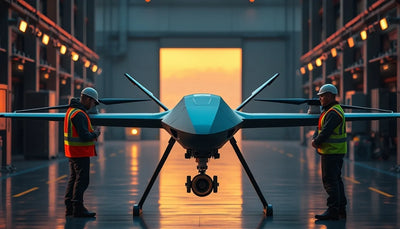
DJI Introduces Two New Agricultural Drones for Spraying, Spreading, Seeding
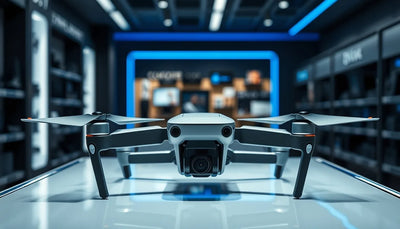
DJI has introduced two new agricultural drones designed for spraying, spreading, and seeding. This move expands precision agriculture options, influencing fleet planning, pre-owned values, and repair services for commercial operators.

DJI has introduced two new agricultural drones designed specifically for spraying, spreading, and seeding operations, according to a report covered by Successful Farming. This development signals a continued push by DJI into precision agriculture, a segment where reliability, payload versatility, and ease of operation are critical for commercial viability. For drone fleet operators, repair customers, and second-hand market participants, these new models carry immediate operational and financial implications.
The new drones join DJI’s existing agricultural lineup but represent a targeted expansion into combined tasks—spraying liquid pesticides or fertilizers, spreading granular material, and seeding cover crops or direct planting. While DJI has offered agricultural drones for years, the dedicated focus on three-in-one functionality in a single platform is a notable evolution. Commercial operators who previously relied on separate equipment or multiple flights for different tasks may now consolidate workflows with a single aircraft.
The Evolution of Agricultural Drone Capabilities
Agricultural drones have transformed from novelty crop monitors to essential tools for input application. DJI’s latest introduction reinforces that trend. By designing two new drones for spraying, spreading, and seeding, DJI addresses a long-standing demand: one platform that can handle the major field operations without requiring a fleet of different machines. The source report specifically states the drones are “built for Spraying, Spreading and Seeding,” highlighting an intentional design rather than a retrofit.
Market context
Turn market news into a buy, repair, or trade-in decision.
Compare pre-owned availability, resale timing, and repair economics before the market moves again.

For operators, this means reduced equipment capital outlay and simplified logistics. Instead of maintaining separate spreaders and sprayers, a single drone can perform multiple roles across the growing season. However, with multifunctionality comes complexity in maintenance and calibration. Spraying systems require precise nozzle health, while spreading and seeding need hopper flow monitoring and calibration for varying particle sizes. Operators should expect that these new models will demand careful attention to their payload subsystems.
The introduction also suggests that DJI is refining its approach to battery and flight platform design to support the heavier payloads associated with spreading and seeding. While specific technical specifications were not detailed in the available source material, the fact that DJI has committed to a dedicated dual model launch indicates confidence in the market demand for integrated agricultural drones.
What this means for drone buyers
For commercial drone buyers—especially farm cooperatives, large acreage operators, and precision agriculture service providers—the arrival of two new DJI agricultural models creates both opportunity and strategic timing decisions. Buyers considering a new drone should evaluate whether the redesigned capabilities offer meaningful productivity gains over existing platforms. The combination of spraying, spreading, and seeding in a single airframe could reduce per-acre operating costs and increase field throughput.
Yet, the immediate impact on the used equipment market is equally significant. With DJI refreshing its agricultural lineup, pre-owned units of earlier models (such as the Agras series) may see price adjustments as the new generation arrives. Operators looking to upgrade can find strong value in the pre-owned DJI drones market, where inspected units from trade-ins and fleet rollovers become available at competitive prices. For those who do not need the absolute latest payload integration, a late-model pre-owned agricultural drone can be a cost-effective entry point into precision farming.
Fleet managers should also account for repair planning. New models often introduce changed parts—new spray booms, hoppers, and avionics—which may take time to become widely available through professional DJI repair services. Early adopters should stock critical spares or secure repair service agreements to avoid downtime during peak field seasons. Conversely, operators of current-generation DJI agricultural drones can expect continued parts support as the aftermarket adjusts to the new models.
One practical answer for buyers: If your current drone is nearing end-of-life or lacks the spraying-spreading-seeding trifecta, consider a trade-in while the new models are still fresh in the market. The drone trade-in guide offers a framework for valuing your existing equipment and timing the swap to minimize financial loss.
Operational and Maintenance Considerations
Operating new agricultural drones brings distinct maintenance demands. The combination of spraying (liquids) and spreading/seeding (solids) in one platform means the airframe must tolerate both corrosive chemicals and abrasive granular material. Downtime from clogs, nozzle wear, or hopper malfunctions can directly affect planting and treatment windows. Professional repair services will need to be equipped with OEM-pulled parts for the new models, which may not be immediately available in all regions.
From a fleet perspective, integrating two new drone types requires training for pilots and mechanics. While DJI’s ecosystem generally offers consistent control interfaces, the payload handling differences between spraying and spreading require operators to understand flow rate calibration, pattern uniformity, and cleaning protocols between tasks. A service that provides genuine OEM spare parts for both new and existing models will be indispensable for fleet managers who cannot afford long repair turnarounds.
Another operational factor is cost of ownership. New agricultural drones typically carry a higher acquisition price, but they may offer lower total cost of operation if they replace multiple older units. Operators should model their seasonal workload to determine whether the new drones yield a positive return on investment. Including potential revenue from drone-based seeding services—a growing segment in conservation agriculture—could tilt the financial equation favorably.
Pre-Owned Market Dynamics
The introduction of two new DJI agricultural drones will undoubtedly ripple through the pre-owned DJI market. Typically, when DJI launches new flagship models, prices for previous generation equipment soften. This creates a window for budget-conscious buyers to acquire capable agricultural drones at reduced prices. For sellers, the timing of a trade-in matters: moving an older unit early in the product cycle often fetches a better price than waiting until the market is saturated with post-upgrade listings.
Pre-owned DJI agricultural drones from the previous generation remain highly capable for spraying-only or simple spreading tasks. Many operators find that a inspected pre-owned unit priced 30–40% below retail offers a compelling value proposition, especially when paired with professional repair and a commitment to genuine OEM spare parts. For those who do not need the latest seeding integration, the earlier models still deliver reliable performance for herbicide and fungicide application.
The secondary market also benefits from fleet turnover as large farms and spraying services upgrade to the new models. Buyers in the market for a pre-owned agricultural drone should watch for well-maintained units with documented service history. Availability of genuine OEM-pulled parts ensures that even older drones can be kept flying with full support. In some cases, the total cost of operating a pre-owned unit plus a proactive repair plan can be lower than leasing a new model.
Ultimately, the dynamic highlights the importance of a liquid second-hand market for professional drone equipment. The DJI ecosystem’s scale supports a robust flow of used hardware, and each new product introduction refreshes this cycle. Operators who understand the trade-off between new features and used cost can make financially sound decisions.
What should operators do differently after reading this?
Fleet managers should start evaluating their current agricultural drone fleet against the new DJI capabilities. Consider whether the integration of spraying, spreading, and seeding in one platform justifies an upgrade. If so, begin planning a phased transition, including trade-ins of older equipment, acquisition of pre-owned units from the secondary market, and partnerships with repair services that stock OEM parts for both old and new models. Early movers can capitalize on resale values before the influx of trade-ins drives down prices.
FAQ
Will the new DJI agricultural drones be compatible with existing Agras accessories?
The source material does not specify compatibility details. It is reasonable to expect that DJI may have redesigned payload attachment systems for the new models. Operators should wait for official documentation before assuming backward compatibility with tanks, pumps, or spreaders from previous generations.
How will the introduction of new agricultural drones affect repair costs?
Initially, parts availability for the new models may be limited, potentially increasing repair turnaround times and costs. However, the wider aftermarket for DJI agricultural drones typically expands rapidly after a launch. Using professional DJI repair services that source genuine OEM parts can mitigate delays and ensure quality.
Should I buy a new DJI agricultural drone or a pre-owned one now?
Your decision depends on budget, immediate need for the latest features, and risk tolerance. If you require integrated spraying, spreading, and seeding immediately, a new unit may be justified. If you can wait and want to save, a inspected pre-owned DJI drone from a reputable seller offers excellent capability at a lower cost, with the confidence of professional repair support.