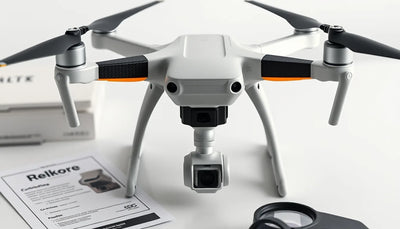
DJI Booth at Vegas Expo Shows Every Drone on FCC Proposed Ban List
DJI Enterprise filled its Commercial UAV Expo booth with aircraft that fall inside the FCC's proposed military-grade definition. The timing is direct: public comments on the proposal close today, leaving fleet buyers and pre-owned DJI owners facing fresh procurement uncertainty.

Quick answer
DJI Enterprise exhibited aircraft at Commercial UAV Expo that fall inside the FCC's proposed military-grade definition, according to DroneXL.co, and public comments on the proposal close on September 2, 2026.
- The FCC proposal could classify certain DJI enterprise drones as military-grade equipment.
- Every aircraft on DJI Enterprise's expo stand reportedly falls within the proposed definition.
- The public comment window closes today, September 2, 2026.
- Commercial operators and fleet buyers face uncertainty about future procurement and support.
Evidence: DroneXL.co
Operator checklist
Turn policy news into a safer fleet decision.
Before changing aircraft, compare repair paths, available DJI inventory, and trade-in timing against the rule change.

The Commercial UAV Expo in Las Vegas has become an unlikely stage for a regulatory collision. According to DroneXL.co, every aircraft on DJI Enterprise's exhibition stand falls inside the Federal Communications Commission's proposed military-grade definition. The timing is pointed: the FCC's public comment window on that proposal closes today, September 2, 2026.
For commercial operators, repair customers, and anyone holding DJI enterprise hardware, the scene captures a market caught between two realities. DJI continues to market and display its enterprise lineup to American buyers at a major industry event, while a federal agency moves forward with language that could reshape how those same aircraft are classified, imported, and supported. The disconnect is no longer theoretical.
The FCC proposal and what the expo display signals
DroneXL.co reports that the aircraft shown at DJI Enterprise's booth all fall within the FCC's proposed military-grade definition. That definition, as reported, is broad enough to sweep in enterprise platforms that many commercial operators currently use for inspection, surveying, public safety, and agricultural work. The proposal does not appear to distinguish between a defense end user and a civilian fleet operator purchasing the same airframe.
The practical signal is that DJI's commercial strategy in the United States is proceeding on one track while federal rulemaking moves on another. Exhibiting at Commercial UAV Expo is a normal business activity, but doing so with hardware that a proposed FCC rule would classify as military-grade creates a visible tension. Buyers walking the show floor are seeing equipment that may face a materially different regulatory status in the near future.
Reboot Hub analysis: the expo display should not be read as a prediction of the FCC's final rule. But it does show that DJI is not voluntarily pulling enterprise hardware from the U.S. market while the comment period runs. For procurement teams, that means the decision to buy, hold, or delay remains an open commercial question rather than a settled compliance matter.
What this means for drone owners and the market
Fleet managers and independent operators now face a procurement environment where the hardware on the show floor and the hardware covered by a proposed federal definition overlap almost completely. If the FCC's language moves forward as proposed, the secondary effects could touch import channels, authorized service networks, and the availability of OEM-pulled parts. A drone that is harder to import is also harder to repair through conventional supply lines.
For owners of pre-owned DJI drones, the regulatory direction adds a new variable to resale value. Buyers in the second-hand market typically price risk into their offers, and a pending federal classification is exactly the kind of risk that shows up in lower bids or longer listing times. Sellers who have been holding enterprise airframes may find that the comment period itself, even before any final rule, dampens buyer confidence. Operators who want to understand how a specific model fits into the current repair and support landscape can check the Drone Wiki for model-level context before making a hold or sell decision.
The immediate operator-facing action is to separate the aircraft you already own from the aircraft you might buy next quarter. Existing hardware does not stop working because a comment period closes. But future procurement, especially for enterprise platforms that fall inside the proposed definition, should be treated as a decision with a live regulatory variable. If your fleet plan assumed uninterrupted access to new DJI enterprise units, that assumption now carries more weight than it did before the expo opened.
Repair, parts, and the second-hand DJI market
The repair side of the market watches these proposals closely because service networks depend on parts availability. A military-grade classification could complicate the flow of genuine OEM spare parts into civilian repair channels, even if the airframes themselves remain in operator hands. DroneXL.co's reporting does not specify how parts distribution would be affected, but the commercial logic is straightforward: any restriction on the equipment tends to ripple into the components that keep it flying. For owners evaluating service and lifecycle risk, Drone Wiki explains the relevant repair, parts, resale, or operational path.
For repair customers, the practical response is to prioritize maintenance on existing enterprise aircraft while parts are still moving through familiar channels. Waiting to address a gimbal fault, a worn landing gear assembly, or a damaged arm on a Matrice-series platform could become more expensive if supply tightens. Pre-owned buyers should also ask harder questions about parts provenance and service history before committing to an enterprise airframe that sits inside the proposed definition.
The pre-owned DJI market has historically absorbed regulatory news in stages. Initial headlines create hesitation, then buyers return once they understand which models are actually affected and how support will work in practice. This proposal is different because the affected category appears to be broad rather than limited to a single model line. That breadth makes it harder for the second-hand market to simply route around the problem by shifting demand to an unaffected platform.
What buyers and fleet managers should watch next
The comment period closing today is not the end of the process. After comments close, the FCC will review submissions and decide whether to advance, revise, or withdraw the proposed definition. DroneXL.co's reporting frames the expo display as a live illustration of the stakes, not as a final regulatory outcome. Fleet buyers should watch for any FCC statement that clarifies whether the military-grade definition would apply retroactively to existing units or only to future imports.
Procurement teams should also monitor how DJI responds in the U.S. market after the comment window closes. If the company adjusts its enterprise lineup, changes distribution partners, or shifts messaging around which platforms are intended for civilian use, those moves will signal how seriously the proposal is being treated internally. A quiet response would suggest DJI expects the rule to stall; a visible strategy shift would suggest the opposite.
For now, the most defensible position for a commercial operator is to document fleet inventory, confirm current service and parts availability for each airframe, and avoid large new commitments to enterprise platforms that sit squarely inside the proposed definition. The expo booth in Las Vegas made the overlap visible. The comment period makes the timing urgent. The decision about what to buy next remains firmly in the operator's hands.
FAQ
Frequently asked questions
What did DroneXL.co report about DJI's expo booth?
DroneXL.co reported that every aircraft on DJI Enterprise's Commercial UAV Expo stand falls inside the FCC's proposed military-grade definition, and that the public comment period on that proposal closes on September 2, 2026.
Does the FCC proposal ban DJI drones immediately?
No. The reporting describes a proposed definition and an open comment period, not a final rule. The regulatory process is still underway, and no immediate ban is confirmed by the source material.
Should fleet buyers delay purchasing DJI enterprise drones?
Fleet buyers should weigh the live regulatory uncertainty before committing to new enterprise hardware that falls inside the proposed definition. Documenting current inventory and confirming parts availability is a prudent near-term step while the FCC process continues.
Which sources support this update?
The visible evidence links identify DroneXL.co; each source is used only for the claim it directly supports.
What remains subject to change?
Retail pricing, availability, product bundles and regulatory timelines can change. Readers should verify the latest terms with the named retailer, manufacturer or regulator before acting.
How should buyers or operators use this analysis?
Use the verified facts as a starting point, then compare mission fit, lifecycle support, maintenance needs and current procurement terms before making a purchase or fleet decision.
Использованные источники
- DroneXL.co - primary source
- FCC Covered List - official regulator source
Редакция Reboot Hub предоставляет анализ по вопросам покупки, ремонта, перепродажи и эксплуатации БПЛА для их владельцев. Если вы заметили ошибку, свяжитесь с нами для ее исправления в соответствии с нашей редакционной политикой.