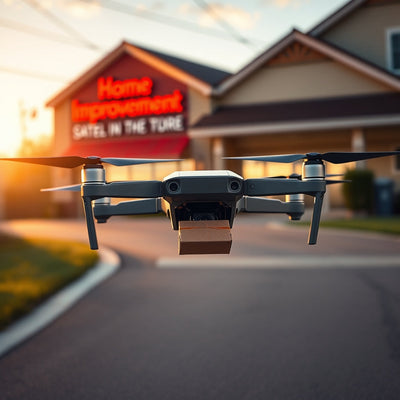
Colorado City Weighs Local Rules for Drone Delivery Launch Hubs
Northglenn, Colorado is drafting rules for commercial drone delivery launch hubs while acknowledging FAA limits on local aircraft oversight. The proposal highlights how cities can shape ground infrastructure even when they cannot regulate flight operations, a distinction that matters for fleet planning and market expansion.

Quick answer
Northglenn, Colorado is considering local rules for commercial drone delivery launch hubs, while city officials acknowledge they cannot regulate aircraft operations due to FAA authority.
- The proposal targets ground infrastructure such as launch hubs, not in-flight drone operations
- City officials recognize FAA preemption limits local control over aircraft operation
- The rules arrive as commercial drone delivery expands across the United States
- The case illustrates how municipalities can shape drone delivery through zoning and land use
Evidence: DRONELIFE · FAA UAS official guidance
Operator checklist
Turn policy news into a safer fleet decision.
Before changing aircraft, compare repair paths, available DJI inventory, and trade-in timing against the rule change.

Commercial drone delivery is expanding across the United States, and local governments are now working through what they can and cannot control. A new proposal in Northglenn, Colorado offers a clear case study. According to reporting by DRONELIFE, the city is considering rules for commercial drone delivery launch hubs, while city officials openly acknowledge that Federal Aviation Administration authority limits their ability to regulate aircraft operations themselves.
The Northglenn proposal matters beyond one Denver suburb. It signals how municipalities will likely approach drone delivery as ground infrastructure becomes the primary lever available to local regulators. For fleet operators, logistics providers, and drone service companies, the distinction between what a city can regulate and what remains under federal control will shape site selection, permitting timelines, and expansion strategy.
What Northglenn is proposing and why it is notable
According to the DRONELIFE report, the Northglenn proposal focuses on commercial drone delivery hubs rather than the drones flying overhead. That focus is deliberate. City officials appear to recognize that the FAA holds authority over aircraft operation, airspace, and flight rules. What remains within municipal reach is the physical footprint of drone delivery: where launch hubs can be located, how they interact with zoning, and what conditions apply to ground operations.
The proposal is notable precisely because of what it does not attempt to regulate. Rather than asserting control over flight paths, altitude, or aircraft certification, the city is targeting the infrastructure layer. That approach is consistent with how local governments have historically handled other transportation networks. A city cannot regulate how an airline flies a jet, but it can regulate the airport terminal, parking, noise buffers, and land use around the facility. Drone delivery hubs appear to be following the same pattern.
For commercial operators, this means the regulatory conversation is shifting from a single federal authority to a layered environment. A drone delivery provider may hold FAA approvals and still face a patchwork of local zoning decisions, conditional use permits, and infrastructure requirements. The Northglenn case suggests that cities will not necessarily block drone delivery outright, but they will want a say in where and how ground operations function.
The regulatory boundary between FAA authority and local control
The DRONELIFE reporting highlights a boundary that has been developing in U.S. drone regulation for years. The FAA generally holds authority over aircraft operation, airspace management, pilot certification, and operational rules. Local governments retain authority over land use, zoning, noise ordinances, and public safety at ground level. The Northglenn proposal sits squarely on the local side of that boundary.
This division has practical consequences. A city cannot tell a drone operator what altitude to fly or which route to take, but it can determine whether a launch hub is permitted in an industrial zone, how many vehicles may access the site, and what hours ground operations may run. Those are meaningful controls. A launch hub that cannot operate overnight or cannot be located near residential areas may change the economics of a delivery route network.
Reboot Hub analysis suggests that fleet managers should treat local infrastructure rules as a core site selection variable, not an afterthought. A location that works under FAA rules may still fail under municipal zoning. Companies planning multi-city drone delivery rollouts will need to track local proposals like the one in Northglenn and build permitting lead time into their expansion schedules.
What this means for drone owners and the market
The Northglenn proposal arrives as commercial drone delivery moves from pilot programs toward broader operational scale. For individual drone owners and small commercial operators, the immediate impact may be indirect, but the signal is clear: local governments are paying closer attention to where drone infrastructure lives. That attention will eventually shape where drone services are available, how dense delivery networks can become, and which markets develop first. For owners evaluating service and lifecycle risk, Drone Wiki explains the relevant repair, parts, resale, or operational path.
For buyers evaluating pre-owned DJI drones and enterprise platforms, the regulatory environment matters because it affects resale value and operational flexibility. A drone that is useful in a market with clear local infrastructure rules may hold value better than one tied to uncertain permitting conditions. Fleet operators who understand the emerging local regulatory layer can make better procurement decisions, including when to buy inspected pre-owned units versus new inventory. The Drone Wiki offers a useful reference for operators tracking how regulatory changes affect equipment choices and maintenance planning.
The pre-owned market also responds to regulatory clarity. When cities define what launch hubs can look like, operators gain confidence in long-term deployment plans. That confidence supports fleet investment, including decisions to expand with genuine OEM spare parts and professional DJI repair support. Conversely, regulatory uncertainty tends to slow purchasing and push operators toward shorter planning horizons. The Northglenn proposal, by acknowledging the FAA boundary early, may actually reduce uncertainty for operators considering the Colorado market.
What operators should watch next
The Northglenn proposal is one data point in a broader trend. As drone delivery expands, more municipalities will draft similar rules. Operators should monitor whether other Colorado cities follow Northglenn's lead and whether the proposal moves from draft to adoption. The specific conditions attached to launch hub permits will matter more than the headline that a city is considering rules at all.
According to the DRONELIFE report, the industry expansion across the United States is the backdrop for this local action. That means the regulatory landscape is developing in real time, often ahead of formal federal guidance on how local and federal authority should interact. Operators who track these local developments will have an advantage in site selection and market entry timing.
For now, the practical takeaway is straightforward: treat local infrastructure rules as a first-order planning variable. Before committing to a service area, review municipal zoning, pending proposals, and any public statements from city officials about drone delivery. A city that is actively drafting launch hub rules may be signaling openness to commercial drone operations, even if the permitting path is not yet fully defined.
FAQ
Frequently asked questions
What can cities regulate about drone delivery?
Cities can generally regulate ground infrastructure such as launch hubs, zoning, land use, and ground-level operational conditions. They cannot regulate aircraft operation, airspace, or flight rules, which remain under FAA authority.
Why is the Northglenn proposal significant?
The Northglenn proposal is significant because it focuses on launch hubs while city officials acknowledge FAA limits on local aircraft regulation. It provides an early example of how municipalities will approach drone delivery infrastructure as the industry expands.
How should fleet operators respond to local drone delivery rules?
Fleet operators should treat local infrastructure rules as a core site selection variable, review municipal zoning and pending proposals before committing to a service area, and build permitting lead time into expansion plans.
Which sources support this update?
The visible evidence links identify DRONELIFE and FAA UAS official guidance; each source is used only for the claim it directly supports.
What remains subject to change?
Retail pricing, availability, product bundles and regulatory timelines can change. Readers should verify the latest terms with the named retailer, manufacturer or regulator before acting.
How should buyers or operators use this analysis?
Use the verified facts as a starting point, then compare mission fit, lifecycle support, maintenance needs and current procurement terms before making a purchase or fleet decision.
Использованные источники
- DRONELIFE - primary source
- FAA UAS official guidance - official regulator source
Редакция Reboot Hub предоставляет анализ по вопросам покупки, ремонта, перепродажи и эксплуатации БПЛА для их владельцев. Если вы заметили ошибку, свяжитесь с нами для ее исправления в соответствии с нашей редакционной политикой.