China's Tightened Low-Altitude Rules Reshape Drone Market Planning
China's low-altitude economy faces a new compliance phase after tightened rules, according to Securities Star reporting. Commercial operators and drone buyers should watch how stricter oversight affects flight approvals, fleet planning, and the secondary market for enterprise UAVs.

Quick answer
China's low-altitude economy is entering a compliance-driven adjustment phase after rules were tightened, according to Securities Star reporting.
- Securities Star reports that stricter rules are reshaping how low-altitude economic activity is managed in China.
- Commercial operators should expect greater scrutiny of flight approvals and operational compliance.
- The shift may affect fleet planning, repair cycles, and the pre-owned enterprise drone market.
- Buyers and operators should monitor regulatory updates before expanding low-altitude operations.
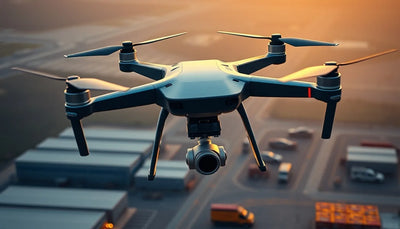
China's low-altitude economy is moving into a more disciplined phase after regulators tightened the rules governing unmanned aerial activity, according to a domestic economy report published by Securities Star. The report frames the change as a critical test: can the sector continue to expand when oversight becomes stricter, or will compliance costs and approval friction slow the commercial momentum that has built up around logistics drones, inspection UAVs, and urban air mobility projects?
Market context
Turn market news into a buy, repair, or trade-in decision.
Compare pre-owned availability, resale timing, and repair economics before the market moves again.

The development matters beyond China's borders because the country has become one of the world's most active markets for commercial drone deployment. Fleet operators, drone buyers, and repair service providers that track Chinese supply chains, enterprise UAV demand, and pre-owned DJI equipment should read the tightening as a signal that the low-altitude economy is maturing from rapid expansion into a more regulated, compliance-heavy phase. Securities Star's reporting does not specify the exact provisions or enforcement timeline, but the central theme is clear: the rules are now tighter, and the industry must adapt.
What the Securities Star report actually says
The primary reporting from Securities Star, a Chinese financial and market news outlet, examines how the low-altitude economy can continue to "fly" after regulatory tightening. The report is framed around the domestic economy, suggesting that policymakers are balancing growth ambitions with safety, airspace management, and operational accountability. Rather than announcing a single dramatic enforcement action, the source presents the tightening as a structural shift that industry participants must now absorb.
For commercial readers, the key takeaway is not a specific fine, ban, or certification requirement. It is the direction of travel. When a market that grew quickly on relatively open operating conditions faces stricter rules, the practical consequences tend to appear in three areas: longer approval timelines, higher compliance overhead, and more conservative fleet planning. Reboot Hub analysis suggests that operators who treat regulatory risk as a core cost line, rather than an afterthought, will be better positioned as the Chinese low-altitude market adjusts.
Why tighter rules change commercial drone economics
Stricter oversight changes the economics of commercial drone operations even before any specific penalty is issued. Flight approvals may take longer, operational windows may narrow, and documentation requirements may increase. For fleet managers, that translates into fewer billable flight hours per aircraft, higher administrative labor, and a stronger incentive to keep every airframe mission-ready. Downtime becomes more expensive when the regulatory environment already constrains utilization.
Reboot Hub analysis: The repair and maintenance side of the market is also sensitive to this shift. When operators face tighter rules, they are less likely to tolerate marginal equipment. A drone that is grounded for a minor fault represents lost revenue and a compliance headache. That dynamic can push professional repair demand higher, especially for genuine OEM spare parts that help operators maintain documented, reliable fleets. Securities Star's report does not address repair economics directly, but the commercial logic follows from the compliance pressure it describes.
What this means for drone owners and the market
For individual drone owners and small commercial operators, the tightening in China is a reminder that regulatory cycles shape resale values and equipment demand. When rules become stricter, buyers often become more selective. A pre-owned DJI drone with complete documentation, clean flight logs, and verified repair history becomes more attractive than an undocumented unit with unclear maintenance. The secondary market rewards transparency when compliance risk rises.
Fleet managers and procurement teams should also reconsider how they value spare parts and service support. In a tighter regulatory environment, the cost of a grounded aircraft is not just the repair bill; it is the lost operational capacity during an approval window that may already be narrow. Operators who maintain access to inspected pre-owned equipment and genuine OEM-pulled parts can reduce that exposure. For readers evaluating their options, the Drone Wiki provides reference material that can help clarify maintenance, repair, and equipment decisions in a changing market. For owners evaluating service and lifecycle risk, Drone Wiki explains the relevant repair, parts, resale, or operational path.
The pre-owned DJI market may feel the effects in subtle ways. If Chinese enterprise operators slow fleet expansion while they adjust to new rules, more used commercial units could enter the secondary market. At the same time, buyers may demand more documentation and service history before purchasing. That combination could widen the gap between well-maintained pre-owned aircraft and units with unclear backgrounds. Reboot Hub analysis views that as a maturing market signal rather than a collapse in demand.
How operators should respond now
The practical response for a buyer, pilot, repair customer, or fleet manager is to treat regulatory change as a planning input rather than a headline to ignore. First, monitor the Chinese low-altitude policy environment through financial and market sources like Securities Star, which covers the domestic economy angle directly. Second, review your own fleet documentation and maintenance records, because compliance scrutiny tends to increase the value of clean paperwork. Third, avoid overcommitting to new airframes until the operational impact of the tightened rules becomes clearer.
For repair customers, the message is simpler: do not defer maintenance on aircraft that are already in service. In a market where approvals may become harder to obtain, a preventable failure is more costly than it was before. Professional DJI repair and genuine OEM spare parts become operational safeguards, not just cost items. The Securities Star report does not provide specifics on repair demand, but the commercial logic of tighter rules points toward more disciplined fleet upkeep.
The low-altitude economy in China is not stopping. It is being asked to prove that it can grow within a stricter framework. For commercial operators and drone buyers, that means the next phase will reward preparation, documentation, and reliable equipment more than aggressive expansion. The rules have tightened, and the market is adjusting in real time.
FAQ
Frequently asked questions
What did Securities Star report about China's low-altitude economy?
Securities Star reported that China's low-altitude economy is facing a new phase after rules were tightened, raising questions about how the sector can continue to grow under stricter oversight.
How could tighter rules affect drone fleet planning?
Reboot Hub analysis: Tighter rules could lead to longer approval timelines, higher compliance costs, and more conservative fleet expansion as operators adjust to a more regulated operating environment.
Why should pre-owned DJI drone buyers pay attention?
Stricter oversight tends to increase the value of documented maintenance history and clean flight logs, making well-maintained pre-owned DJI drones more attractive relative to units with unclear service records.
Which sources support this update?
The article distinguishes reported information from analysis and does not present an unverified source as official confirmation.
What remains subject to change?
Retail pricing, availability, product bundles and regulatory timelines can change. Readers should verify the latest terms with the named retailer, manufacturer or regulator before acting.
How should buyers or operators use this analysis?
Use the verified facts as a starting point, then compare mission fit, lifecycle support, maintenance needs and current procurement terms before making a purchase or fleet decision.
Использованные источники
- Source material - primary source
На момент публикации дополнительная официальная документация отсутствовала.
Редакция Reboot Hub предоставляет анализ по вопросам покупки, ремонта, перепродажи и эксплуатации БПЛА для их владельцев. Если вы заметили ошибку, свяжитесь с нами для ее исправления в соответствии с нашей редакционной политикой.
Данная статья представляет собой рыночный обзор для операторов и покупателей БПЛА и не является инвестиционной рекомендацией. Reboot Hub не предоставляет финансовых консультаций и не рекомендует совершать операции с ценными бумагами.