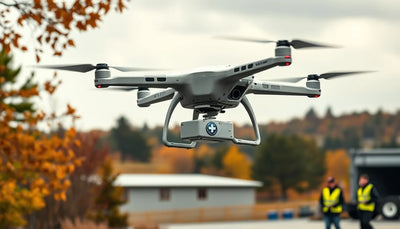
US Army Tests Counter-Drone Tech at Mexican Border as Cartel Use Rises
Defense News reports the US Army is testing counter-drone technology at the Mexican border as cartel drone activity increases. The development signals growing demand for detection and mitigation systems and could shape how commercial operators plan around evolving security infrastructure.

Quick answer
The US Army is testing counter-drone technology at the Mexican border in response to rising cartel drone use, according to Defense News.
- The US Army is sharpening defenses against cartel drone activity near the Mexican border.
- Defense News reports the service is seeking better counter-drone capabilities for this operational environment.
- The development signals growing military and security demand for drone detection and mitigation systems.
- Commercial operators should monitor how expanded counter-UAS activity affects airspace access and flight planning.
Evidence: Defense News · AeroVironment unmanned systems solutions · FAA UAS official guidance · Defense.gov official source
Fleet readiness
Keep DJI hardware available without overbuying new units.
Use defense and fleet news as a planning signal for repair support, inspected pre-owned aircraft, and replacement timing.

The US Army is testing counter-drone technology along the Mexican border as cartel drone use continues to rise, according to a report published by Defense News on October 5, 2026. The service is seeking to sharpen its defenses against what it views as a growing threat from unmanned aircraft operated by criminal organizations in the border region.
The testing activity, as described in the Defense News report, reflects a broader military focus on counter-UAS capabilities in domestic and border security contexts. While the source report does not specify the exact systems under evaluation, the operational picture is clear: military planners are treating cartel drone activity as a persistent security challenge that requires dedicated detection and mitigation resources.
Why counter-drone testing matters at the border
Cartel use of drones has evolved from occasional surveillance flights to a more routine operational tool, according to the Defense News reporting. The US Army's decision to test counter-drone technology in this environment suggests that the threat is no longer viewed as a niche concern but as a recurring problem requiring military-grade solutions.
For commercial drone operators, this development carries practical implications. Expanded counter-UAS activity near the border can affect airspace access, flight planning, and the perception of drone operations in sensitive areas. Operators who fly near border zones or in regions with elevated security postures should expect increased scrutiny and potentially more restrictive operating conditions as counter-drone infrastructure becomes more common.
What the Army's focus signals about counter-UAS demand
The Defense News report indicates that the US Army is actively seeking to improve its defensive posture against cartel drones. This aligns with a broader trend in defense procurement, where counter-UAS systems have become a priority category for military and security agencies worldwide.
Reboot Hub analysis: sustained military investment in counter-drone technology typically creates secondary effects in the commercial market. Detection systems, signal analysis tools, and airspace monitoring infrastructure developed for defense applications often influence the regulatory and operational environment that civilian drone pilots navigate. Fleet managers and enterprise operators should track these developments because they can shape where and how commercial drones are permitted to fly.
What this means for drone owners and the market
The rise in cartel drone activity and the military response to it do not directly change the rules for most commercial drone pilots, but they do reinforce a broader trend toward stricter airspace awareness and enforcement. Buyers considering pre-owned DJI drones or fleet expansion should factor in the likelihood of more counter-UAS activity in border regions and other security-sensitive zones.
For operators who rely on DJI hardware, the practical takeaway is to stay informed about airspace restrictions and to maintain current firmware and Remote ID compliance. While the source report does not mention DJI specifically, the commercial drone ecosystem is deeply affected by how security agencies respond to unauthorized drone use. Operators who keep their aircraft properly registered and compliant are better positioned to continue flying without disruption as counter-drone measures expand. Those evaluating the pre-owned market can use the Drone Wiki to understand model-specific compliance and operational considerations before purchasing. For owners evaluating service and lifecycle risk, Drone Wiki explains the relevant repair, parts, resale, or operational path.
Reboot Hub analysis: Repair customers and fleet managers should also note that increased counter-UAS activity does not create new hardware requirements for civilian drones, but it does raise the stakes for maintaining reliable, well-documented aircraft. A drone that is properly maintained, registered, and operated within legal parameters is less likely to draw unwanted attention in environments where security forces are actively monitoring airspace.
Broader implications for border-region operations
The Defense News report highlights a specific geographic focus: the US-Mexico border. For commercial operators working in logistics, agriculture, infrastructure inspection, or public safety near border communities, the presence of military counter-drone testing introduces a new variable into flight planning.
Operators should monitor local airspace notices and coordinate with relevant authorities before flying near border areas where counter-drone testing or active monitoring may be underway. The source report does not provide specific coordinates or timelines for the testing, so operators should rely on official airspace notifications rather than assuming any particular area is affected.
The commercial drone market has already absorbed multiple waves of regulatory and security-driven change, from Remote ID implementation to expanded no-fly zones around sensitive facilities. Border-region counter-drone activity represents another layer of that same trend. For buyers and sellers in the pre-owned DJI market, the key variable is not whether counter-drone technology exists but whether it changes the practical utility of drones in specific operating environments.
FAQ
Frequently asked questions
What did Defense News report about the US Army and counter-drone testing?
Defense News reported on October 5, 2026, that the US Army is testing counter-drone technology at the Mexican border in response to rising cartel drone use. The service is seeking to strengthen its defenses against this growing threat.
Does this development change the rules for commercial drone pilots?
The source report does not indicate any immediate regulatory change for commercial drone pilots. However, expanded counter-UAS activity near the border could affect airspace access and flight planning in those regions, so operators should monitor official airspace notices.
Should drone buyers or fleet managers change their plans based on this news?
Buyers and fleet managers should treat this as a signal that counter-drone infrastructure is expanding in security-sensitive areas. Maintaining compliant, well-documented aircraft and staying informed about airspace restrictions is the most practical response for commercial operators.
Which sources support this update?
The visible evidence links identify Defense News and AeroVironment unmanned systems solutions and FAA UAS official guidance and Defense.gov official source; each source is used only for the claim it directly supports.
What remains subject to change?
Retail pricing, availability, product bundles and regulatory timelines can change. Readers should verify the latest terms with the named retailer, manufacturer or regulator before acting.
How should buyers or operators use this analysis?
Use the verified facts as a starting point, then compare mission fit, lifecycle support, maintenance needs and current procurement terms before making a purchase or fleet decision.
Surse consultate
- Defense News - primary source
- AeroVironment unmanned systems solutions - official company source
- FAA UAS official guidance - official regulator source
- Defense.gov official source - official government source
Redacția Reboot Hub oferă analize privind achiziția, reparația, revânzarea și operarea pentru proprietarii de drone. Dacă observați o eroare, contactați-ne pentru revizuirea corecției conform politicii noastre editoriale.