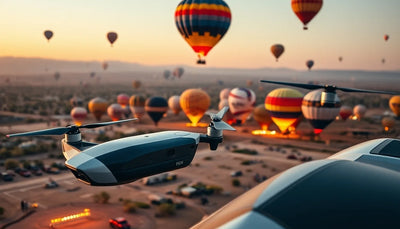
Sky Elements flies 11,000-drone show in Texas, setting US record
Sky Elements flew more than 71,000 drones across seven shows in three nights in Blue Ridge, Texas, including an 11,000-drone performance the company calls the largest ever flown in America. The effort secured two Guinness World Records titles and signals how quickly commercial drone show scale is expanding.

Quick answer
Sky Elements flew more than 71,000 drones across seven shows over three nights in Blue Ridge, Texas, including an 11,000-drone performance the company says is the largest drone show ever flown in America, and secured two Guinness World Records titles.
- The 11,000-drone performance is reported as the largest drone show flown in America
- The effort covered seven shows over three consecutive nights in Blue Ridge, Texas
- Sky Elements secured two Guinness World Records titles
- The total fleet usage across the event exceeded 71,000 drones
Evidence: DroneDJ
Market context
Turn market news into a buy, repair, or trade-in decision.
Compare pre-owned availability, resale timing, and repair economics before the market moves again.

Verified facts
What the available evidence confirms
| Metric | Reported value |
|---|---|
| Largest single show | 11,000 drones |
| Total drones flown across event | More than 71,000 |
| Number of shows | Seven |
| Duration | Three consecutive nights |
| Location | Blue Ridge, Texas |
| Guinness World Records titles | Two |
Sky Elements just gave the commercial drone industry a concrete look at how fast light show operations are scaling. According to reporting by DroneDJ, the Texas-based drone show company flew more than 71,000 drones across seven shows over three consecutive nights in Blue Ridge, Texas. The centerpiece was an 11,000-drone performance that the company says is the largest drone show ever flown in America.
The effort secured two Guinness World Records titles, according to the DroneDJ report. That level of simultaneous fleet coordination moves the conversation beyond novelty and into operational territory: logistics, battery management, airspace coordination, spare parts planning, and post-event maintenance all become meaningful commercial questions when a single company is cycling tens of thousands of aircraft through back-to-back performances.
What the record actually shows about scale
The DroneDJ report attributes the central claims directly to Sky Elements: more than 71,000 drones flown across seven shows in three nights, with one 11,000-drone performance standing as the largest in America. Two Guinness World Records titles were secured as part of the effort. The event took place in Blue Ridge, Texas, a location that gives the company room to stage and launch large drone formations outside dense urban airspace.
What matters commercially is not the record itself but the throughput. Flying 71,000 drones over three nights means the company is not operating a single fixed fleet. It is cycling aircraft, batteries, and launch infrastructure at a rate that requires real maintenance discipline. Even a small failure rate across that volume creates a meaningful repair and replacement pipeline.
Why fleet economics shift at this volume
For most commercial operators, a fleet of 20 or 50 drones already demands careful battery tracking, firmware consistency, and scheduled maintenance. Scaling to thousands of aircraft per show changes the cost structure. At that volume, operators begin to think in terms of parts availability, rapid turnaround repair, and the residual value of aircraft retired from show duty.
Light show drones are typically small, lightweight quadcopters optimized for synchronized flight and LED payloads. They are not camera platforms, and they do not carry the same sensor payloads as inspection or mapping aircraft. But they share a core economic reality with every other commercial drone: downtime is expensive, and replacement units are a recurring operating cost. The DroneDJ report does not provide failure rates, spare inventory figures, or maintenance schedules, so those specifics remain unknown. What is clear is that an operation of this size cannot succeed without a disciplined approach to fleet upkeep.
What this means for drone owners and the market
The record-setting Texas event is a signal that commercial drone show operators are becoming serious fleet buyers. That has downstream effects across the broader drone market, including the pre-owned segment. As show operators scale up, they retire aircraft earlier, standardize on specific models, and create demand for reliable parts sourcing. Buyers looking at inspected pre-owned DJI drones may find that a maturing commercial market improves the availability of well-maintained aircraft and genuine OEM spare parts, even if the specific show drones themselves are not the same models most individual buyers purchase. For owners evaluating service and lifecycle risk, Drone Wiki explains the relevant repair, parts, resale, or operational path.
For a fleet manager or independent operator, the practical takeaway is to pay attention to how high-volume commercial users handle maintenance and parts planning. The same discipline that keeps an 11,000-drone show running translates to smaller operations: standardized charging workflows, pre-flight battery checks, and a clear repair path for damaged units. Readers tracking the commercial drone ecosystem can find maintenance and parts context in the Drone Wiki.
The DroneDJ report does not identify the specific drone models used in the Blue Ridge event, nor does it provide pricing, supplier details, or the exact Guinness World Records categories. Those gaps matter for buyers trying to draw direct procurement lessons. What the report does establish is the headline scale: an American company flew more drones in a single show than most operators will fly in a decade.
What buyers and operators should watch next
The commercial drone show sector has been growing for several years, but an 11,000-drone single performance marks a step change in ambition. For buyers, that means watching how show operators influence component demand, battery supply, and the used market. For repair customers, it means recognizing that high-volume commercial users are shaping the availability of parts and service capacity.
The Blue Ridge event also raises questions the DroneDJ report does not answer: how many aircraft were lost or damaged, what the total battery inventory looked like, and how the company managed airspace authorization for such a large simultaneous launch. Those operational details would tell a fuller story about the true cost of scale. Until then, the record stands as a clear demonstration that drone shows are no longer a boutique service.
FAQ
Frequently asked questions
What record did Sky Elements set in Texas?
According to DroneDJ, Sky Elements flew an 11,000-drone show in Blue Ridge, Texas, which the company says is the largest drone show ever flown in America. The broader effort involved more than 71,000 drones across seven shows over three nights and secured two Guinness World Records titles.
Why does this matter for commercial drone operators?
The event shows that drone show companies are now operating at fleet volumes that require serious maintenance, parts, and battery logistics. Smaller operators can learn from the discipline required to cycle tens of thousands of aircraft through back-to-back performances.
Does this affect the pre-owned DJI drone market?
Indirectly, yes. Large commercial drone users tend to standardize fleets, retire aircraft earlier, and create steady demand for parts and service. That can improve the availability of inspected pre-owned aircraft and genuine OEM spare parts over time, even if show drones are not the same models most individual buyers purchase.
Which sources support this update?
The visible evidence links identify DroneDJ; each source is used only for the claim it directly supports.
What remains subject to change?
Retail pricing, availability, product bundles and regulatory timelines can change. Readers should verify the latest terms with the named retailer, manufacturer or regulator before acting.
How should buyers or operators use this analysis?
Use the verified facts as a starting point, then compare mission fit, lifecycle support, maintenance needs and current procurement terms before making a purchase or fleet decision.
Surse consultate
- DroneDJ - primary source
La momentul publicării, nu era disponibilă documentație oficială suplimentară.
Redacția Reboot Hub oferă analize privind achiziția, reparația, revânzarea și operarea pentru proprietarii de drone. Dacă observați o eroare, contactați-ne pentru revizuirea corecției conform politicii noastre editoriale.