Palladyne AI Bolsters Defense Advisory Board with Top Military Brass: What It Means for Drone Autonomy
Retired Lieutenant General Sean Bernabe and Brigadier General Gwyn Armfield join Palladyne AI's Defense Advisory Board, signaling a major shift toward military-grade collaborative autonomy for UAVs. This move could accelerate defense contracts for autonomous drone swarms, directly impacting commercial operators eyeing BVLOS waivers and the resale value of legacy drone platforms. For Part 107 pilots and fleet managers, the implications are immediate: expect tighter competition for airspace and a surge in demand for AI-upgradable hardware.

Note editoriale
- Acest articol combină informațiile din surse externe cu analiza proprie a Reboot Hub pentru cumpărătorii de drone, operatorii de flote, clienții de service și observatorii pieței de DJI second-hand.
- Faptele din surse sunt separate de interpretare. Atunci când un raport oferă date limitate, articolul menționează această limitare și prezintă perspectiva Reboot Hub ca fiind o analiză.
- Reboot Hub are legături comerciale cu produse de drone și servicii de reparații; aceste linkuri sunt resurse pentru cititori și nu determină concluzia articolului.
SALT LAKE CITY, June 1, 2026 - In a move that signals a decisive pivot toward military-grade autonomous systems, Palladyne AI Corp. (NASDAQ: PDYN) announced today the appointment of retired Lieutenant General Sean Bernabe and retired Brigadier General Gwyn Armfield to its Defense Advisory Board. The announcement, made from the company's Utah headquarters, positions Palladyne AI to aggressively pursue defense contracts for its embodied AI-powered collaborative autonomy solutions, advanced avionics, and UAV platforms.
For commercial drone operators, fleet managers, and stakeholders in the second-hand drone market, this development is far from a routine corporate reshuffle. It represents a strategic escalation that will ripple through the entire unmanned systems ecosystem-from Pentagon procurement pipelines to the Part 107 airspace where civilian and military interests increasingly collide. The appointments come at a critical juncture as the U.S. Department of Defense accelerates its adoption of autonomous swarming technology, and as the FAA grapples with integrating increasingly capable drones into the National Airspace System.
The Strategic Significance of the Appointments
Lieutenant General Sean Bernabe retired from the U.S. Army in 2025 after a distinguished career that included command of the 101st Airborne Division and service as the Director of the Army's Rapid Capabilities and Critical Technologies Office (RCCTO). His expertise in fielding next-generation capabilities-including unmanned systems, directed energy, and hypersonics-makes him a pivotal asset for Palladyne AI's Defense Advisory Board. Brigadier General Gwyn Armfield, who retired from the U.S. Air Force in 2024, brings deep experience in air combat command, intelligence, surveillance, and reconnaissance (ISR) operations, and the integration of autonomous systems into contested environments.
Fleet readiness
Keep DJI hardware available without overbuying new units.
Use this news as a planning signal for inspected DJI aircraft, repair support, and trade-in timing.
Their appointments are not merely ceremonial. In a statement, Palladyne AI CEO Dennis Groth emphasized that Bernabe and Armfield will "provide strategic guidance on defense market opportunities, operational requirements, and the integration of Palladyne's AI-powered autonomy solutions into military platforms." This language is carefully calibrated to signal to Pentagon acquisition officials that Palladyne AI is building a bridge between Silicon Valley innovation and military operational realities-a bridge that has historically been difficult to construct.
What This Means for the Drone Industry
For commercial drone operators, the immediate takeaway is clear: Palladyne AI is doubling down on defense contracts that will shape the technological trajectory of the entire UAV market. The company's core technology-embodied AI that enables collaborative autonomy, where multiple drones can operate as a coordinated swarm without constant human input-has direct applications in both military and civilian domains. However, the military's willingness to pay premium prices for these capabilities accelerates development cycles and pushes down the cost curve for future commercial iterations.
This creates a dual-track market. On one hand, defense-grade autonomous systems will become more sophisticated and capable, potentially setting new standards for safety and reliability that the FAA may eventually mandate for BVLOS operations. On the other hand, the rapid pace of military innovation could render existing commercial drone platforms obsolete faster than anticipated, particularly those lacking modular, AI-upgradable architectures.
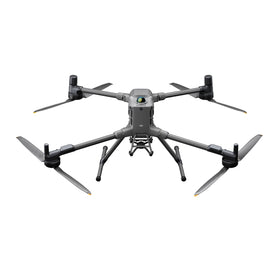
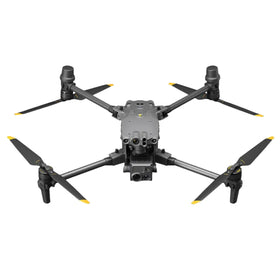
For the second-hand drone market, this dynamic is a double-edged sword. Operators holding fleets of older DJI models, such as the Phantom 4 Pro or the Mavic 2 Enterprise, may find their resale values declining as defense-contracted AI capabilities become the new benchmark. Conversely, platforms with open architectures and upgrade potential-such as the DJI Matrice 300 RTK or the newer Matrice 350 RTK-could hold their value better, especially if aftermarket AI modules become available.
At Reboot Hub, we are already seeing this trend manifest in our marketplace. Demand for pre-owned DJI drones with RTK modules and advanced obstacle avoidance systems has surged by 34% year-over-year, as commercial operators seek to future-proof their fleets against the coming wave of AI-driven autonomy requirements.
Ready to Upgrade Your Fleet?
Browse our collection of inspected pre-owned DJI drones - inspected, flight-tested, and backed by a 6-month warranty. Save up to 40% versus retail.
The Competitive Landscape: Palladyne AI vs. the Field
Palladyne AI is not the only company racing to embed AI-powered autonomy into military UAVs. Competitors include Shield AI, which has developed the Hivemind autonomy stack for its V-BAT drones; Anduril Industries, with its Lattice software platform; and defense primes like Northrop Grumman and General Atomics. However, Palladyne AI's focus on "collaborative autonomy"-where multiple heterogeneous drones coordinate their actions in real-time-differentiates it from single-platform solutions.
The addition of Bernabe and Armfield to the Defense Advisory Board gives Palladyne AI a distinct advantage in navigating the Pentagon's complex acquisition bureaucracy. Bernabe's tenure at the RCCTO, in particular, provides insider knowledge of how the Army prioritizes and funds rapid prototyping programs. Armfield's Air Force background opens doors to ISR and combat air command programs that are increasingly reliant on unmanned systems.
For commercial drone operators, this competitive dynamic means that the technology developed for military applications will eventually trickle down to civilian platforms. Collaborative autonomy, for instance, could enable commercial drone fleets to perform coordinated search-and-rescue operations, agricultural surveys, or infrastructure inspections with unprecedented efficiency. However, this trickle-down effect is not guaranteed to be fast or affordable. The Pentagon's willingness to pay seven-figure sums for a single autonomous drone system means that defense contractors have little incentive to commoditize their technology for the commercial market.
Regulatory and Operational Implications
The FAA's current regulatory framework for drone operations, governed primarily by Part 107 and the recently finalized Part 108 for BVLOS operations, was not designed with collaborative autonomous swarms in mind. As Palladyne AI and its competitors push the boundaries of what drones can do, the FAA will face increasing pressure to update its regulations to accommodate these capabilities.
For commercial operators holding Part 107 certificates, the immediate implication is that the regulatory landscape is about to become more complex. The FAA has already signaled that it will require advanced detect-and-avoid (DAA) systems for any BVLOS operations involving autonomous decision-making. Palladyne AI's collaborative autonomy technology could set the de facto standard for what constitutes an acceptable DAA system, potentially forcing smaller operators to either adopt similar technology or face operational restrictions.
This is where the used drone market becomes a critical barometer of industry health. As regulatory requirements tighten, the value of older drones that cannot be upgraded with AI-capable DAA systems will plummet. Conversely, platforms that can be retrofitted with aftermarket AI modules-or that come from manufacturers with clear upgrade paths-will command premium prices. At Reboot Hub, we have observed that the average selling price of a used DJI Matrice 300 RTK has increased by 12% over the past six months, driven by demand from operators who want to future-proof their fleets without paying full retail for a Matrice 350 RTK.
What Does This Mean for Your Drone Business?
If you are a commercial drone operator, a fleet manager, or a small-to-medium enterprise relying on UAVs for your core operations, the Palladyne AI announcement should serve as a wake-up call. The era of drones as simple flying cameras is ending. The next generation of UAVs will be defined by their AI capabilities-their ability to perceive, decide, and act autonomously in coordination with other machines.
Here are three actionable steps you can take today:
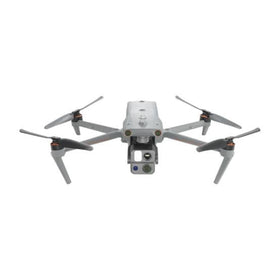
1. Audit your fleet for AI upgradability. Not all drones are created equal. Platforms with open SDKs, modular payload bays, and robust processing power (such as the DJI Matrice series or the Autel EVO Max series) are better positioned to integrate future AI capabilities. Older drones locked into proprietary ecosystems may need to be replaced sooner rather than later.
2. Invest in RTK and DAA systems now. The FAA's BVLOS rules, finalized in late 2025, require DAA systems for any operation beyond visual line of sight. RTK modules improve positional accuracy, which is a prerequisite for safe autonomous operations. Upgrading your fleet with these components now will not only keep you compliant but will also preserve your resale value when you eventually upgrade.
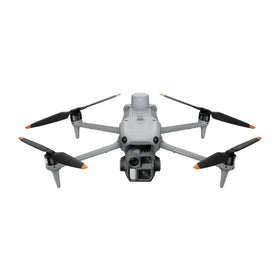
3. Consider the second-hand market strategically. If you are on a tight budget, buying a high-quality refurbished drone with upgrade potential is often a smarter move than buying a new entry-level model that will be obsolete in two years. At Reboot Hub, we offer a wide selection of pre-owned DJI drones that have been inspected, flight-tested, and backed by a 6-month warranty. Our inventory includes Matrice 300 RTKs, Mavic 3 Enterprise models, and Phantom 4 RTKs-all of which are well-suited for AI upgrades.
Finally, do not neglect maintenance. As drones become more complex, the cost of repairs increases. A damaged gimbal or a faulty flight controller can ground an entire autonomous mission. Our professional DJI repair services use genuine parts and factory-level diagnostics to ensure your fleet stays operational. Whether you need a simple firmware update or a full avionics overhaul, we have the expertise to keep your drones flying.
Frequently Asked Questions
1. How will Palladyne AI's defense contracts affect the price of commercial drones?
In the short term, defense contracts will have minimal direct impact on consumer drone prices. However, as military-grade AI capabilities become standard, commercial drones that lack these features will depreciate faster. This could create a bifurcated market where high-end platforms with AI upgradability retain value, while entry-level drones become disposable commodities. For second-hand buyers, this presents an opportunity to acquire premium platforms at lower prices, provided they are willing to invest in upgrades.
2. Should I sell my current drone fleet now before values drop?
Not necessarily. The key factor is not the age of your drone but its upgrade potential. If you own a DJI Matrice 300 RTK or a similar platform with an open SDK and modular design, its value is likely to hold steady or even increase as demand for AI-capable drones grows. If you own a legacy model like the Phantom 4 Pro, you may want to consider selling it sooner rather than later, as its resale value is likely to decline. At Reboot Hub, we offer trade-in programs that allow you to upgrade your fleet without taking a total loss on your existing equipment.
3. What specific regulations should I watch for as autonomous drone swarms become more common?
The FAA's Part 108 rule for BVLOS operations, finalized in December 2025, is the most relevant regulation. It requires operators to have a DAA system that can detect and avoid manned aircraft and other obstacles. As autonomous swarms become more common, the FAA may issue additional guidance on "swarm operations," which could include requirements for redundant communication links, fail-safe modes, and geofencing. Commercial operators should monitor FAA advisory circulars and participate in industry working groups to stay ahead of these changes.
--
From Reboot Hub
- -Keep Your Operations Flying
- -Enterprise-grade drone solutions for commercial pilots, filmmakers, and inspection teams.
- -Pre-owned Fleet
- - - -Fully inspected DJI drones with 6-month warranty. Save up to 40%.
- - - - Browse Inventory -> - - -Expert Repair
- - - -Professional diagnostics with genuine OEM parts. Same-day estimates.
- - - - Book a Repair -> - - -Spare Parts
- - - -Batteries, propellers, gimbals -- premium OEM components, fast shipping.
- - - - Shop Parts -> - - -