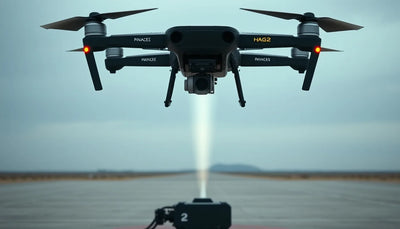
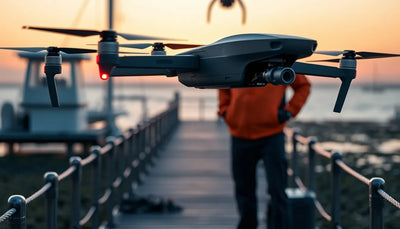
Industrial Drone Deployments Show Autonomy Still Has Hard Limits
The Robot Report highlights what real industrial drone deployments reveal about autonomy gaps. For commercial operators, the findings point to practical constraints in inspection, logistics, and fleet planning that shape repair cycles, spare parts demand, and pre-owned equipment decisions.

Quick answer
The Robot Report reports that industrial drone deployments expose persistent real-world autonomy challenges despite marketing claims of full automation.
- Industrial drone autonomy remains constrained by real-world conditions, not just software maturity
- Commercial operators should plan for human oversight and intervention in autonomous workflows
- Autonomy gaps influence maintenance frequency, spare parts demand, and fleet utilization rates
- Pre-owned DJI enterprise platforms may see steadier demand as buyers prioritize proven reliability over autonomy hype
The Robot Report has published an analysis of what industrial drone deployments reveal about real-world autonomy challenges, and the findings cut against the grain of vendor marketing that often suggests fully autonomous commercial drone operations are already here. The reporting, aggregated through Google News, points to a persistent gap between autonomy as demonstrated in controlled environments and autonomy as it performs under the messy, variable conditions of industrial sites.
Market context
Turn market news into a buy, repair, or trade-in decision.
Compare pre-owned availability, resale timing, and repair economics before the market moves again.

For commercial drone buyers, fleet managers, and repair customers, this is not an abstract robotics debate. Autonomy limitations directly shape how many drones a fleet actually needs, how often those platforms require maintenance, and whether operators can realistically reduce headcount or simply shift human labor from piloting to supervision and exception handling. The source material frames these as deployment-level findings rather than isolated anecdotes, which matters for procurement teams trying to separate realistic capability from demo-reel performance.
What industrial deployments actually show about autonomy
According to The Robot Report's coverage, industrial drone programs are encountering autonomy challenges that stem less from a lack of sensor sophistication and more from the unpredictability of real operating environments. Industrial sites present variable lighting, dust, electromagnetic interference, moving equipment, and changing physical layouts, all of which stress autonomous navigation and decision-making systems in ways that controlled test flights do not.
The practical implication is that operators cannot yet treat autonomous drones as set-and-forget assets. Even when a platform handles routine waypoint flights well, edge cases, degraded GPS environments, obstacle-rich corridors, and unexpected weather shifts still require human judgment. For fleet planning, this means staffing models should assume supervised autonomy rather than unattended operation for most industrial use cases in the near term.
Why autonomy gaps affect maintenance and repair economics
When autonomous systems encounter conditions they cannot resolve, the failure modes are not always graceful. The Robot Report's analysis suggests that real-world deployments reveal how autonomy limitations can translate into aborted missions, unexpected landings, or increased wear on components as platforms repeatedly attempt to navigate difficult environments. Each of these outcomes has a direct cost implication for operators.
For repair customers and fleet managers, this points to a maintenance reality that is easy to underestimate. Drones operating in industrial settings with partial autonomy may log more flight hours in challenging conditions, increasing demand for genuine OEM spare parts, sensor recalibration, and structural inspections. A platform that struggles with autonomy in a dusty or obstacle-dense environment will likely require more frequent propeller replacement, motor checks, and gimbal servicing than one flying clean, open-air routes. Reboot Hub analysis suggests this dynamic may sustain demand for professional DJI repair services even as autonomy software improves, because the physical stress of industrial operation does not disappear simply because the flight controller is more capable.
What this means for drone owners and the market
The autonomy gap identified in The Robot Report's coverage has a subtle but important effect on the pre-owned DJI market. Enterprise buyers who have been burned by autonomy overpromises often become more conservative in their next procurement cycle. They may favor proven platforms with established repair ecosystems and readily available OEM-pulled parts over newer models that promise advanced autonomy but lack a track record in demanding industrial environments. For owners evaluating service and lifecycle risk, Drone Wiki explains the relevant repair, parts, resale, or operational path.
For owners of pre-owned DJI enterprise drones, this is a relatively favorable signal. If autonomy limitations push buyers toward reliability and serviceability rather than cutting-edge autonomy features, then inspected pre-owned platforms with known maintenance histories become more attractive. Operators who understand that human oversight will remain necessary for the foreseeable future may choose to expand their fleet with additional pre-owned units rather than betting their entire budget on a single autonomous platform. Readers evaluating their options can review the Drone Wiki for context on platform capabilities and ownership considerations.
The broader market implication is that autonomy is not yet a reliable differentiator for most industrial buyers. Procurement teams should evaluate drones on sensor quality, durability, serviceability, and spare parts availability first, treating autonomy as a secondary feature that reduces pilot workload rather than eliminates it. This reframing has consequences for how vendors position products and how operators allocate training budgets.
Planning for supervised autonomy in commercial fleets
The source material underscores that industrial drone programs succeed when they plan for human-in-the-loop operations rather than assuming full autonomy will materialize on schedule. This means training pilots to handle autonomy failures, establishing clear protocols for manual intervention, and budgeting for the maintenance burden that comes with operating in difficult industrial environments.
Fleet managers should also revisit their spare parts inventory assumptions. If autonomy limitations lead to more aborted missions and unexpected landings, the rate of component damage may be higher than vendor projections suggest. Keeping a stock of genuine OEM spare parts, particularly propellers, landing gear, and sensor housings, becomes a practical hedge against downtime. For repair customers, this reinforces the value of working with service providers who understand the specific failure patterns of industrial drone operations rather than general consumer repairs.
FAQ
Frequently asked questions
Are industrial drones fully autonomous today?
No. The Robot Report's coverage indicates that real-world industrial deployments still encounter significant autonomy challenges, requiring human oversight and intervention in many operating conditions.
How do autonomy limitations affect drone maintenance costs?
Autonomy gaps can lead to aborted missions, unexpected landings, and increased component wear in challenging industrial environments, which may raise demand for spare parts and professional repair services.
Should fleet managers buy pre-owned DJI drones given autonomy limits?
Pre-owned DJI enterprise platforms with proven reliability and available OEM-pulled parts may be a practical choice for operators who prioritize serviceability over unproven autonomy features.
Which sources support this update?
The article distinguishes reported information from analysis and does not present an unverified source as official confirmation.
What remains subject to change?
Retail pricing, availability, product bundles and regulatory timelines can change. Readers should verify the latest terms with the named retailer, manufacturer or regulator before acting.
How should buyers or operators use this analysis?
Use the verified facts as a starting point, then compare mission fit, lifecycle support, maintenance needs and current procurement terms before making a purchase or fleet decision.
Surse consultate
- The Robot Report via Google News - primary source
La momentul publicării, nu era disponibilă documentație oficială suplimentară.
Redacția Reboot Hub oferă analize privind achiziția, reparația, revânzarea și operarea pentru proprietarii de drone. Dacă observați o eroare, contactați-ne pentru revizuirea corecției conform politicii noastre editoriale.