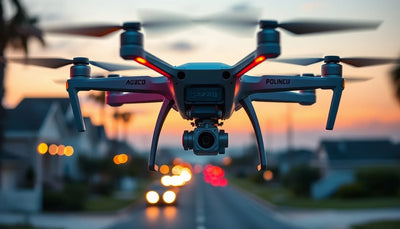
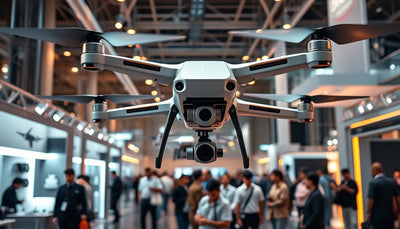
Guangzhou Low-Altitude Economy Gains Momentum, Report Finds
A new industry report highlights accelerating low-altitude economy activity in Guangzhou. The development signals expanding commercial drone operations, logistics demand, and service infrastructure in southern China, with potential knock-on effects for fleet planning, spare parts demand, and pre-owned DJI equipment markets.

Quick answer
A Sina industry report indicates Guangzhou's low-altitude economy is gaining momentum, pointing to expanded commercial drone activity in the region.
- Sina reports accelerating low-altitude economy development in Guangzhou
- The trend suggests rising commercial drone operations and logistics demand
- Operators may see increased service, repair, and spare parts needs
- Pre-owned DJI market activity could respond to regional fleet expansion
Evidence: Defense.gov official source
Market context
Turn market news into a buy, repair, or trade-in decision.
Compare pre-owned availability, resale timing, and repair economics before the market moves again.

Guangzhou's low-altitude economy is showing renewed momentum, according to a recent industry report published by Sina. The report frames the southern Chinese city as an active testing and deployment zone for commercial drone operations, logistics corridors, and related airspace coordination. For drone buyers, fleet operators, and repair customers, the development matters because regional policy and infrastructure signals often precede broader commercial adoption patterns.
The report does not provide granular operational data, launch dates, or specific company earnings figures. Instead, it points to a directional shift: Guangzhou is positioning itself as a meaningful node in China's expanding low-altitude economy. That positioning typically translates into more flight activity, more vehicle hours, and more wear on commercial airframes — all of which carry downstream implications for maintenance, spare parts, and resale markets.
What the report actually says
Sina's coverage describes Guangzhou's low-altitude economy as "taking off," emphasizing the city's role in advancing commercial drone applications. The report highlights the broader regional push toward integrating drones into urban logistics, inspection, and public service workflows. While specific company names, funding rounds, and regulatory filings are not detailed in the source material, the central claim is clear: activity is accelerating, and Guangzhou is a focal point.
For commercial operators, this kind of regional momentum often signals increased demand for airframes, batteries, payloads, and consumable components. High-utilization environments — urban logistics corridors, infrastructure inspection routes, and municipal service programs — generate more frequent maintenance intervals. Buyers planning fleet expansion should view regional policy signals like this as early indicators of where service demand and parts consumption may concentrate over the next 12 to 24 months.
Why regional low-altitude growth affects repair and parts demand
When a city or province accelerates low-altitude economy activity, the operational burden on commercial drone fleets rises. More flights mean more motor hours, more battery cycles, more gimbal stress, and more exposure to urban environmental factors. Repair shops and parts suppliers in active regions typically see higher volumes of gimbal replacements, arm repairs, ESC failures, and battery degradation issues. For owners evaluating service and lifecycle risk, Drone Wiki explains the relevant repair, parts, resale, or operational path.
The Guangzhou signal is relevant even for operators outside China. Low-altitude economy programs in major Chinese cities often influence component supply chains, battery cell availability, and aftermarket parts flows globally. A sustained increase in regional drone operations can tighten OEM parts availability for popular enterprise platforms, which in turn affects repair turnaround times and pre-owned equipment pricing in other markets.
What this means for drone owners and the market
For individual drone owners and small commercial operators, the Guangzhou development is not an immediate call to action. It is, however, a useful planning signal. Regions that invest in low-altitude infrastructure tend to generate secondary demand for reliable, inspected pre-owned platforms — particularly for operators who need additional airframes without committing to new-unit pricing. As commercial activity expands, the market for pristine pre-owned DJI drones and genuine OEM spare parts often tightens, especially for workhorse models used in logistics and inspection roles.
Buyers and fleet managers should monitor how regional low-altitude programs affect parts availability and service pricing. If Guangzhou's activity accelerates as the report suggests, demand for OEM-pulled parts and professional DJI repair services could rise in tandem. For readers researching maintenance options or evaluating pre-owned equipment, the Drone Wiki provides reference material that can help clarify platform choices and repair considerations before making a purchase decision.
One practical step for operators is to review current fleet maintenance schedules and identify single points of failure — gimbals, landing gear, battery inventory — before regional demand shifts parts availability. A proactive parts buffer is often cheaper than expedited repair costs during periods of elevated service demand.
The broader commercial signal for drone markets
Guangzhou's low-altitude economy push fits a wider pattern of Chinese cities competing for drone logistics, inspection, and urban air mobility activity. The commercial significance lies less in any single announcement and more in the cumulative effect: more approved flight corridors, more operator activity, and more pressure on the supply chain that supports commercial drone fleets.
For the pre-owned DJI market, this pattern historically supports steady demand for enterprise-oriented platforms. Operators expanding into logistics or inspection work often seek additional airframes at lower acquisition cost, which increases interest in inspected pre-owned units. At the same time, repair customers benefit from a more active parts ecosystem, provided OEM-pulled components remain available and reasonably priced.
The report does not confirm specific procurement contracts, fleet sizes, or regulatory approvals. Reboot Hub analysis suggests the commercial takeaway is directional rather than transactional: Guangzhou is a market to watch, and operators who plan maintenance and equipment strategy around regional growth signals tend to manage costs more effectively than those who react after demand spikes.
FAQ
Frequently asked questions
What is Guangzhou's low-altitude economy?
It refers to commercial drone activity in Guangzhou, including logistics, inspection, and public service applications, as covered in a Sina industry report describing the sector's accelerating momentum.
How could this affect pre-owned DJI drone demand?
Expanding regional drone operations often increase demand for additional airframes, including inspected pre-owned DJI platforms, as operators seek cost-effective ways to scale fleets without paying full new-unit pricing.
Should drone owners change their maintenance planning now?
Not immediately, but operators should monitor regional growth signals. Reviewing spare parts inventory and maintenance schedules now can reduce exposure to higher service demand and parts availability pressure later.
Which sources support this update?
The visible evidence links identify Defense.gov official source; each source is used only for the claim it directly supports.
What remains subject to change?
Retail pricing, availability, product bundles and regulatory timelines can change. Readers should verify the latest terms with the named retailer, manufacturer or regulator before acting.
How should buyers or operators use this analysis?
Use the verified facts as a starting point, then compare mission fit, lifecycle support, maintenance needs and current procurement terms before making a purchase or fleet decision.
Surse consultate
La momentul publicării, nu era disponibilă documentație oficială suplimentară.
Redacția Reboot Hub oferă analize privind achiziția, reparația, revânzarea și operarea pentru proprietarii de drone. Dacă observați o eroare, contactați-ne pentru revizuirea corecției conform politicii noastre editoriale.