GoPro Mission 1 Pro Unboxing: 8K60, USB-C Audio, 1-Inch Sensor for Drone Use
The GoPro Mission 1 Pro arrives with 8K60 video, a new 1-inch sensor, and USB-C audio. For drone operators using action cameras as payloads, this update brings meaningful improvements to aerial footage quality and audio syncing.

Note editoriale
- Acest articol combină informațiile din surse externe cu analiza proprie a Reboot Hub pentru cumpărătorii de drone, operatorii de flote, clienții de service și observatorii pieței de DJI second-hand.
- Faptele din surse sunt separate de interpretare. Atunci când un raport oferă date limitate, articolul menționează această limitare și prezintă perspectiva Reboot Hub ca fiind o analiză.
- Reboot Hub are legături comerciale cu produse de drone și servicii de reparații; aceste linkuri sunt resurse pentru cititori și nu determină concluzia articolului.
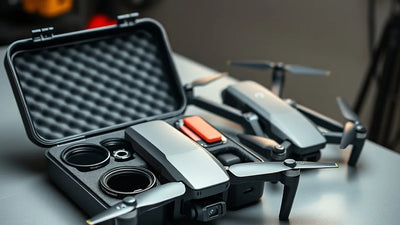
Earlier this week, DroneXL.co published a quick unboxing of the newly announced GoPro Mission 1 Pro. The video, hosted by Shawn from Air Photography, shows the camera alongside the optional point-and-shoot hand grip-a grip that was offered free during the pre-order period. For drone operators and fleet managers who rely on action cameras for aerial capture, the Mission 1 Pro introduces several hardware refinements that merit close attention. While GoPro is not a drone manufacturer, its cameras are widely used as payloads on FPV builds, small quadcopters, and even some commercial sUAS platforms where lightweight, high-quality video is essential.

The unboxing highlights three headline features: 8K60 video recording, a new 1-inch sensor, and USB-C audio support. None of these are entirely unprecedented in the action-camera space, but their combination in a compact form factor-paired with a dedicated hand grip that can double as a stabilization mount-makes the Mission 1 Pro a relevant option for drone cinematographers who need reliable, high-bitrate footage without the bulk of a mirrorless system. The following analysis unpacks what these changes mean for buyers, fleet operators, and the second-hand market.
What the Mission 1 Pro brings to the table
The source material confirms that the Mission 1 Pro records video at 8K resolution with 60 frames per second. For drone operators, 8K60 offers significant flexibility: it allows for heavy crops, re-framing, and stabilization without dropping below 4K output, all of which are common workflows in aerial production. The 1-inch sensor is a notable upgrade from the smaller sensors found in earlier GoPro models. A larger sensor generally means better low-light performance, improved dynamic range, and shallower depth of field-all beneficial when capturing landscapes or moving subjects from a drone.
The inclusion of USB-C audio is another practical addition. Shawn mentions in the unboxing that the camera features USB-C connectivity for audio input. For drone pilots who record voiceovers or ambient sound in sync with footage, this allows a direct connection of external microphones without adapters. In an aerial context, that might mean easier integration with on-board audio recorders or wireless mic receivers mounted on a drone frame. Although the source does not specify audio codecs or latency figures, the presence of USB-C audio eliminates the need for proprietary cables, which is a welcome standardization for operators who maintain multiple camera types.
The point-and-shoot hand grip, shown alongside the camera, is described as an accessory that was available free with pre-orders. For drone users, this grip could serve as a handheld stabilizer for ground-redundancy shots or as a modular mount that can be attached to a gimbal. While the source does not detail compatibility with existing GoPro mounts, the form factor appears consistent with the brand's standard mounting footprint. Operators should verify whether the Mission 1 Pro uses the same mounting interface as earlier models before assuming retrofit capability.
Implications for drone payloads and fleet operators
For operators who fly custom-built drones or use action cameras as secondary payloads, the Mission 1 Pro's 1-inch sensor warrants attention. Historically, GoPro's smaller sensors required careful lighting conditions to avoid noise, especially in twilight or overcast weather. The larger sensor should improve usable dynamic range, meaning fewer blown-out skies or crushed shadows in aerial clips. This could reduce the need for heavy post-processing, saving time for content creators and commercial inspectors alike.
Commercial drone planning
Build the next fleet step around inspected hardware and serviceable parts.
Use Reboot Hub to compare certified DJI drones, repair options, and OEM components before the market moves again.
Fleet operators who standardize on a single camera model across multiple drones will need to evaluate whether the Mission 1 Pro's new sensor and connector layout are compatible with existing mounts, battery chargers, and housings. USB-C audio may also require new cables if the fleet previously relied on micro-USB or 3.5mm adapters. However, the shift to USB-C aligns with broader industry trends, and over time it may simplify accessory inventory. The hand grip, if used as a mount, might not fit all gimbal adapters, so field testing is recommended before fleet-wide adoption.
Another practical implication involves weight. The unboxing footage does not provide exact gram figures, but a larger sensor and USB-C port may slightly increase the payload weight compared to older GoPro models. For small drones with tight lift margins, even a few extra grams can affect flight time or stability. Operators should consult the final specifications once GoPro publishes them, or wait for third-party teardowns that compare weight with the previous generation.
What this means for drone buyers
If you are a drone buyer considering an action camera for aerial use, the Mission 1 Pro should be on your shortlist-but only after confirming that its mounting and power requirements align with your platform. The 8K60 capability is future-proof for clients who demand ultra-high-resolution deliverables, but it also demands significant storage space and processing power. Buyers should ensure their editing hardware can handle 8K footage, or plan to use proxies.
For those who already own a GoPro Hero 12 or earlier, the jump to a 1-inch sensor and 8K60 is substantial. If your work involves commercial real estate, agricultural surveys, or cinematography that benefits from dynamic range, the upgrade may justify the expense. However, if you primarily need 4K60 for social media or inspections, older models may still be adequate, and the second-hand market for those models will likely soften as the Mission 1 Pro enters the channel.
Second-hand buyers should monitor auction and resale platforms for discounted Hero 11 and Hero 12 units once the Mission 1 Pro ships in volume. Historically, GoPro launches cause a temporary dip in used prices for previous generations as early adopters trade up. That creates an opportunity for cost-conscious drone operators to pick up capable cameras at lower prices. Just be aware that the older sensors will not match the low-light performance of the new 1-inch sensor, so weigh the savings against mission requirements.
For operators looking for a complete aerial system rather than just a camera, pairing the Mission 1 Pro with a refurbishment-labeled drone platform can be a smart move. Reboot Hub offers pre-owned DJI drones that come with verified batteries, motors, and flight controllers, providing a reliable base for mounting the Mission 1 Pro via standard GoPro adapters. This combination gives you a modern camera payload on a professionally inspected airframe-often at a lower total cost than buying new.
Second-hand and repair considerations
GoPro has traditionally maintained a strong repair ecosystem through authorized service centers and independent shops. The Mission 1 Pro's use of USB-C audio may simplify aftermarket repair diagnostics, as USB-C is a common port with well-documented pinouts. However, the new 1-inch sensor module could be more expensive to replace than earlier smaller sensors, which may increase out-of-warranty repair costs. Operators who plan to operate the camera in harsh environments-such as rain, dust, or high vibration-should consider a protective housing and a spare sensor unit if available.
On the second-hand market, the arrival of the Mission 1 Pro will likely depress values for GoPro Hero 10, 11, and 12 cameras. This is a normal cycle: cutting-edge buyers sell off older gear, and the rest of the market absorbs it at lower prices. For fleet operators who need multiple cameras for multi-rotor operations, this could be a good time to stock up on refurbished older models. Those older models will still deliver excellent 4K footage and are often compatible with existing gimbals and mounts. Meanwhile, the Mission 1 Pro will initially command a premium and may not be widely available on resale platforms for another four to six months.
Repair services for GoPro cameras are generally separate from drone repair, but Reboot Hub's professional DJI repair services can still be relevant if you are using a DJI drone as the airframe. A well-maintained drone ensures stable footage-no matter how good the camera, a shaky platform ruins the shot. So while the camera itself may need separate service, keeping the drone in top condition is equally important.
In conclusion, the GoPro Mission 1 Pro represents a meaningful step forward in action-camera technology, particularly for drone operators who prioritize resolution, low-light quality, and audio flexibility. The unboxing by DroneXL.co confirms the key features, and the hand grip accessory adds value for handheld use. Before buying, verify compatibility with your drone's mounting system and power requirements. Consider the second-hand market for previous models if budget is tight. And if you need a proven drone platform to carry the Mission 1 Pro, explore refurbishment-labeled options.
Will the GoPro Mission 1 Pro fit my existing drone gimbal?
The unboxing does not provide detailed dimensions or mount compatibility. Based on GoPro's historical design, the Mission 1 Pro likely uses the same mounting interface as previous models, but you should confirm the physical size and weight with official specs when available. Many aftermarket gimbals include adjustable trays that accommodate different action cameras.
Is USB-C audio a big deal for drone operators?
Yes for those who need clean audio synced with aerial footage. USB-C audio allows direct connection of external microphones without a separate adapter, which simplifies wiring on a drone build. It also makes it easier to use wireless receiver systems designed for USB-C output. However, not all drones will have space for a full-size USB-C cable, so test clearance before mounting.
Should I upgrade from a GoPro Hero 12 to the Mission 1 Pro?
The main reasons to upgrade are the 1-inch sensor for better dynamic range and 8K60 for cropping flexibility. If your work requires those capabilities and your drone can handle the payload, the upgrade may be worthwhile. If you are satisfied with 4K60 and good lighting, the Hero 12 remains capable. Keep an eye on used prices if you decide to sell your current camera.
From Reboot Hub
Build the next fleet step around inspected hardware and serviceable parts.
Use Reboot Hub to compare certified DJI drones, repair options, and OEM components before the market moves again.
Pre-owned DJI drones
Inspected pre-owned aircraft with warranty coverage and clear condition grading.
Browse inventory ->Genuine-part repair
Diagnostics, repair planning, and component replacement for working DJI fleets.
Book a repair ->OEM spare parts
Batteries, propellers, gimbals, and essential DJI components for faster recovery.
Shop parts ->