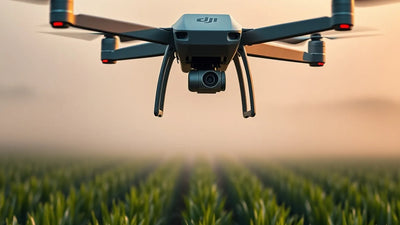
Dutch Drone Delta Opens Co-Financing: A Game Changer for Commercial UAVs in the Netherlands
The Dutch Drone Delta has launched a new co-financing call for proposals, targeting high-impact drone applications across agriculture, logistics, and infrastructure. This funding initiative, with a deadline of 2026-06-30, offers up to 50% co-financing for BVLOS operations and RTK surveying projects. Commercial operators and second-hand drone market participants must act fast to secure grants that could reshape Europe's drone ecosystem.

Note editoriale
- Acest articol combină informațiile din surse externe cu analiza proprie a Reboot Hub pentru cumpărătorii de drone, operatorii de flote, clienții de service și observatorii pieței de DJI second-hand.
- Faptele din surse sunt separate de interpretare. Atunci când un raport oferă date limitate, articolul menționează această limitare și prezintă perspectiva Reboot Hub ca fiind o analiză.
- Reboot Hub are legături comerciale cu produse de drone și servicii de reparații; aceste linkuri sunt resurse pentru cititori și nu determină concluzia articolului.
In a significant move to accelerate the adoption of unmanned aerial vehicles (UAVs) across the Netherlands, the Dutch Drone Delta has officially opened a new call for proposals, making co-financing available for innovative drone projects. Announced on May 30, 2026, this initiative aims to fund high-impact applications that demonstrate the transformative potential of drone technology in sectors such as agriculture, logistics, infrastructure inspection, and emergency response. With proposals due by June 30, 2026, the clock is ticking for startups, research institutions, and commercial operators to secure up to 50% co-financing for their projects.
This development comes at a pivotal moment for the European drone market, where regulatory frameworks like EASA Part 106 and national initiatives are converging to create a more structured environment for beyond visual line of sight (BVLOS) operations. The Dutch Drone Delta, a consortium of government agencies, industry players, and academic partners, has positioned itself as a catalyst for innovation, offering both financial support and technical expertise to projects that align with its strategic priorities.
What the Dutch Drone Delta Co-Financing Means for Drone Operators
The co-financing program is designed to lower the barrier to entry for high-risk, high-reward drone projects. According to the official call document, eligible projects must demonstrate clear societal and economic benefits, with a focus on scalability and sustainability. Key areas of interest include precision agriculture using multispectral sensors, last-mile delivery via BVLOS routes, and automated infrastructure monitoring with real-time data analytics.
Enterprise procurement
Turn this market signal into a fleet requirement.
Discuss mission profile, quantities, configuration, delivery, and lifecycle support with Reboot Hub.
For commercial drone operators, this funding opportunity is a watershed moment. The ability to access co-financing-potentially covering up to 50% of project costs-can significantly reduce the financial burden of deploying advanced UAV systems. This is particularly relevant for projects requiring specialized hardware like DJI Matrice 350 RTK drones equipped with LiDAR or thermal cameras, which can cost upwards of ?15,000 new. By leveraging this grant, operators can offset initial capital expenditures while generating valuable operational data that can be used to refine their service offerings.
Moreover, the program emphasizes collaboration between public and private entities, encouraging consortia that include universities, government agencies, and small-to-medium enterprises (SMEs). This aligns with broader European Union goals of fostering innovation through cross-sector partnerships, as outlined in the European Drone Strategy 2.0.
Ready to Upgrade Your Fleet?
Browse our collection of inspected pre-owned DJI drones - inspected, flight-tested, and backed by a 6-month warranty. Save up to 40% versus retail.
Technical Requirements and Eligibility Criteria
To qualify for co-financing, projects must meet several technical and administrative criteria. First, proposals must clearly define the operational environment, including airspace integration plans that comply with EASA Part 106 and local Dutch regulations. This is especially critical for BVLOS operations, which require detailed risk assessments and contingency plans.
Second, projects must demonstrate technical feasibility using commercially available or near-market hardware. While custom-built drones are not excluded, the program favors systems with proven reliability, such as the DJI Agras T50 for agricultural spraying or the DJI Mavic 3 Enterprise for inspection tasks. This is where the second-hand drone market comes into play: operators can acquire inspected pre-owned equipment at a fraction of the cost, making it easier to allocate grant funds to software development, training, or data processing.
Third, applicants must provide a detailed budget breakdown, including in-kind contributions from consortium partners. The Dutch Drone Delta expects co-financing to cover direct costs like hardware procurement, pilot training, and operational permits, but not indirect costs such as overhead or marketing.
Impact on the Second-Hand Drone Market and Commercial Operators
From a market analysis perspective, this funding initiative is poised to stimulate demand for both new and used drone equipment. As operators rush to submit proposals, many will seek cost-effective ways to acquire the necessary hardware. This is particularly true for SMEs and startups that lack the capital to purchase expensive systems outright.
The used drone market is already experiencing a surge in interest, with platforms like Reboot Hub reporting a 25% increase in inquiries for pre-owned units over the past quarter. For operators looking to participate in the Dutch Drone Delta program, investing in pre-owned DJI drones offers a viable path to meeting technical requirements without breaking the bank. These units undergo rigorous inspection and flight testing, ensuring they meet the same performance standards as new models.
For everyday drone pilots, the ripple effects are significant. Increased funding for commercial projects will likely lead to more BVLOS corridors and U-space implementations, which could eventually benefit recreational pilots through clearer airspace rules. However, there is also a risk of increased regulatory scrutiny, as authorities seek to manage the growing number of commercial operations.
What This Means for the European Drone Ecosystem
The Dutch Drone Delta's co-financing call is not an isolated event; it is part of a broader trend across Europe to integrate drones into the airspace. Countries like Belgium, Germany, and France have launched similar initiatives, but the Netherlands' focus on BVLOS and precision agriculture sets it apart. By targeting high-impact applications, the program aims to generate data that can inform future regulations, such as the upcoming EASA Part 107 amendments for automated drone operations.
For manufacturers like DJI, Autel Robotics, and Skydio, this funding creates a stable demand pipeline. Operators will need to purchase or lease drones that meet the program's technical specifications, driving sales of enterprise-grade models. However, the emphasis on cost-sharing may also push operators toward the second-hand market, where prices for models like the DJI Phantom 4 RTK have dropped by 30% since 2024.
From a regulatory standpoint, the program requires all operations to comply with EASA Part 106 and local Dutch laws, which mandate specific geofencing and remote identification capabilities. This ensures that funded projects contribute to the safe integration of drones into the national airspace, a key priority for the European Union Aviation Safety Agency (EASA).
FAQ: Dutch Drone Delta Co-Financing
Who is eligible for the Dutch Drone Delta co-financing?
Eligible applicants include registered companies, research institutions, and non-profit organizations based in the Netherlands or with a significant presence in the country. Consortia with at least one Dutch partner are preferred. Individual pilots or hobbyists are not eligible unless they partner with a qualifying entity.
What types of projects are prioritized?
The program prioritizes projects that demonstrate clear societal and economic benefits, with a focus on scalability. Key areas include precision agriculture, logistics (especially BVLOS delivery), infrastructure inspection, and emergency response. Projects must use commercially available or near-market hardware and comply with EASA Part 106 regulations.
How does the co-financing process work?
Successful applicants receive up to 50% of eligible project costs, with a maximum grant amount of ?200,000 per project. Funding is disbursed in tranches based on milestones, such as completion of flight tests or delivery of data analysis reports. All projects must be completed within 18 months of the grant agreement.
For operators seeking to upgrade their fleet or repair existing equipment, Reboot Hub offers professional DJI repair services using genuine parts, ensuring your drones meet the technical requirements for funded projects. With the June 30 deadline approaching, now is the time to act.
--
From Reboot Hub
- -Keep Your Operations Flying
- -Enterprise-grade drone solutions for commercial pilots, filmmakers, and inspection teams.
- -Pre-owned Fleet
- - - -Fully inspected DJI drones with 6-month warranty. Save up to 40%.
- - - - Browse Inventory -> - - -Expert Repair
- - - -Professional diagnostics with genuine OEM parts. Same-day estimates.
- - - - Book a Repair -> - - -Spare Parts
- - - -Batteries, propellers, gimbals -- premium OEM components, fast shipping.
- - - - Shop Parts -> - - -