DJI's Perception Stack Moves Indoors and Spots Cables Pilots Miss
DJI's drone perception stack is now reaching indoor environments, with reported cable detection that human pilots can miss. The shift matters for commercial operators, repair decisions, and the pre-owned DJI market as sensing becomes a core value driver.

Quick answer
DJI's drone perception stack is now entering indoor residential environments and can detect cables that human pilots may not see, according to a forkast.news report.
- The report describes DJI perception technology moving from outdoor flight into indoor living spaces
- Cable detection is highlighted as a capability that exceeds typical human visual awareness
- The development signals growing commercial value for obstacle sensing in complex indoor environments
- Operators evaluating pre-owned DJI hardware should weigh sensing capability as a key resale factor
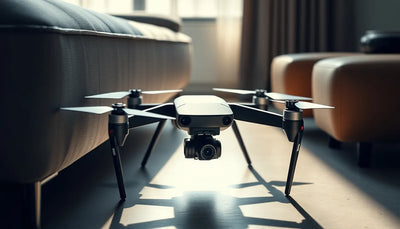
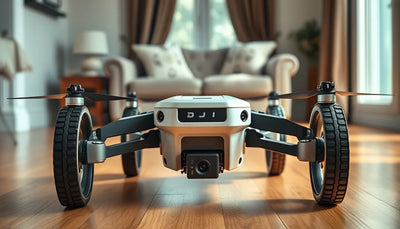
DJI's drone perception stack has crossed a threshold that matters more than most product announcements. According to a report published by forkast.news, the company's sensing technology is now entering indoor residential environments, and it can detect cables that human pilots may not see. That is a meaningful shift for anyone who flies commercially, manages a fleet, or buys and sells pre-owned DJI drones.
DJI buying context
Match product news to hardware you can actually deploy.
Check inspected DJI aircraft, repair support, and trade-in timing before deciding whether to upgrade, repair, or wait.

The report frames this as a move into the living room, which is not just a consumer novelty. Indoor flight has historically been one of the most demanding environments for small drones. Furniture, narrow doorways, variable lighting, reflective surfaces, and thin overhead cables all create failure points. A perception stack that can identify cables in that setting changes how operators should think about risk, repair frequency, and hardware selection.
Why indoor cable detection changes the operational risk picture
The forkast.news report specifically highlights cable detection as a capability that exceeds what a human pilot can reliably see. That matters because cable strikes are a common cause of minor but expensive damage. A drone that clips a power line, a lighting cable, or a thin guy wire can suffer gimbal damage, cracked arms, or motor stress that does not show up immediately. For commercial operators, that translates into downtime and repair costs.
Reboot Hub analysis suggests that the practical implication is not that pilots should fly indoors without caution. Rather, the development signals that perception hardware is becoming a more important variable in drone valuation. A unit with stronger sensing capability may hold its value better in the pre-owned market, because buyers increasingly view obstacle detection as a core safety feature rather than a convenience. Fleet managers who rotate hardware on a schedule should pay attention to how sensing capability is presented in listings and service records.
What this means for drone owners and the market
For individual owners and small commercial operators, the report points to a market where software-driven perception is evolving faster than airframe design. That has consequences for how long a drone remains operationally relevant. A model with older sensing hardware may still fly well, but it may not offer the same protection in complex indoor or cluttered outdoor environments. When evaluating a pre-owned DJI drone, buyers should ask about the perception generation, not just flight time and cosmetic condition.
The pre-owned DJI market is particularly sensitive to this kind of shift. As new perception capabilities become standard, older units can see faster depreciation, especially if repair costs for cable strikes remain high. Operators who want to understand how sensing features affect long-term ownership costs can consult the Drone Wiki for context on DJI hardware generations and repair considerations. The key takeaway is that sensing capability is now a legitimate factor in resale pricing and fleet planning. For owners evaluating service and lifecycle risk, Drone Wiki explains the relevant repair, parts, resale, or operational path.
Repair economics and the case for genuine OEM parts
When perception systems fail or sustain impact damage, repair decisions become more complicated. A drone that can see cables is only useful if its sensors, gimbal, and processing modules remain calibrated and intact. The forkast.news report does not provide repair data, but the commercial logic is clear: more sophisticated sensing means more components that require proper replacement. Operators who cut corners on aftermarket parts may compromise the very capability that made the drone valuable in the first place.
For repair customers, this reinforces the case for genuine OEM spare parts and professional service. A perception stack is not a single replaceable module in most consumer and prosumer airframes. It involves cameras, infrared or time-of-flight sensors, processing units, and firmware calibration. A repair that restores flight but not sensing accuracy leaves the operator with a false sense of security. That is a real commercial risk, especially for anyone flying indoors or near infrastructure where cables are present.
What operators should do differently now
The most immediate action for a buyer, pilot, or fleet manager is to treat perception capability as a first-class evaluation criterion. Before purchasing a pre-owned DJI drone, ask whether the sensing system has been inspected, whether any sensor-related repairs have been performed, and whether the firmware is current. If the seller cannot answer those questions, the unit may carry hidden risk even if it looks clean and flies straight.
Second, operators who fly indoors or in cluttered environments should factor cable detection into their pre-flight checklist. Even if the drone can see cables, the pilot remains responsible for the flight. The technology reduces risk; it does not eliminate it. Third, fleet managers should document sensing-related incidents and repairs separately from general wear and tear. That data will become more valuable as perception capability increasingly defines resale value in the pre-owned DJI market.
The broader market signal is that DJI is pushing perception technology into spaces where human vision is the weakest link. That is not a gimmick. It is a commercial statement about where drone value is heading. Operators who understand that shift early will make better buying, repair, and resale decisions.
FAQ
Frequently asked questions
What did forkast.news report about DJI's perception stack?
The report stated that DJI's drone perception stack has entered indoor residential environments and can detect cables that human pilots may not see.
Why does indoor cable detection matter for commercial operators?
Cable strikes are a common cause of drone damage, and indoor environments present thin cables, variable lighting, and tight spaces that increase risk. Stronger sensing can reduce repair frequency and downtime.
How should buyers evaluate pre-owned DJI drones after this development?
Buyers should treat sensing capability as a core valuation factor, ask about sensor inspection and repair history, and verify that the perception system has not been compromised by prior damage or non-OEM repairs.
Which sources support this update?
The article distinguishes reported information from analysis and does not present an unverified source as official confirmation.
What remains subject to change?
Retail pricing, availability, product bundles and regulatory timelines can change. Readers should verify the latest terms with the named retailer, manufacturer or regulator before acting.
How should buyers or operators use this analysis?
Use the verified facts as a starting point, then compare mission fit, lifecycle support, maintenance needs and current procurement terms before making a purchase or fleet decision.
Surse consultate
- forkast.news via Google News - primary source
La momentul publicării, nu era disponibilă documentație oficială suplimentară.
Redacția Reboot Hub oferă analize privind achiziția, reparația, revânzarea și operarea pentru proprietarii de drone. Dacă observați o eroare, contactați-ne pentru revizuirea corecției conform politicii noastre editoriale.