Chimp Sanctuary Uses DJI Drone After Florida Floods Cut Off Kaleb
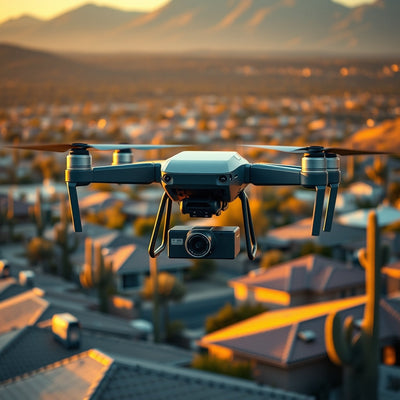
A Florida chimpanzee sanctuary used a DJI Air 3-series drone to deliver food and blankets to an isolated chimp after flooding. The same capability sits out of reach for Florida public agencies, highlighting a widening gap between private drone operations and government fleets under current procurement restrictions.

Quick answer
Save the Chimps used a DJI Air 3-series drone to drop bananas and blankets to Kaleb, a 38-year-old chimpanzee, after floods cut him off, while Florida agencies remain unable to fly the same hardware.
- A Florida sanctuary flew a DJI Air 3-series drone for emergency supply drops to an isolated chimp after flooding.
- The drone delivered bananas and blankets to Kaleb, age 38, according to DroneXL.co reporting.
- Florida public agencies cannot fly the same DJI hardware under current state-level restrictions.
- The incident highlights the operational gap between private and public-sector drone access in emergency response.
Evidence: DroneXL.co
Operator checklist
Turn policy news into a safer fleet decision.
Before changing aircraft, compare repair paths, available DJI inventory, and trade-in timing against the rule change.

Verified facts
What the available evidence confirms
| Operator | Aircraft | Task | Status |
|---|---|---|---|
| Save the Chimps sanctuary | DJI Air 3-series | Drop bananas and blankets to chimp Kaleb after floods | Reported operational |
| Florida public agencies | DJI Air 3-series equivalent | Emergency response and logistics | Restricted from flying |
DroneXL.co reported on November 8, 2026, that Save the Chimps, a Florida sanctuary, flew a DJI Air 3-series drone to deliver bananas and blankets to Kaleb, a 38-year-old chimpanzee, after floodwaters cut off access to his area. The flight was a direct, small-scale logistics response: a private organization used commercially available DJI hardware to move essential supplies to a stranded animal when ground routes were unavailable.
The detail that makes this more than a feel-good rescue story is the contrast embedded in the same report. Florida's own public agencies cannot fly the same DJI hardware. That split between what a private sanctuary can do with an off-the-shelf drone and what a state agency is permitted to operate sits at the center of a growing procurement and fleet-planning problem for commercial operators, repair shops, and buyers in the pre-owned DJI market.
The reported event and its operational context
According to the DroneXL.co report, the sanctuary used a DJI Air 3-series aircraft to make supply drops to Kaleb after flooding isolated him. The payloads were bananas and blankets, which suggests a short-range, low-weight delivery profile well within the practical capability of a mid-size consumer-to-prosumer drone. No official agency confirmation of the flight details was included in the source material, so the operational specifics should be treated as reported by the primary outlet rather than independently verified.
What matters for commercial readers is the use case. A private entity with a single DJI airframe executed an emergency logistics task that would normally require ground crews, boats, or heavier aviation assets. The drone did not replace a full disaster response system, but it closed a narrow gap quickly. For fleet managers, the incident reinforces a pattern: lightweight DJI platforms are increasingly being used for point-to-point delivery of small essential items in time-sensitive situations, even when the operator is not a dedicated logistics company.
The source-limited nature of the reporting means we do not know the exact Air 3-series variant, the number of flights, the distance covered, or whether any waivers or airspace authorizations were involved. Those details matter for replicating the operation, but their absence does not change the core takeaway: the hardware was available, the operator was private, and the mission succeeded.
The regulatory split between private and public operators
The same DroneXL.co report states that Florida agencies cannot fly the DJI hardware used by the sanctuary. This is not framed as a technical limitation but as a policy and procurement restriction. The report does not specify the exact statute, funding rule, or agency policy behind the restriction, so Reboot Hub analysis should treat the precise legal mechanism as unconfirmed. What is clear is the practical outcome: a private nonprofit can operate a DJI Air 3-series drone for emergency supply delivery, while a public agency in the same state cannot field the same aircraft.
That asymmetry has direct consequences for how emergency response capacity is built. When public agencies are barred from purchasing or operating certain DJI models, they must either rely on other vendors, request mutual aid from private operators, or go without the capability. In this case, the sanctuary acted on its own. The broader question for the commercial drone sector is whether private operators will increasingly become the default providers of small-scale emergency logistics in jurisdictions where public fleets face DJI restrictions.
For repair and support businesses, the split also changes demand patterns. Private operators who can fly DJI hardware will continue to need parts, maintenance, and replacement aircraft. Public agencies that cannot fly DJI will source from other manufacturers, but those fleets are often smaller and less standardized. The result is a bifurcated service market: one side built around high-volume DJI repair and parts demand, the other around lower-volume, multi-vendor public-sector support.
What this means for drone owners and the market
The incident strengthens the case that DJI hardware remains operationally relevant in the United States even as public-sector restrictions tighten. Private buyers, nonprofits, agricultural operators, inspection firms, and small logistics providers continue to fly DJI aircraft because the platforms are widely available, well-supported by third-party repair networks, and familiar to pilots. When a sanctuary can pull a DJI Air 3-series drone out of its inventory and run an emergency supply drop, that is a signal about the installed base and the practical utility of the platform.
For owners and buyers, the takeaway is not that every DJI drone is a disaster-response tool. It is that the pre-owned and parts ecosystem around DJI hardware remains liquid and useful. A buyer considering a pre-owned DJI Air 3-series aircraft can look at this reported event and see a platform that is still being flown for real work, not just recreational use. For those evaluating repair and support options, the relevant reference point is the broader Drone Wiki resource, which tracks the practical ownership and maintenance landscape for DJI platforms.
Fleet managers should treat the Florida agency restriction as a planning variable, not a headline. If your operation is private and does not rely on federal or state procurement rules that restrict DJI, your access to DJI hardware, parts, and service is likely unchanged. If your operation contracts with public agencies, you should expect those agencies to require non-DJI platforms or to structure work so that private contractors provide the DJI capability under their own operating authority. That distinction affects which aircraft you buy, which repair partners you use, and how you structure pilot training.
The pre-owned DJI market is also affected by the durability of demand. Every reported operational success with DJI hardware, whether in agriculture, inspection, or emergency logistics, supports resale values and keeps demand for OEM-pulled parts steady. Public-sector restrictions remove some buyers from the market, but private operators continue to absorb used DJI inventory. The result is a market where inspected pre-owned DJI drones hold value better than they would if the platform were losing operational relevance. For owners evaluating service and lifecycle risk, Drone Wiki explains the relevant repair, parts, resale, or operational path.
Repair, parts, and fleet-planning implications
For repair shops and parts suppliers, the sanctuary story is a reminder that DJI aircraft are being used in environments that accelerate wear. Flood response means moisture exposure, repeated takeoffs and landings from unimproved surfaces, and payload drops that stress gimbal and airframe components. An Air 3-series drone used for supply delivery will need more frequent inspection than the same model flown for calm-weather photography. That pattern supports steady demand for genuine OEM spare parts and professional DJI repair services.
Fleet managers should also note the payload reality. The report describes bananas and blankets, not medical equipment or heavy supplies. That is consistent with the practical payload class of a mid-size DJI drone. Operators should not over-read the incident as proof that DJI consumer drones can replace dedicated cargo platforms. The lesson is narrower: for small, urgent, lightweight deliveries over short distances, a DJI Air 3-series aircraft can be a viable tool when no other option is available.
The regulatory angle also affects how fleets are insured and documented. If a private operator is flying DJI hardware in a state where public agencies cannot, the operator should keep clear records showing private ownership, private operation, and compliance with applicable airspace rules. That documentation matters if the operator later wants to contract with public agencies or if questions arise about the origin and support status of the aircraft. For buyers of pre-owned DJI drones, the same documentation discipline applies: a well-documented aircraft with a clear private-use history is easier to insure, repair, and resell.
FAQ
Frequently asked questions
Why could a Florida sanctuary fly a DJI drone when state agencies cannot?
According to the DroneXL.co report, the sanctuary is a private organization and was able to operate the DJI Air 3-series drone, while Florida public agencies face restrictions on flying the same hardware. The report does not specify the exact legal basis for the agency restriction, so the precise policy mechanism should be treated as unconfirmed.
What should a private drone operator learn from this incident?
Private operators should recognize that DJI hardware remains operationally useful for short-range, lightweight emergency logistics even in jurisdictions where public agencies face DJI restrictions. Operators should keep clear ownership and flight documentation, especially if they may later contract with public-sector clients.
Does this incident affect the pre-owned DJI drone market?
Reported operational successes with DJI platforms support steady private-sector demand, which helps maintain resale value and demand for OEM-pulled parts. Public-sector restrictions remove some buyers, but private operators continue to absorb inspected pre-owned DJI inventory.
Which sources support this update?
The visible evidence links identify DroneXL.co; each source is used only for the claim it directly supports.
What remains subject to change?
Retail pricing, availability, product bundles and regulatory timelines can change. Readers should verify the latest terms with the named retailer, manufacturer or regulator before acting.
How should buyers or operators use this analysis?
Use the verified facts as a starting point, then compare mission fit, lifecycle support, maintenance needs and current procurement terms before making a purchase or fleet decision.
Surse consultate
- DroneXL.co - primary source
La momentul publicării, nu era disponibilă documentație oficială suplimentară.
Redacția Reboot Hub oferă analize privind achiziția, reparația, revânzarea și operarea pentru proprietarii de drone. Dacă observați o eroare, contactați-ne pentru revizuirea corecției conform politicii noastre editoriale.