Wuhan Maritime Authority Tests Ship-Launched Autonomous Drone Ops
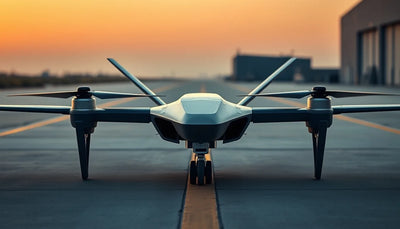
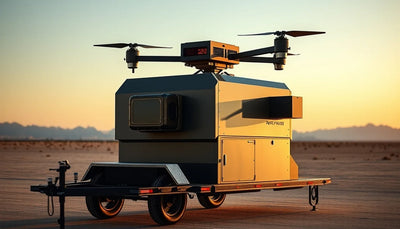
Wuhan Maritime Safety Administration is exploring dynamic autonomous takeoff, landing, and following technology for ship-coordinated UAVs. The initiative points to growing demand for maritime drone operations that can track moving vessels without manual piloting.

Quick answer
Wuhan Maritime Safety Administration is exploring dynamic autonomous takeoff, landing, and following technology for ship-coordinated UAVs, according to a Hubei News Network report.
- The initiative focuses on drones that can launch and land on moving ships autonomously
- The technology aims to enable UAVs to follow vessels without continuous manual piloting
- The report comes from Hubei News Network and covers a Chinese maritime regulator
- Commercial implications center on maritime inspection, patrol, and fleet operation workflows
The Wuhan Maritime Safety Administration is exploring dynamic autonomous takeoff, landing, and following technology for ship-coordinated unmanned aerial vehicles, according to a report published by Hubei News Network. The development, first reported in the Chinese regional outlet, signals that maritime regulators are looking beyond manually piloted drone flights toward systems that can operate from moving vessels with less direct human input.
Market context
Turn market news into a buy, repair, or trade-in decision.
Compare pre-owned availability, resale timing, and repair economics before the market moves again.

For commercial drone operators, fleet planners, and repair providers, the initiative matters because ship-based autonomous operations introduce a distinct set of hardware, maintenance, and workflow demands. A drone that must repeatedly land on a pitching deck, track a moving vessel, and return without a pilot guiding it by hand faces different stress patterns than a unit flown from stable ground. That difference eventually shows up in airframe wear, sensor calibration, and spare parts demand.
What the Wuhan initiative involves
The Hubei News Network report describes an exploration of dynamic autonomous takeoff, landing, and following technology for ship-coordinated UAVs. The term "dynamic" is significant here: it suggests the system is being evaluated against conditions where both the drone and the landing platform are in motion. That is a more demanding operational envelope than static pad landings or return-to-home routines common in consumer and many enterprise workflows.
The source does not provide technical specifications, vendor names, or deployment timelines. Reboot Hub analysis is therefore limited to what the report states: the Wuhan Maritime Safety Administration is exploring the technology, not necessarily procuring it at scale. For operators watching the Chinese maritime drone market, the announcement is best read as an early signal of regulator interest rather than a confirmed fleet program.
Maritime safety agencies in China have been active users of UAVs for river and coastal inspection, port monitoring, and emergency response. A move toward ship-coordinated autonomy would build on that existing operational base. The practical question is whether the technology can handle the mechanical and navigational complexity of a vessel that is itself moving, turning, and rolling during launch and recovery.
Why ship-coordinated autonomy changes operational demands
Drones that take off and land from moving ships face repeated high-stress cycles. Each landing involves approach corrections, abrupt deceleration, and contact with a surface that may be shifting in three axes. Over time, that pattern accelerates wear on landing gear, gimbal mounts, motor bearings, and airframe joints. A fleet manager planning for maritime operations should expect different maintenance intervals than a land-based inspection team using the same airframe.
The following function described in the source also has implications. If a UAV is expected to track a vessel autonomously, it must continuously process position data from the ship, adjust for wind and current, and manage power reserves to remain within recovery range. That places additional load on flight controllers, positioning modules, and battery systems. Repair providers serving maritime customers may see more frequent requests for diagnostics on navigation components and power delivery systems.
For the pre-owned DJI market, the relevance is indirect but real. Many commercial operators enter maritime work with used or inspected pre-owned airframes to test workflows before committing to new fleet purchases. If ship-coordinated autonomy becomes a standard requirement for maritime inspection contracts, demand for airframes that can support precision landing and active tracking features could shift. Buyers may begin prioritizing models with robust downward vision systems and strong wind resistance, even in the pre-owned segment.
What this means for drone owners and the market
The Wuhan report is a single data point, but it aligns with a broader commercial trend: maritime operators want drones that can work from vessels without tying up a dedicated pilot for every launch and recovery cycle. If the technology matures, it could expand the addressable market for inspection drones in port, shipping, and offshore applications. That expansion would eventually flow through to procurement decisions, spare parts consumption, and service demand. For owners evaluating service and lifecycle risk, Drone Wiki explains the relevant repair, parts, resale, or operational path.
For buyers and fleet managers, the practical takeaway is to watch how maritime regulators in China and elsewhere define acceptable autonomous ship operations. Early exploration often precedes formal requirements. Operators who anticipate those requirements can plan airframe choices, maintenance schedules, and training investments accordingly. For those evaluating current hardware, resources such as the Drone Wiki can help clarify which airframes and components are suited to demanding operational environments.
Repair providers should also note the direction of travel. Ship-based drones operate in salt air, high humidity, and constant vibration. Even without autonomous landing, those conditions shorten component life. Add dynamic takeoff and landing cycles, and the case for proactive maintenance becomes stronger. Shops that understand maritime wear patterns will be better positioned to serve commercial customers as this segment grows.
Limitations of the current reporting
The source report is brief and does not include technical detail. There are no confirmed vendors, no stated performance metrics, no regulatory filing references, and no timeline for deployment. Reboot Hub has not independently verified the scope of the Wuhan Maritime Safety Administration's exploration beyond the Hubei News Network account.
That absence of detail matters for commercial readers. It would be premature to assume that a specific DJI model, flight controller, or landing system is involved. It would also be premature to forecast near-term procurement volumes. The responsible interpretation is that a maritime regulator is evaluating a capability that, if proven, could influence future operational standards and fleet requirements.
Operators should treat the development as a signal, not a specification. The signal is that ship-coordinated autonomy is on the agenda for at least one Chinese maritime authority. The specification, if one emerges, will come through later reporting, tender documents, or vendor announcements.
FAQ
Frequently asked questions
What did the Wuhan Maritime Safety Administration announce?
According to Hubei News Network, the agency is exploring dynamic autonomous takeoff, landing, and following technology for ship-coordinated UAVs. The report does not specify vendors, timelines, or technical parameters.
How could this affect commercial drone operators?
If ship-coordinated autonomy becomes a standard requirement, maritime inspection and patrol operators may need airframes and maintenance programs designed for repeated landings on moving vessels. That could shift procurement and repair demand over time.
Should drone buyers change their purchasing plans now?
Not based on this report alone. The development is an early exploration by a maritime regulator. Buyers should monitor follow-up reporting and tender activity before adjusting fleet plans around ship-based autonomous operations.
Which sources support this update?
The article distinguishes reported information from analysis and does not present an unverified source as official confirmation.
What remains subject to change?
Retail pricing, availability, product bundles and regulatory timelines can change. Readers should verify the latest terms with the named retailer, manufacturer or regulator before acting.
How should buyers or operators use this analysis?
Use the verified facts as a starting point, then compare mission fit, lifecycle support, maintenance needs and current procurement terms before making a purchase or fleet decision.
Fontes consultadas
- Source material - primary source
Não estava disponível documentação oficial adicional no momento da publicação.
O Editorial Reboot Hub acrescenta análises de compra, reparação, revenda e operacionais para proprietários de drones. Se detetar um erro, contacte-nos para a revisão da correção através da nossa política editorial.