Sentrycs Prices Portable Counter-Drone System Under $100,000
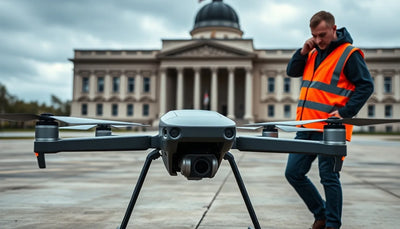
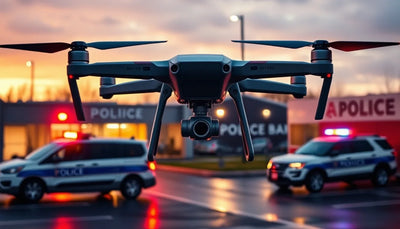
Sentrycs announced a $99,000 firm-fixed-price offering for its portable Ranger counter-drone system, including three years of maintenance. The move targets state and local agencies seeking to expand airspace awareness and distribute detection, tracking, identification, and mitigation capabilities across more operational teams.

Quick answer
Sentrycs announced a $99,000 firm-fixed-price offering for its portable Ranger counter-drone system, including three years of maintenance, aimed at state and local agencies.
- The offering covers detection, tracking, identification, and mitigation (DTIM)
- The $99,000 price includes three years of maintenance
- It is configured as a portable system for distributing capability across operational teams
- The announcement is tied to helping states use FEMA grant funding
Evidence: Source material · AeroVironment unmanned systems solutions · FAA UAS official guidance
Fleet readiness
Keep DJI hardware available without overbuying new units.
Use defense and fleet news as a planning signal for repair support, inspected pre-owned aircraft, and replacement timing.

Verified facts
What the available evidence confirms
| Attribute | Sentrycs Ranger Offering |
|---|---|
| Price | $99,000 firm-fixed-price |
| Maintenance | Three years included |
| Capability | Detection, tracking, identification, mitigation (DTIM) |
| Form factor | Portable system |
| Target buyers | State and local agencies |
Ondas Holdings subsidiary Sentrycs has put a concrete price on portable counter-drone capability. According to a report published by Yahoo Finance, the company announced a $99,000 firm-fixed-price offering for its portable Sentrycs Ranger system, formerly known as Scout, with three years of maintenance included. The package is configured for detection, tracking, identification, and mitigation, or DTIM, and is positioned as a way for state and local agencies to expand airspace awareness against unlawful drones.
The announcement matters because counter-UAS procurement has historically been opaque, with pricing often buried in multi-year contracts or bundled into larger security programs. A published firm-fixed price gives municipal and state buyers a clear budget benchmark, and it signals that Sentrycs is targeting grant-funded deployments rather than only large federal programs. The source frames the offering specifically around helping states maximize the latest round of FEMA grant funding, which suggests a near-term procurement window for public safety agencies.
The offering and its procurement context
The Sentrycs Ranger is described in the source as a portable system built for detection, tracking, identification, and mitigation. The $99,000 price includes three years of maintenance, which is a meaningful detail for public agencies that must plan total cost of ownership rather than upfront hardware cost alone. Maintenance coverage over three years reduces the risk of unbudgeted repair or service expenses during the initial deployment period.
For fleet planners and public safety buyers, a firm-fixed-price model is easier to insert into grant applications than a negotiated or variable-price contract. The source notes that the offering is designed to help states and local agencies distribute capabilities across more operational teams. That phrasing points to a shift away from a single centralized counter-drone unit toward broader, more distributed deployment, which is consistent with how many agencies now think about drone response across events, critical infrastructure, and routine patrol operations.
What this means for drone owners and the market
The expansion of state and local counter-drone programs has direct implications for commercial operators and private drone owners. As more agencies deploy detection and mitigation systems, the operational environment for lawful flights becomes more scrutinized. Pilots flying near public venues, critical infrastructure, or municipal events should expect more active airspace monitoring and faster response to unidentified or unauthorized flights. The presence of portable DTIM systems also means that enforcement capability can move with an event, rather than being fixed at a single site.
Reboot Hub analysis: For the pre-owned DJI market, this matters in a subtle but real way. Buyers evaluating inspected pre-owned DJI drones should pay close attention to firmware, Remote ID compliance, and registration documentation before flying in areas where local agencies are deploying counter-drone tools. A drone that is not properly registered or broadcasting identification data is more likely to draw attention from a detection system, and operators who cannot demonstrate compliance may face operational disruption even if their flight is otherwise lawful. Reboot Hub's Drone Wiki is a useful reference for understanding the compliance and maintenance factors that affect pre-owned drone ownership in an increasingly monitored airspace environment. For owners evaluating service and lifecycle risk, Drone Wiki explains the relevant repair, parts, resale, or operational path.
The announcement also reinforces a broader market pattern: counter-UAS capability is moving down-market from federal defense programs to state and municipal budgets. That shift increases the total number of detection systems in operation, which changes the risk calculus for operators who fly without proper authorization or in restricted areas. It also creates a growing secondary market for training, maintenance, and integration services around these systems, though the source does not provide detail on those adjacent service categories.
Grant funding and the timing of the announcement
The source explicitly ties the Sentrycs offering to FEMA's latest round of grant funding. That timing is commercially significant because grant cycles create concentrated purchasing windows. Agencies that receive funding must often commit to specific equipment purchases within a defined period, and a vendor that publishes a clear price during that window reduces friction for procurement officers who need to justify line items in a grant budget.
The three-year maintenance inclusion also aligns with how grant-funded programs are typically structured. Many public safety grants require recipients to demonstrate sustainability beyond the initial purchase, and bundled maintenance helps agencies show that they have accounted for ongoing support costs. For Sentrycs, the fixed price and maintenance bundle may also serve as a competitive differentiator against vendors that quote hardware separately from service contracts.
What buyers and operators should watch next
For fleet managers and public safety procurement officers, the immediate takeaway is that portable counter-drone capability now has a published reference price under $100,000. That makes it easier to compare against other DTIM solutions and to build realistic grant requests. Buyers should still ask about installation, training, and any costs beyond the three-year maintenance window, since the source does not specify those terms.
For commercial drone operators, the practical step is to treat counter-drone deployment as a growing feature of the operating environment, especially around public events and critical infrastructure. Maintaining current registration, enabling Remote ID where required, and keeping flight documentation accessible are low-cost steps that reduce the chance of a disruptive encounter with a detection or mitigation system. The source does not describe specific mitigation methods or operational limitations, so operators should avoid assumptions about how any particular system will respond to a given flight profile.
FAQ
Frequently asked questions
What did Sentrycs announce?
Sentrycs announced a $99,000 firm-fixed-price offering for its portable Ranger counter-drone system, including three years of maintenance, according to a Yahoo Finance report.
Who is the target buyer for the Sentrycs Ranger offering?
The offering is aimed at state and local agencies seeking to expand airspace awareness and distribute counter-drone capability across more operational teams, with a stated connection to FEMA grant funding.
What should commercial drone operators do after this announcement?
Operators should expect more portable counter-drone systems in public safety use and ensure their drones are properly registered, Remote ID compliant, and flown with documentation readily available, especially near public events and critical infrastructure.
Which sources support this update?
The visible evidence links identify Source material and AeroVironment unmanned systems solutions and FAA UAS official guidance; each source is used only for the claim it directly supports.
What remains subject to change?
Retail pricing, availability, product bundles and regulatory timelines can change. Readers should verify the latest terms with the named retailer, manufacturer or regulator before acting.
How should buyers or operators use this analysis?
Use the verified facts as a starting point, then compare mission fit, lifecycle support, maintenance needs and current procurement terms before making a purchase or fleet decision.
Fontes consultadas
- Source material - primary source
- AeroVironment unmanned systems solutions - official company source
- FAA UAS official guidance - official regulator source
O Editorial Reboot Hub acrescenta análises de compra, reparação, revenda e operacionais para proprietários de drones. Se detetar um erro, contacte-nos para a revisão da correção através da nossa política editorial.