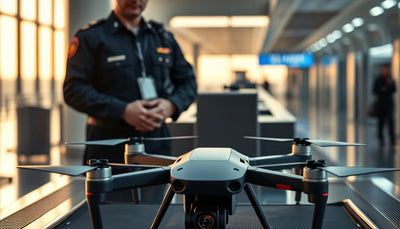
Robinson Unmanned Demonstrates Heavy-Lift Helicopter Deck Ops
Robinson Unmanned is moving beyond small tactical drones, showing a full-size unmanned helicopter performing deck landings and cargo operations. The demonstration signals broader defense and logistics ambitions that could reshape how operators think about heavy-lift autonomy and fleet planning.

Quick answer
Robinson Unmanned demonstrated a full-size unmanned helicopter performing deck landings and cargo operations, expanding its strategy from small tactical drones to heavy-lift autonomous aircraft.
- The demonstration was reported by DRONELIFE on September 8, 2026
- The company is positioning itself across both small tactical drones and heavy-lift UAS
- Deck landings and cargo operations were shown in an offshore context
- The development signals a broader U.S. defense and logistics push
Evidence: DRONELIFE
Fleet readiness
Keep DJI hardware available without overbuying new units.
Use defense and fleet news as a planning signal for repair support, inspected pre-owned aircraft, and replacement timing.

Robinson Unmanned is making a deliberate move beyond the small tactical drone segment that has defined much of the current defense robotics conversation. According to reporting from DRONELIFE, the company recently demonstrated a full-size unmanned helicopter performing deck landings and cargo operations, a step that extends its strategy into heavy-lift autonomous aircraft. The demonstration, reported on September 8, 2026, positions Robinson Unmanned as a more serious participant in the growing U.S. unmanned defense and logistics sector.
The shift matters because heavy-lift unmanned aerial systems occupy a different operational and commercial category than the small quadcopters and fixed-wing tactical platforms that dominate most procurement discussions. Deck landings and cargo operations require different flight control logic, different safety margins, and different maintenance planning. For commercial operators and fleet buyers watching the defense market for signals about where autonomy is heading, Robinson's move is a useful data point about how quickly the envelope is expanding.
What the demonstration actually shows
DRONELIFE reported that the full-size unmanned helicopter demonstrated deck landings and cargo operations, with the company showing off a range that now spans from small tactical drones to heavy-lift autonomous aircraft. The phrase "Era of Both" in the source title suggests Robinson is deliberately framing itself as a dual-capability player rather than a niche tactical supplier. That positioning has practical consequences: a company that can support small reconnaissance platforms and heavy-lift logistics airframes is competing for a wider slice of defense and commercial logistics budgets.
Deck landings are among the most demanding rotary-wing maneuvers in any environment, manned or unmanned. A moving vessel, wind over the deck, and rotor wash interacting with ship structures create a dynamic landing zone that tests sensor fusion, control authority, and fail-safe logic. The fact that Robinson chose to demonstrate this capability publicly suggests the company believes the system is mature enough for scrutiny from defense and offshore logistics buyers. For operators evaluating heavy-lift autonomy, the demonstration is a signal that the technology is moving from test range to realistic maritime conditions.
Why heavy-lift UAS is a different commercial category
Small tactical drones are typically expendable or semi-expendable assets with short service lives and relatively low unit costs. Heavy-lift unmanned helicopters invert that model. These are capital assets that require scheduled maintenance, component tracking, spare parts planning, and trained support personnel. A deck landing demonstration is not just a flight test; it is a preview of the sustainment burden that fleet operators will need to plan for if heavy-lift UAS enters regular service.
For the broader commercial drone market, the development is worth watching because defense logistics programs often incubate capabilities that later migrate into civilian applications. Offshore energy logistics, disaster relief resupply, and remote infrastructure support are all areas where heavy-lift rotary-wing autonomy could eventually reduce crewed helicopter hours. Robinson's demonstration does not confirm any commercial launch, but it does indicate that the underlying flight control and deck operations capability is being validated in a realistic maritime context.
What this means for drone owners and the market
The immediate impact on most commercial drone operators is indirect but not irrelevant. Heavy-lift defense programs influence supplier priorities, component availability, and the direction of autonomy software development. When a manufacturer like Robinson invests in deck landing algorithms, sensor packages, and cargo hook control logic, those engineering efforts can eventually filter down into more accessible platforms. Fleet managers who track defense UAS developments are often better positioned to anticipate which capabilities will become commercially available in the next procurement cycle.
For buyers and operators in the pre-owned DJI market, the connection is even more tenuous, but the underlying logic still applies. Defense and enterprise autonomy programs shape the perception of what drones can do reliably, which in turn influences demand for commercial platforms that can handle inspection, mapping, and light logistics tasks. A buyer evaluating a pre-owned DJI airframe today is not directly affected by Robinson's heavy-lift demonstration, but the broader trend toward validated autonomous cargo operations supports the case that drone logistics is becoming a durable commercial category rather than a speculative experiment. Operators who want to understand how autonomy is maturing can track developments like this alongside more familiar commercial product news, and resources such as the Drone Wiki can help contextualize platform choices and ownership considerations. For owners evaluating service and lifecycle risk, Drone Wiki explains the relevant repair, parts, resale, or operational path.
The practical takeaway for a fleet manager or repair customer is to watch how heavy-lift autonomy programs handle maintenance and sustainment. If defense buyers begin requiring component traceability, scheduled airframe inspections, and documented repair histories for unmanned helicopters, those practices will eventually influence commercial drone maintenance expectations as well. Operators who already keep disciplined maintenance logs and source genuine OEM spare parts will be ahead of that curve.
What to watch next
DRONELIFE's reporting did not include specific technical specifications, payload figures, or program timelines for the heavy-lift system. That absence of detail is worth noting. The demonstration is a capability signal, not a procurement announcement. Buyers and analysts should watch for follow-on reporting about whether Robinson secures defense or offshore logistics contracts, whether the system enters formal testing with a U.S. agency, and whether any commercial variant is announced.
The broader U.S. unmanned defense and logistics sector is crowded, with multiple companies pursuing heavy-lift autonomy in different form factors. Robinson's advantage appears to be its established rotary-wing heritage and its ability to present a full range from small tactical drones to large unmanned helicopters. Whether that translates into sustained program wins will depend on reliability data, sustainment costs, and the company's ability to scale production and support. For now, the deck landing demonstration is best understood as a serious statement of intent from a company that wants to be measured against the full spectrum of unmanned aviation, not just the tactical segment.
FAQ
Frequently asked questions
What did Robinson Unmanned demonstrate?
According to DRONELIFE, Robinson Unmanned demonstrated a full-size unmanned helicopter performing deck landings and cargo operations, expanding its range from small tactical drones to heavy-lift autonomous aircraft.
Why does heavy-lift UAS matter for the drone market?
Heavy-lift unmanned helicopters are capital assets with different maintenance, spare parts, and sustainment requirements than small tactical drones. Defense logistics programs that validate heavy-lift autonomy can influence future commercial logistics and inspection demand.
Should commercial drone operators change anything now?
No immediate change is required, but operators should track heavy-lift autonomy programs for signals about component availability, maintenance standards, and which capabilities may eventually reach commercial platforms.
Which sources support this update?
The visible evidence links identify DRONELIFE; each source is used only for the claim it directly supports.
What remains subject to change?
Retail pricing, availability, product bundles and regulatory timelines can change. Readers should verify the latest terms with the named retailer, manufacturer or regulator before acting.
How should buyers or operators use this analysis?
Use the verified facts as a starting point, then compare mission fit, lifecycle support, maintenance needs and current procurement terms before making a purchase or fleet decision.
Fontes consultadas
- DRONELIFE - primary source
Não estava disponível documentação oficial adicional no momento da publicação.
O Editorial Reboot Hub acrescenta análises de compra, reparação, revenda e operacionais para proprietários de drones. Se detetar um erro, contacte-nos para a revisão da correção através da nossa política editorial.