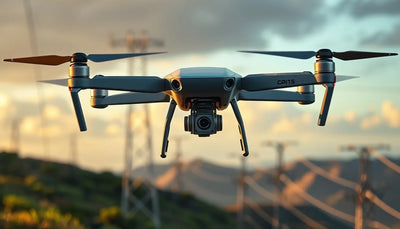
Ring's Drone Cam Stays Unreleased, Signaling a Stalled Consumer Security Drone Market
Ring's autonomous indoor security drone remains commercially unavailable, according to Joe's Daily. The stalled release highlights how consumer security drones still face a difficult path to retail, even as commercial UAV demand grows.

Quick answer
Ring's Drone Cam remains unavailable to purchase, according to Joe's Daily, despite being announced as a flying indoor security camera concept.
- The product has not reached a buyable retail stage as of November 2026.
- The delay reflects broader challenges in consumer autonomous security drone commercialization.
- Commercial UAV buyers should treat consumer security drone availability claims with caution.
- The pre-owned DJI market remains the more liquid and accessible segment for drone acquisition.
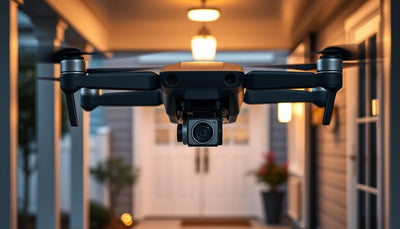
Ring's Drone Cam, a concept for an autonomous indoor flying security camera, is still not available to purchase, according to reporting from Joe's Daily. The development, or rather the lack of one, is a quiet but meaningful signal in the broader commercial UAV landscape. While enterprise and industrial drone adoption continues to mature, consumer-facing autonomous security drones remain stuck between concept demonstrations and actual retail availability.
Market context
Turn market news into a buy, repair, or trade-in decision.
Compare pre-owned availability, resale timing, and repair economics before the market moves again.

The absence of a buyable Ring Drone Cam matters because it illustrates a recurring pattern: security-focused drone products generate significant attention at announcement, then face long and often indefinite paths to market. For drone buyers, fleet operators, and repair customers, this pattern should shape how they evaluate new product claims and where they place procurement confidence.
The Ring Drone Cam situation as reported
Joe's Daily reports that Ring's Drone Cam is a flying security camera concept and that consumers still cannot buy one. The report does not provide a confirmed release date, pricing, or a formal statement from Ring about when or whether the product will reach retail. That absence of commercial detail is itself the central fact of the story.
For commercial observers, the key takeaway is not that a single product is delayed. It is that a well-resourced consumer technology brand has not yet converted an autonomous indoor drone concept into a purchasable product. This suggests that the technical, regulatory, and product-safety hurdles for autonomous indoor flight remain significant, even for companies with substantial hardware and software experience.
Reboot Hub analysis: the stalled release should not be read as a failure of drone technology broadly. Rather, it reflects the specific difficulty of building a consumer-priced autonomous indoor drone that meets safety, privacy, and reliability expectations. Enterprise UAV platforms operate under different constraints and have clearer operational use cases, which is why commercial adoption continues to outpace consumer security drone commercialization.
What this means for drone owners and the market
For current and prospective drone owners, the Ring Drone Cam situation reinforces a practical lesson: announced products are not the same as available products. Buyers who need a drone for security, inspection, or commercial work should base decisions on hardware that can actually be purchased, supported, and repaired today. The pre-owned DJI market remains one of the most accessible routes for operators who want proven platforms without waiting on unproven consumer concepts. Reboot Hub's Drone Wiki offers a reference point for understanding the models and components that are actually in circulation.
The stalled consumer security drone segment also has implications for repair and parts markets. Products that never reach scale generate no meaningful spare parts ecosystem, no third-party repair knowledge base, and no resale liquidity. By contrast, established DJI platforms benefit from mature parts availability and service channels. Fleet managers evaluating security or inspection drones should weigh long-term serviceability as heavily as initial capability. For owners evaluating service and lifecycle risk, Drone Wiki explains the relevant repair, parts, resale, or operational path.
For repair customers, the lesson is straightforward: a drone that cannot be bought cannot be repaired. When evaluating any new drone category, operators should ask whether OEM parts, diagnostic tools, and independent repair expertise exist. If those elements are absent, the total cost of ownership becomes unpredictable regardless of the product's advertised features.
Consumer security drones versus commercial UAV momentum
The Ring Drone Cam's continued unavailability contrasts with the steady expansion of commercial UAV use in inspection, mapping, public safety, and logistics. Commercial buyers increasingly expect drones to integrate into existing workflows, meet regulatory requirements, and deliver measurable operational value. Consumer security drones, by contrast, must solve a harder product problem: fully autonomous indoor flight in unpredictable home environments, with privacy and safety expectations that leave little room for error.
Joe's Daily's report does not suggest that Ring has abandoned the concept. But the extended gap between announcement and availability is itself a market signal. It suggests that the consumer autonomous security drone category has not yet found a commercially viable formula, even as adjacent categories like home security cameras and video doorbells remain strong sellers.
Reboot Hub analysis: For commercial operators, this divergence is useful context. It indicates that demand for aerial data collection and monitoring is real, but that the winning form factors are more likely to be conventional multirotor platforms with human oversight than fully autonomous indoor drones. Procurement teams should continue to prioritize platforms with proven operational records, available training, and accessible service infrastructure.
What buyers and operators should watch next
Buyers and fleet managers should monitor whether Ring or other major consumer brands move from concept to actual retail availability, and under what terms. A genuine commercial launch would include pricing, availability dates, warranty terms, and a service or replacement path. Until those elements appear, any security drone announcement should be treated as a product experiment rather than a procurement option.
Operators who need aerial security or monitoring capability today should focus on available hardware with established support ecosystems. That includes evaluating pre-owned DJI platforms for cost-effective fleet expansion, provided they come through inspection and testing channels that verify airframe, battery, and sensor condition. The absence of a consumer security drone from Ring does not change the operational value of proven commercial UAVs.
The broader takeaway for the market is that autonomous indoor flight remains a hard problem, and consumer price points make it harder. Until that changes, the practical drone market will continue to be defined by conventional multirotor platforms, mature parts channels, and service models that support real operational uptime.
FAQ
Frequently asked questions
Is Ring's Drone Cam available to buy?
No. According to Joe's Daily, Ring's Drone Cam is still not available for purchase as of November 2026, and no confirmed release date or pricing has been reported.
Why does the Ring Drone Cam delay matter for commercial drone buyers?
It shows that consumer autonomous security drones face significant commercialization hurdles. Buyers should base procurement on available, serviceable platforms rather than announced concepts without retail availability.
What should a drone operator do instead of waiting for consumer security drones?
Operators should evaluate proven platforms with available parts, repair channels, and resale liquidity. Pre-owned DJI drones remain a practical option for cost-effective fleet expansion when sourced through proper inspection channels.
Which sources support this update?
The article distinguishes reported information from analysis and does not present an unverified source as official confirmation.
What remains subject to change?
Retail pricing, availability, product bundles and regulatory timelines can change. Readers should verify the latest terms with the named retailer, manufacturer or regulator before acting.
How should buyers or operators use this analysis?
Use the verified facts as a starting point, then compare mission fit, lifecycle support, maintenance needs and current procurement terms before making a purchase or fleet decision.
Fontes consultadas
- Joe's Daily via Google News - primary source
Não estava disponível documentação oficial adicional no momento da publicação.
O Editorial Reboot Hub acrescenta análises de compra, reparação, revenda e operacionais para proprietários de drones. Se detetar um erro, contacte-nos para a revisão da correção através da nossa política editorial.