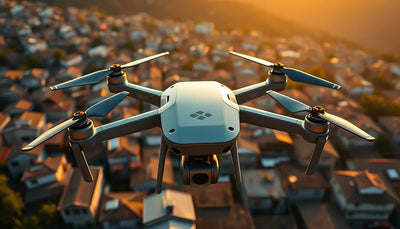
Neijiang's Low-Altitude Economy Push Signals Regional Drone Growth
Sichuan News reports that Neijiang is advancing its low-altitude economy strategy, positioning the region for expanded commercial drone activity. The development highlights how Chinese cities are building infrastructure and policy frameworks that could reshape regional drone demand, service networks, and fleet planning.

Quick answer
Neijiang is advancing a low-altitude economy strategy that could expand commercial drone activity in the region.
- Sichuan News reports Neijiang is pushing its low-altitude economy forward
- The initiative points to growing regional demand for commercial drone infrastructure
- Operators and service providers may see new opportunities in smaller Chinese cities
- The development reflects broader market expansion beyond major drone hubs
Evidence: DJI ROMO official robot vacuum page · DJI Support ROMO beginner guide
Market context
Turn market news into a buy, repair, or trade-in decision.
Compare pre-owned availability, resale timing, and repair economics before the market moves again.

Neijiang, a prefecture-level city in China's Sichuan province, is making a deliberate push into the low-altitude economy, according to a report from Sichuan News. The development, framed around the phrase "asking the sky for directions," signals that regional governments in China are treating low-altitude airspace as a serious commercial corridor rather than a niche testing ground. For drone operators, fleet buyers, and service providers watching China's commercial UAV market, this kind of municipal commitment matters because it often precedes tangible infrastructure investment, route approvals, and local demand for maintenance and support services.
The report, as summarized in the source material, does not specify exact funding figures, aircraft counts, or operational timelines. What it does establish is directional: Neijiang is positioning itself within China's broader low-altitude economy agenda, a policy area that has gained momentum as cities compete for drone logistics, inspection, agriculture, and emergency response activity. Reboot Hub analysis suggests that when a regional government publicly frames low-altitude airspace as an economic asset, the practical consequence is usually a more predictable operating environment for commercial drone work in that area.
What the Neijiang report actually says
Sichuan News, the primary reporting source cited in the source data, describes Neijiang's low-altitude economy initiative as an effort to "fly farther" by asking the sky for directions. The phrasing is promotional, but the underlying signal is clear: the city is treating low-altitude airspace as a development priority. The source summary does not provide detailed operational data, specific drone models, or named corporate partners, so readers should treat this as a policy-direction story rather than a procurement announcement.
For commercial operators, the absence of hard numbers is less important than the pattern it represents. Chinese regional governments have increasingly used low-altitude economy frameworks to attract drone logistics firms, agricultural service providers, and inspection companies. When a city like Neijiang makes this a public priority, it often leads to designated flight corridors, simplified approval processes, and local investment in ground infrastructure. None of that is confirmed in this specific report, but the directional signal is consistent with how other Chinese cities have approached similar announcements.
Regional expansion and the commercial drone supply chain
The commercial drone market in China has historically concentrated in major hubs like Shenzhen, where DJI and other manufacturers maintain dense ecosystems of suppliers, repair centers, and talent. A push from smaller cities like Neijiang introduces a different dynamic: demand for drone services in areas that may lack the same depth of local support infrastructure. This is where fleet operators and service providers need to think carefully about maintenance capacity, parts availability, and technician access.
For buyers of pre-owned DJI drones, regional market expansion has a practical implication. As more cities in China and elsewhere build low-altitude economic zones, the secondary market for inspected pre-owned aircraft tends to deepen. Operators entering new regional markets often look for cost-effective ways to scale fleets without committing to full-price new units. Reboot Hub analysis suggests that regional policy signals like Neijiang's can influence fleet procurement decisions, particularly for operators who need to test demand in a new area before making larger capital commitments.
What this means for drone owners and the market
For individual drone owners and small commercial operators, the Neijiang story is a reminder that market growth is not evenly distributed. Cities that actively build low-altitude infrastructure create local advantages: more approved flight areas, more potential clients, and more predictable regulatory behavior. Operators who track these municipal signals can position themselves earlier than competitors who wait for national-level policy shifts. The source report does not confirm specific operational benefits in Neijiang, but the strategic direction is worth monitoring.
Fleet managers should also consider the maintenance and repair implications of regional expansion. When drone activity spreads into smaller cities, the nearest qualified repair facility may be farther away, and genuine OEM spare parts may take longer to source. This is where having a reliable parts and repair strategy becomes operationally important. For operators evaluating pre-owned DJI aircraft or professional DJI repair options, understanding the support landscape in emerging markets like Neijiang can inform decisions about spare aircraft, parts inventory, and service partnerships. Readers looking for reference material on drone maintenance and parts can consult the Drone Wiki for background information. For owners evaluating service and lifecycle risk, Drone Wiki explains the relevant repair, parts, resale, or operational path.
The pre-owned market angle is worth watching closely. As regional Chinese markets mature, the volume of used commercial drones entering resale channels tends to increase. Some of those aircraft are well-maintained and inspected, while others carry hidden wear from intensive agricultural or logistics work. Buyers who understand the difference between pristine pre-owned units and heavily cycled aircraft will be better positioned as inventory from emerging markets becomes more available.
What operators should watch next
The most useful next step for anyone tracking this story is to look for follow-up reporting from Sichuan News or other regional outlets that includes concrete details: named companies, route approvals, infrastructure projects, or investment figures. Those specifics would convert this directional signal into an actionable market data point. Until then, operators should treat Neijiang's announcement as evidence that low-altitude economy competition among Chinese cities is intensifying.
For drone buyers and fleet operators outside China, the Neijiang story also carries a broader lesson. Low-altitude economy policies are becoming a competitive differentiator for cities worldwide. Municipalities that streamline approvals, invest in ground infrastructure, and attract service providers tend to generate more predictable commercial drone demand. Operators who monitor these policy signals can make smarter decisions about where to expand, when to add aircraft, and how to structure maintenance and parts support in new regions.
FAQ
Frequently asked questions
What is Neijiang's low-altitude economy initiative?
According to Sichuan News, Neijiang is advancing a low-altitude economy strategy aimed at expanding commercial drone activity in the region. The report frames the effort as a way for the city to "fly farther" in developing its aerial economy.
Does this announcement include specific drone models or funding figures?
No. The source summary does not provide specific drone models, funding amounts, corporate partnerships, or operational timelines. It is a directional policy story indicating that Neijiang is prioritizing low-altitude airspace development.
How could this affect drone buyers and fleet operators?
Regional low-altitude economy pushes can create new operating opportunities, increase local demand for drone services, and influence the availability of pre-owned aircraft and repair support in those areas. Operators should monitor follow-up reporting for concrete infrastructure and approval details.
Which sources support this update?
The visible evidence links identify DJI ROMO official robot vacuum page and DJI Support ROMO beginner guide; each source is used only for the claim it directly supports.
What remains subject to change?
Retail pricing, availability, product bundles and regulatory timelines can change. Readers should verify the latest terms with the named retailer, manufacturer or regulator before acting.
How should buyers or operators use this analysis?
Use the verified facts as a starting point, then compare mission fit, lifecycle support, maintenance needs and current procurement terms before making a purchase or fleet decision.
Fontes consultadas
- Source material - primary source
- DJI ROMO official robot vacuum page - official product page
- DJI Support ROMO beginner guide - official support guide
O Editorial Reboot Hub acrescenta análises de compra, reparação, revenda e operacionais para proprietários de drones. Se detetar um erro, contacte-nos para a revisão da correção através da nossa política editorial.