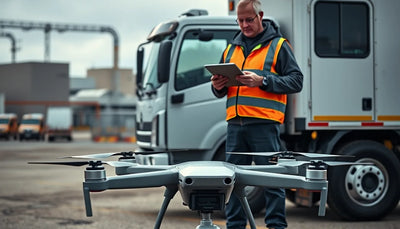
Nanyou University Team Links Low-Altitude Economy to Drone Computing
A research team at Nanyou University has published analysis connecting low-altitude economy growth to drone computing requirements. The work highlights how data processing, onboard systems, and network infrastructure will shape commercial UAV operations and fleet planning.

Quick answer
A Nanyou University research team led by Professor Huang Haiping has published analysis on the relationship between the low-altitude economy and drone computing, as reported by Sohu.
- The research connects low-altitude economy development to computing demands in drone systems.
- The report was published via Sohu and attributed to Professor Huang Haiping's team at Nanyou University.
- The analysis points to computing infrastructure as a factor in commercial UAV scaling.
- No specific technical specifications or regulatory changes were included in the source material.
A research team at Nanyou University, led by Professor Huang Haiping, has published analysis examining the connection between the low-altitude economy and drone computing, according to a report carried by Sohu. The publication frames computing capability as a structural layer beneath the commercial drone market, rather than a peripheral technical detail.
Market context
Turn market news into a buy, repair, or trade-in decision.
Compare pre-owned availability, resale timing, and repair economics before the market moves again.

The source material is limited, but the central signal is clear: as low-altitude airspace becomes more commercially active, the computational demands placed on drones, ground stations, and supporting networks will grow. For operators and buyers, that means procurement decisions may increasingly hinge on how a platform handles data, not just how it flies.
The research signal and its source
The report attributed to Professor Huang Haiping's team at Nanyou University was published through Sohu, a Chinese media outlet. The team's work focuses on the intersection of low-altitude economy development and drone computing, a pairing that reflects broader industry attention to the software and processing layer of unmanned aviation.
Reboot Hub analysis: this is not a product announcement or a regulatory filing. It is an academic and industry perspective that signals where Chinese research institutions see commercial drone growth heading. The absence of specific technical benchmarks in the source means operators should treat this as directional context, not as a specification update.
Why computing matters to low-altitude operations
The low-altitude economy encompasses delivery, inspection, mapping, agriculture, and urban air services. Each of these use cases generates data that must be processed onboard, at the edge, or in the cloud. The Nanyou University team's framing suggests that computing capacity will become a defining constraint as these operations scale.
For fleet managers, this has practical meaning. A drone that cannot process sensor data efficiently may require more ground-side infrastructure, more frequent data offloads, or more expensive connectivity. Those costs accumulate across a fleet and across a maintenance cycle. Computing architecture is therefore not an abstract research topic; it is a total cost of ownership variable.
What this means for drone owners and the market
Commercial operators evaluating new platforms should pay closer attention to how onboard computing, data handling, and software support are positioned by manufacturers. The research direction highlighted by the Nanyou University team suggests that future platform differentiation may shift from flight hardware alone toward integrated computing performance.
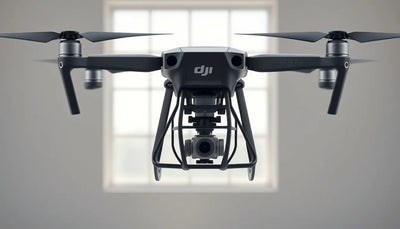
For buyers in the pre-owned DJI market, this raises a practical question: how well will current-generation platforms hold their value if computing requirements accelerate? A drone with a strong processing foundation may remain operationally relevant longer, while platforms with limited onboard capability could face earlier obsolescence. Readers tracking these shifts can consult the Drone Wiki for context on how platform capabilities affect ownership and repair decisions. For owners evaluating service and lifecycle risk, Drone Wiki explains the relevant repair, parts, resale, or operational path.
Repair customers should also note the implication. As drones become more compute-dependent, diagnostics increasingly involve software, firmware, and processing modules, not just motors and gimbals. Repair workflows that address only mechanical issues may miss the failure points that matter most in a computing-heavy fleet.
What operators should watch next
The source does not provide a timeline, investment figure, or regulatory proposal. What it does provide is a research-backed indication that computing is moving to the center of low-altitude economy planning. Operators should watch for follow-up publications, industry conferences, or manufacturer responses that translate this research into product or service changes.
Procurement teams should ask harder questions about processing capability, software update commitments, and data pipeline compatibility. The most commercially relevant takeaway is not that a single technology will dominate, but that the cost and complexity of drone computing will likely rise as the low-altitude economy matures.
FAQ
Frequently asked questions
What did the Nanyou University team report?
The team led by Professor Huang Haiping published analysis on the low-altitude economy and drone computing, as carried by Sohu. The report connects commercial low-altitude activity to the computing demands of drone systems.
Does this research change current drone regulations?
No. The source material does not include any regulatory changes, certification updates, or compliance requirements. It is an industry and research perspective, not a policy document.
Should fleet operators change their procurement approach now?
Not immediately. But operators should begin evaluating computing capability, software support, and data handling as core procurement criteria, alongside flight performance and payload specifications.
Which sources support this update?
The article distinguishes reported information from analysis and does not present an unverified source as official confirmation.
What remains subject to change?
Retail pricing, availability, product bundles and regulatory timelines can change. Readers should verify the latest terms with the named retailer, manufacturer or regulator before acting.
How should buyers or operators use this analysis?
Use the verified facts as a starting point, then compare mission fit, lifecycle support, maintenance needs and current procurement terms before making a purchase or fleet decision.
Fontes consultadas
Não estava disponível documentação oficial adicional no momento da publicação.
O Editorial Reboot Hub acrescenta análises de compra, reparação, revenda e operacionais para proprietários de drones. Se detetar um erro, contacte-nos para a revisão da correção através da nossa política editorial.