DJI quietly revives firmware support for Mavic Air 2 and Air 2S
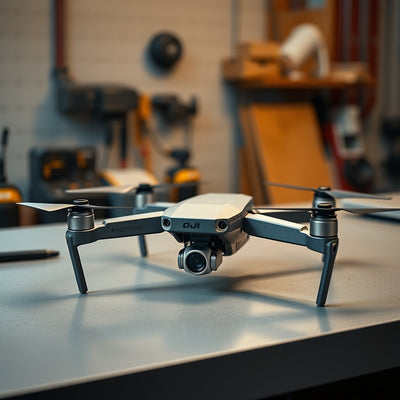
DJI has returned to software maintenance for two aging camera drones after long gaps. The Mavic Air 2 and Air 2S both received new firmware, signaling continued support for older hardware and raising practical questions for owners, buyers, and repair decisions.

Quick answer
DJI released new firmware updates for the Mavic Air 2 and Air 2S after the Air 2's last update in 2023 and the Air 2S's last update in 2024, marking a return to software maintenance for both older camera drones.
- The Mavic Air 2 received its first firmware update since 2023.
- The Air 2S received its first firmware update since 2024.
- DroneDJ reported the development on October 21, 2026.
- Older DJI hardware continues to receive periodic software attention.
Evidence: DroneDJ
DJI buying context
Match product news to hardware you can actually deploy.
Check inspected DJI aircraft, repair support, and trade-in timing before deciding whether to upgrade, repair, or wait.

Verified facts
What the available evidence confirms
| Model | Previous firmware update | Current status |
|---|---|---|
| DJI Mavic Air 2 | 2023 | New firmware released |
| DJI Mavic Air 2S | 2024 | New firmware released |
DJI has quietly returned to software maintenance for two of its older consumer camera drones. According to reporting from DroneDJ, the Mavic Air 2 and Air 2S have both received new firmware updates, ending a stretch of silence that lasted since 2023 for the Air 2 and since 2024 for the Air 2S. The development is modest on its face, but it carries meaningful signals for owners, buyers, and the broader pre-owned DJI market.
Firmware updates for aging hardware rarely generate the same attention as new product launches. Yet for commercial operators and repair-conscious buyers, they are a quiet indicator of how long a platform will remain viable. When a manufacturer stops issuing software maintenance, questions about security, compatibility, and long-term support naturally follow. DJI's decision to revisit two older models suggests that these airframes still hold enough market presence to justify engineering attention.
What the firmware updates actually signal
The central fact is straightforward: DJI has issued new firmware for the Mavic Air 2 and Air 2S, according to DroneDJ's October 21, 2026 report. The Air 2 had not seen an update since 2023, while the Air 2S had been without one since 2024. The gap matters because firmware cadence is one of the few public signals buyers and operators can use to assess a drone's remaining support runway.
Reboot Hub analysis suggests that this kind of late-cycle maintenance often reflects a manufacturer's awareness that a large installed base still exists. The Mavic Air 2 and Air 2S were popular models in their respective generations, and many units remain in active use across hobbyist, freelance, and light commercial workflows. A firmware update does not guarantee future updates, but it does indicate that DJI has not fully retired these platforms from its software roadmap.
What this means for drone owners and the market
For current owners, the practical takeaway is that these drones remain serviceable enough to warrant continued use. Operators who were weighing whether to retire an Air 2 or Air 2S in favor of a newer model now have one more data point suggesting the older hardware is not yet obsolete. That can shift repair-versus-replace calculations, especially for pilots whose workflows do not demand the latest imaging or transmission capabilities.
For buyers in the pre-owned market, the update adds a layer of confidence. A drone that is still receiving firmware attention is generally easier to justify as a purchase than one that has been silently abandoned. This is particularly relevant for budget-conscious operators who want a capable camera platform without paying new-model prices. When evaluating a used Air 2 or Air 2S, buyers should still check battery health, gimbal function, and flight logs, but the firmware news removes one common objection about software neglect. For owners who decide their current unit needs attention rather than replacement, professional DJI drone repair service options can help extend the useful life of an older airframe. For owners evaluating service and lifecycle risk, DJI drone repair service explains the relevant repair, parts, resale, or operational path.
The resale angle is also worth watching. Firmware support can influence pricing in the second-hand market, though it is rarely the dominant factor. Condition, battery cycles, and included accessories still drive most value. Still, a model that is demonstrably still supported may hold its price slightly better than one that appears frozen in time. Sellers of the Air 2 and Air 2S now have a concrete, recent fact to cite when listing their units.
Repair, parts, and long-term ownership considerations
Reboot Hub analysis: Software maintenance and hardware repairability are linked in practical terms. A drone that continues to receive firmware updates is more likely to remain compatible with the broader DJI ecosystem, including apps, batteries, and accessories. That reduces the risk of a situation where a perfectly functional airframe becomes difficult to operate because of software incompatibility. For repair customers, this is a meaningful consideration: spending money on a repair makes more sense when the platform is still being maintained at the software level.
Fleet managers who operate mixed fleets should take note as well. The Air 2 and Air 2S are not enterprise platforms, but they appear in some light commercial and inspection workflows. Knowing that DJI has not abandoned them makes it easier to justify keeping a few units in rotation as backup or training aircraft. The update also suggests that DJI's software team is willing to allocate resources to older models when the installed base justifies it, which is a broader positive signal for the longevity of DJI hardware.
What operators should do differently now
The immediate action item is simple: owners of the Mavic Air 2 and Air 2S should check for the new firmware and review any release notes that accompany it. DroneDJ's report does not detail the specific contents of the update, so operators should not assume it adds major features. It may be a stability or security patch, or it may address compatibility with newer app versions. Either way, staying current is generally the safer default for anyone who flies regularly.
Buyers considering a used Air 2 or Air 2S should treat the firmware news as one positive factor among several. It does not replace a physical inspection or a test flight, but it does reduce the risk of buying into a platform that has been fully sunset. Sellers, meanwhile, can reasonably mention recent firmware support in listings, though they should avoid overstating what the update actually delivers. The pre-owned DJI market rewards transparency, and buyers are increasingly sophisticated about checking support status before committing.
For repair customers, the update reinforces a simple principle: an older drone is not automatically a bad investment if it is maintained properly. Software support and physical repair go hand in hand, and platforms that receive both tend to deliver better long-term value. The Mavic Air 2 and Air 2S now sit in a more favorable position on that spectrum than they did before the update.
FAQ
Frequently asked questions
Did DJI release new firmware for the Mavic Air 2 and Air 2S?
Yes. According to DroneDJ, both the Mavic Air 2 and Air 2S received new firmware updates in October 2026, marking the first updates for the Air 2 since 2023 and for the Air 2S since 2024.
Does the firmware update mean DJI will keep supporting these drones?
It suggests continued software attention, but it does not guarantee future updates. The update indicates DJI has not fully retired these platforms, which is a positive signal for owners and buyers, but long-term support plans remain unconfirmed.
Should I buy a used Mavic Air 2 or Air 2S now?
The firmware news is a positive factor, but buyers should still inspect battery health, gimbal function, and flight logs before purchasing. Recent software support reduces one common risk, but it does not replace a physical evaluation of the unit.
Which sources support this update?
The visible evidence links identify DroneDJ; each source is used only for the claim it directly supports.
What remains subject to change?
Retail pricing, availability, product bundles and regulatory timelines can change. Readers should verify the latest terms with the named retailer, manufacturer or regulator before acting.
How should buyers or operators use this analysis?
Use the verified facts as a starting point, then compare mission fit, lifecycle support, maintenance needs and current procurement terms before making a purchase or fleet decision.
Fontes consultadas
- DroneDJ - primary source
Não estava disponível documentação oficial adicional no momento da publicação.
O Editorial Reboot Hub acrescenta análises de compra, reparação, revenda e operacionais para proprietários de drones. Se detetar um erro, contacte-nos para a revisão da correção através da nossa política editorial.