DJI Power 2000 Balcony Solar Kit Debuts at IFA, US Buyers Left Out
DJI showed the Power 2000 as a grid-tied home battery with a balcony solar kit at IFA 2026. The launch is Europe-focused, leaving US drone operators and fleet buyers without a domestic path to the new configuration.

Quick answer
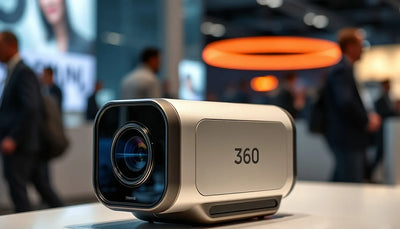
DJI presented the Power 2000 at IFA 2026 as a grid-tied home battery with its first balcony solar kit, but the launch does not include the United States.
- The Power 2000 appeared at IFA 2026 in a grid-tied home battery configuration
- DJI paired it with its first balcony solar kit
- US buyers are not included in the announced availability
- The news matters for operators who use DJI power stations for field charging and backup power
Evidence: DroneXL.co
DJI buying context
Match product news to hardware you can actually deploy.
Check inspected DJI aircraft, repair support, and trade-in timing before deciding whether to upgrade, repair, or wait.

DJI used IFA 2026 in Berlin to reposition the Power 2000 as a grid-tied home battery, complete with the company's first balcony solar kit. The announcement, reported by DroneXL.co, marks a shift for a product line that many commercial drone operators know primarily as portable field power. But the launch carries a sharp geographic boundary: buyers in the United States get none of it.
For drone pilots and fleet managers who already rely on DJI power stations to keep batteries, controllers, and accessories charged on job sites, the IFA presentation is a signal about where DJI is prioritizing energy products. It also raises practical questions about regional availability, support, and the long-term direction of DJI's power ecosystem outside Europe.
What DJI actually showed at IFA 2026
According to DroneXL.co's reporting from the event, DJI put the Power 2000 on stage as a grid-tied home battery rather than only a portable power station. The company paired the unit with a balcony solar kit, a configuration aimed at residential energy storage and solar self-consumption. That is a meaningful product positioning change for a device class that has historically been marketed around mobility and off-grid use.
The grid-tied framing matters because it suggests the Power 2000 can interface with a home electrical system, not just operate as a standalone battery pack. For European buyers, that opens a path toward balcony solar setups that feed stored energy back into household circuits. For US-based commercial operators, the immediate takeaway is simpler: the configuration shown in Berlin is not part of the American product lineup.
DroneXL.co explicitly noted that US buyers get none of the announced offering. The report does not describe a timeline for American availability, a separate US variant, or a regulatory pathway for the balcony solar kit. Reboot Hub analysis reads this as a regional product strategy decision, though DJI has not publicly detailed the reasons behind the geographic split.
Why the regional split matters for field power buyers
Commercial drone operators often treat portable power stations as operational infrastructure. A unit like the Power 2000 can support multi-battery charging cycles during mapping, inspection, or agricultural missions where grid access is unreliable. When a manufacturer signals that a product is evolving into a home energy device in one region but not another, it creates uncertainty about accessory support, firmware direction, and spare parts availability over time.
The balcony solar kit is the clearest example. If European customers begin receiving solar input hardware and grid-tie accessories that are not sold in the US, American operators may find themselves locked out of a growing portion of the Power 2000 ecosystem. That has downstream effects for procurement planning, especially for fleets that standardize on a single power platform across multiple job sites.
There is also a resale and repair angle. Pre-owned DJI power stations tend to hold value when the surrounding accessory ecosystem remains stable. A regional product split can complicate that. Buyers in the US who purchase a used Power 2000 may later discover that certain solar or grid-tie components were never officially distributed domestically, which can affect compatibility expectations and long-term serviceability.
What this means for drone owners and the market
For individual drone owners, the IFA announcement is less about immediate action and more about watching DJI's energy product roadmap. If the Power 2000 becomes a Europe-first home battery platform, US operators may need to evaluate whether their current portable power setup will remain aligned with the accessories and updates DJI chooses to release. That is especially relevant for pilots who bought a DJI power station expecting a unified global accessory path.
Fleet managers should treat the US exclusion as a procurement variable. A power station that is positioned as a grid-tied home battery in one market may receive different firmware priorities, different safety certifications, and different accessory bundles than the version sold elsewhere. Before adding DJI power hardware to a commercial fleet, buyers should confirm which regional configuration they are purchasing and whether the accessories shown at international events will ever reach the US market. For operators who want to understand how DJI hardware decisions affect repair and resale value, the Drone Wiki offers a useful reference point for tracking model-specific support considerations. For owners evaluating service and lifecycle risk, Drone Wiki explains the relevant repair, parts, resale, or operational path.
The pre-owned DJI market could feel this indirectly. If US availability of the balcony solar kit remains absent, used Power 2000 units sold domestically may be valued differently than European units that can integrate with the new solar accessory. Sellers and buyers in the second-hand market should document exactly which regional version they are transacting, because the IFA configuration suggests that not all Power 2000 units will have identical expansion paths.
Repair customers should also pay attention. Grid-tie functionality introduces new electrical components, inverter behavior, and safety considerations that portable-only units may not have. If DJI eventually brings a grid-tied Power 2000 variant to the US, repair shops will need to distinguish between portable and grid-connected service procedures. Until then, the current US market remains on the portable-only side of the product line.
The broader signal from DJI's energy strategy
DJI's decision to showcase the Power 2000 as a home battery at IFA 2026 suggests the company sees energy storage as more than a drone accessory category. The balcony solar kit positions DJI against established residential battery and microinverter brands in Europe, where balcony solar adoption has grown rapidly. That is a different competitive arena than the drone power station market.
For commercial drone operators, the strategic implication is that DJI's energy division may prioritize residential and grid-tied products in regions with favorable solar policies. The US, with its more complex utility interconnection rules and state-by-state solar regulations, may simply be a slower or more difficult market for this product category. DroneXL.co's report does not indicate whether DJI is pursuing US certification or waiting for regulatory clarity.
Until DJI provides a formal US roadmap, operators should avoid assuming that the balcony solar kit or grid-tied Power 2000 configuration will arrive stateside. The safest procurement posture is to evaluate DJI power stations based on what is actually sold and supported in the US today, not on what appears at European trade shows.
FAQ
Frequently asked questions
Is the DJI Power 2000 balcony solar kit coming to the US?
Based on DroneXL.co's reporting, US buyers are not included in the IFA 2026 announcement. DJI has not confirmed a US release timeline for the balcony solar kit or the grid-tied Power 2000 configuration.
Does the IFA announcement change the Power 2000 for current US owners?
No immediate change is described for existing US units. The announcement concerns a grid-tied home battery configuration shown in Europe, and current US availability remains separate from that product positioning.
Should fleet managers wait for the grid-tied Power 2000 before buying?
Fleet managers should base purchasing decisions on currently available US configurations. Waiting on an unconfirmed US release could delay field power procurement without a clear benefit.
Which sources support this update?
The visible evidence links identify DroneXL.co; each source is used only for the claim it directly supports.
What remains subject to change?
Retail pricing, availability, product bundles and regulatory timelines can change. Readers should verify the latest terms with the named retailer, manufacturer or regulator before acting.
How should buyers or operators use this analysis?
Use the verified facts as a starting point, then compare mission fit, lifecycle support, maintenance needs and current procurement terms before making a purchase or fleet decision.
Fontes consultadas
- DroneXL.co - primary source
Não estava disponível documentação oficial adicional no momento da publicação.
O Editorial Reboot Hub acrescenta análises de compra, reparação, revenda e operacionais para proprietários de drones. Se detetar um erro, contacte-nos para a revisão da correção através da nossa política editorial.