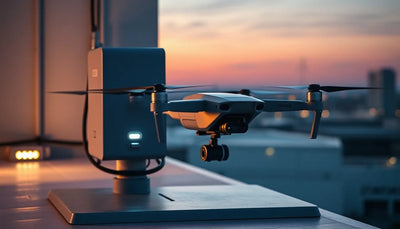
DJI 4K Self-Flying Drone Hits $139 on Amazon, a 365-Day Low
A DJI 4K self-flying drone has dropped to $139 on Amazon, the lowest price recorded in the past year. The discount signals shifting inventory pressure and raises questions about resale value for current owners and fleet buyers.

Quick answer
A DJI 4K self-flying drone has dropped to $139 on Amazon, marking a 365-day low according to Y.M.Cinema reporting.
- The $139 price is the lowest recorded for this model in the past 365 days.
- The discount was reported by Y.M.Cinema, a film and camera industry publication.
- The price movement may affect resale expectations for current owners.
- Fleet buyers should weigh the entry price against long-term repair and spare parts costs.
Amazon has listed a DJI 4K self-flying drone at $139, a price point that Y.M.Cinema reports as a 365-day low for the model. The markdown, observed in mid-October 2026, is the kind of signal that tends to move through drone owner communities quickly, especially among buyers who have been waiting for a threshold price before committing to a first aircraft or an additional unit.
DJI buying context
Match product news to hardware you can actually deploy.
Check inspected DJI aircraft, repair support, and trade-in timing before deciding whether to upgrade, repair, or wait.

The report frames the discount as a notable retail event rather than a permanent repricing. For commercial operators, hobbyists, and repair-oriented buyers, the immediate question is not simply whether the price is attractive, but what a 365-day low tells us about inventory cycles, model positioning, and the downstream effect on pre-owned DJI drone values.
The pricing signal behind the discount
Y.M.Cinema, the primary reporting source for this development, describes the $139 listing as the lowest price recorded for this DJI 4K self-flying drone on Amazon over the past year. A 365-day low is a meaningful data point because it marks the floor of observed retail pricing within a defined window. When a widely tracked consumer drone reaches that floor, it often reflects a combination of seasonal inventory management, competitive pressure from newer releases, or a deliberate push to clear stock ahead of a product cycle shift.
Reboot Hub analysis suggests that buyers should treat a 365-day low as a snapshot, not a guarantee. Amazon pricing on DJI hardware can move quickly, and a one-day or short-window discount does not necessarily indicate a permanent reduction in the manufacturer's suggested retail position. For procurement-minded buyers, the practical takeaway is to record the observed price and compare it against historical averages rather than assuming the floor will hold.
What this means for drone owners and the market
For current owners of this DJI 4K self-flying model, a headline discount at $139 has a direct psychological and financial effect. When retail pricing drops to a 365-day low, the resale value of lightly used units tends to compress. A private seller who purchased the same aircraft at a higher price now competes against a brand-new unit available at the lowest observed retail price in a year. That pressure is most acute in the weeks immediately following the discount, when buyers are most aware of the new price anchor.
Fleet operators and repair customers should read the discount differently. A lower entry price for a capable 4K self-flying platform can reduce the cost of adding redundancy to a small fleet or replacing a unit that is no longer economical to repair. However, acquisition cost is only one part of ownership. Operators evaluating the $139 price should also consider the long-term availability of genuine OEM spare parts and professional DJI repair support, since a discounted aircraft that later requires service still carries the same maintenance economics as a unit purchased at full retail. For buyers who want to understand how a specific DJI platform fits into repair and parts planning, the Drone Wiki provides model-level context that helps separate short-term price moves from longer ownership costs. For owners evaluating service and lifecycle risk, Drone Wiki explains the relevant repair, parts, resale, or operational path.
The pre-owned DJI market is the most exposed segment in this pricing event. Sellers with inspected pre-owned units of the same or a closely related model may need to adjust asking prices to remain competitive against a new unit at $139. Buyers, by contrast, gain leverage. A 365-day low on new inventory effectively caps what a rational buyer should pay for a used example unless the pre-owned unit includes meaningful added value, such as extra batteries, a case, or verified service history.
Repair, spare parts, and the real cost of a cheap drone
A $139 price tag is easy to celebrate, but repair-oriented buyers know that the purchase price is only the opening line of a longer cost story. DJI consumer drones are tightly integrated systems. A hard landing, a gimbal fault, or a battery issue can quickly generate repair costs that rival a meaningful share of the discounted purchase price. That does not make the $139 listing a bad deal; it makes it a deal that should be evaluated with serviceability in mind.
For operators who already run DJI hardware, the discount may be most useful as a source of OEM-pulled parts. When a model becomes available at a 365-day low, some buyers acquire a second unit specifically to harvest genuine components rather than relying on third-party replacements of uncertain provenance. This approach is common in small fleet environments where downtime is more expensive than the cost of a spare aircraft. The key is to confirm that the discounted unit is a genuine DJI product sold through a legitimate retail channel, since warranty and parts authenticity depend on the supply chain behind the listing.
How buyers should respond to the 365-day low
The most disciplined response to this pricing signal is to separate the immediate discount from the longer ownership decision. A buyer who already planned to purchase this DJI 4K self-flying drone and has been tracking its price now has a concrete data point: $139 is the lowest observed Amazon price in 365 days. That is useful. A buyer who had no prior interest but is reacting to the price alone should slow down and confirm that the model actually matches their operational needs, because a cheap drone that does not fit the mission is still an unnecessary expense.
Fleet managers should treat the discount as a procurement opportunity with a defined window. If the model fits an existing training or inspection workflow, adding a unit at a 365-day low can lower the average cost per aircraft and provide a spare for rotation during maintenance. If the model does not fit the fleet, the discount is irrelevant regardless of how steep it appears. The same logic applies to pre-owned market participants: sellers should recognize that the new-unit price floor has moved, while buyers should use the $139 anchor as a ceiling for comparable used listings.
FAQ
Frequently asked questions
Is $139 actually the lowest price for this DJI drone in the past year?
According to Y.M.Cinema, the $139 Amazon listing represents a 365-day low for this DJI 4K self-flying drone. That means it is the lowest observed price within the trailing twelve-month window covered by the report.
Should I sell my used DJI drone now because of this discount?
Not necessarily. A 365-day low on new inventory does compress resale value for comparable used units, but selling decisions should also account for your aircraft's condition, included accessories, and your own replacement timeline. Rushing to sell during a discount window can lock in a lower price than patience would yield.
Does a lower retail price mean repair costs will also drop?
No. Repair costs are driven by parts availability, labor, and the complexity of the specific fault, not by the retail price of a new unit. A discounted drone can still require professional DJI repair or genuine OEM spare parts, and those costs remain independent of the Amazon listing price.
Which sources support this update?
The article distinguishes reported information from analysis and does not present an unverified source as official confirmation.
What remains subject to change?
Retail pricing, availability, product bundles and regulatory timelines can change. Readers should verify the latest terms with the named retailer, manufacturer or regulator before acting.
How should buyers or operators use this analysis?
Use the verified facts as a starting point, then compare mission fit, lifecycle support, maintenance needs and current procurement terms before making a purchase or fleet decision.
Fontes consultadas
- Y.M.Cinema via Google News - primary source
Não estava disponível documentação oficial adicional no momento da publicação.
O Editorial Reboot Hub acrescenta análises de compra, reparação, revenda e operacionais para proprietários de drones. Se detetar um erro, contacte-nos para a revisão da correção através da nossa política editorial.