China's Drone Sector Pushes Stability and Fleet Management
China's commercial drone conversation is shifting from raw hardware specs toward steady flight performance and disciplined fleet oversight. Sohu reports growing operator focus on stability and management as core buying criteria, with implications for procurement, maintenance, and the pre-owned DJI market.

Quick answer
Sohu reports that China's commercial drone sector is increasingly prioritizing stable flight performance and disciplined fleet management alongside raw hardware capabilities.
- Sohu highlights flight stability and fleet management as rising commercial priorities in China's drone market
- The shift signals procurement criteria moving beyond hardware specs toward operational reliability
- Operators are weighing maintenance and oversight costs more heavily in fleet decisions
- The trend could reshape how pre-owned DJI drones are evaluated for commercial use
Verified facts
Market context
Turn market news into a buy, repair, or trade-in decision.
Compare pre-owned availability, resale timing, and repair economics before the market moves again.

What the available evidence confirms
| Focus area | What is changing | Commercial implication |
|---|---|---|
| Flight stability | Operators are prioritizing steady hover and reliable flight behavior | Reliability becomes a procurement filter, not just a spec sheet item |
| Fleet management | Oversight and coordination of multiple drones is gaining attention | Maintenance planning and operational control costs rise in importance |
| Market demand | Sohu reports growing commercial interest in stable, manageable platforms | Buyers may favor proven platforms with strong support ecosystems |
China's commercial drone market is undergoing a quiet but meaningful shift in how operators evaluate equipment. According to a recent report from Sohu, the conversation among commercial drone buyers is moving beyond raw hardware specifications and toward two operational priorities: how steadily a drone flies and how well a fleet can be managed over time. The report frames these as connected challenges, suggesting that a drone's value is increasingly measured by its behavior in real-world operations rather than its performance on a product sheet.
The development matters because China remains one of the world's most active commercial drone markets, with dense urban logistics trials, agricultural spraying programs, and inspection services operating at scale. When procurement criteria in that market begin to emphasize stability and management, the ripple effects tend to reach manufacturers, component suppliers, repair networks, and secondary market pricing. For commercial operators elsewhere, the signal is worth watching even before formal regulations or product announcements follow.
Why flight stability is becoming a procurement filter
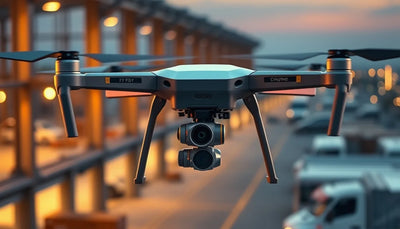
The Sohu report highlights flight stability as a central concern for commercial operators. In practical terms, stable flight means predictable hover behavior, consistent positioning under wind load, and reliable gimbal performance during extended missions. For operators running inspection, mapping, or delivery routes, instability translates directly into missed data, reshot flights, and higher labor costs. A drone that drifts or oscillates during a mission is not simply a nuisance; it is a financial liability.
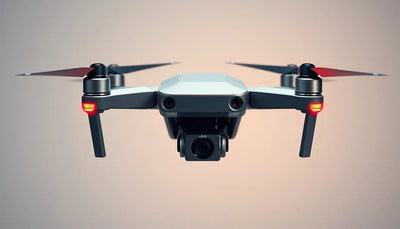
This emphasis on stability has commercial consequences. Buyers who once compared drones primarily by camera resolution, flight time, or transmission range are now asking harder questions about how a platform behaves across hundreds of flight hours. That shift favors platforms with proven flight controller tuning, robust sensor fusion, and consistent manufacturing quality. It also raises the stakes for repair work: a drone that has been serviced with mismatched or low-quality parts may fly, but it may not fly steadily. For operators in the pre-owned DJI market, this means that inspection and repair history are becoming as important as the model name printed on the airframe.
Fleet management moves from afterthought to core requirement
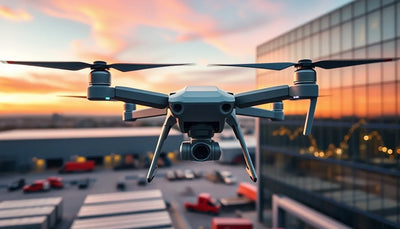
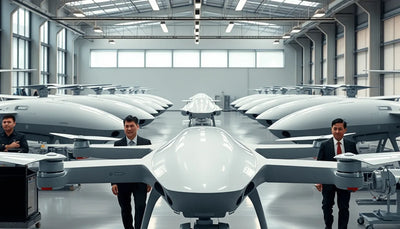
The second half of the Sohu report focuses on fleet management. As commercial operations scale from one or two drones to dozens, the ability to track flight hours, schedule maintenance, monitor pilot assignments, and coordinate airspace usage becomes a distinct operational discipline. The report suggests that Chinese operators are increasingly treating this management layer as a core requirement rather than a back-office afterthought.
For fleet managers, the implication is clear: procurement decisions must account for the total cost of oversight, not just the sticker price of each aircraft. A cheaper drone that lacks reliable telemetry, consistent spare parts availability, or predictable maintenance intervals can become more expensive to manage than a higher-priced platform with a mature support ecosystem. This is where the commercial bridge becomes relevant for readers evaluating their own fleet strategy: the Drone Wiki provides reference material that helps operators understand how stability, maintenance, and fleet oversight interact across different DJI platforms.
What this means for drone owners and the market
Reboot Hub analysis: The shift described by Sohu has direct implications for individual drone owners, repair customers, and second-hand buyers. When stability becomes a primary buying criterion, the market begins to distinguish more sharply between drones that are merely functional and drones that are operationally dependable. A pre-owned DJI drone with a clean maintenance history, genuine OEM parts, and documented flight behavior is likely to hold value better than a visually similar unit with an unknown repair past. For owners evaluating service and lifecycle risk, Drone Wiki explains the relevant repair, parts, resale, or operational path.
Repair customers should take note of the same dynamic. A repair that restores basic flight capability but introduces subtle instability, vibration, or gimbal drift may pass a quick test flight yet fail under commercial scrutiny. This is why sourcing matters: OEM-pulled parts and professional DJI repair practices are not just about authenticity; they are about preserving the flight characteristics that buyers increasingly demand. Operators who cut corners on maintenance may find their aircraft harder to sell or less reliable on mission-critical routes.
For fleet planners, the message is to treat stability and manageability as procurement criteria with measurable costs attached. A procurement team that ignores maintenance intervals, spare parts lead times, or telemetry quality is effectively accepting hidden operational risk. The Sohu report does not provide specific pricing data or regulatory timelines, but the directional signal is clear enough: commercial buyers in one of the world's largest drone markets are voting with their budgets for platforms that fly predictably and manage cleanly.
Source-limited analysis and what to watch next
It is important to frame this development carefully. The Sohu report is a source-limited market commentary rather than a formal industry study or regulatory filing. Reboot Hub analysis can identify the commercial logic behind the shift, but the report itself does not include survey data, named enterprise buyers, or specific procurement figures. Readers should treat the stability and management emphasis as a reported market trend rather than a quantified demand curve.
What to watch next is whether major manufacturers respond with firmware updates, service programs, or enterprise management tools that formalize these priorities. If stability-focused features begin appearing in product marketing or enterprise service tiers, that would confirm the trend Sohu describes. Similarly, if pre-owned DJI pricing begins to diverge based on documented maintenance history, the secondary market would be reflecting the same operational logic. For now, the most prudent response for any commercial operator is to evaluate current and prospective aircraft through the lens of steady flight and manageable upkeep, not just headline specifications.
FAQ
Frequently asked questions
What is the main development in China's drone market?
Sohu reports that commercial drone operators in China are increasingly prioritizing flight stability and fleet management as core criteria, shifting attention away from raw hardware specifications alone.
How does this affect pre-owned DJI drone buyers?
Buyers should pay closer attention to maintenance history, repair quality, and documented flight behavior, because stability-focused procurement criteria may widen the value gap between well-maintained and poorly serviced pre-owned DJI drones.
What should fleet managers do differently after reading this?
Fleet managers should treat stability and manageability as measurable procurement filters, factoring in maintenance intervals, spare parts availability, and telemetry quality alongside upfront purchase price.
Which sources support this update?
The article distinguishes reported information from analysis and does not present an unverified source as official confirmation.
What remains subject to change?
Retail pricing, availability, product bundles and regulatory timelines can change. Readers should verify the latest terms with the named retailer, manufacturer or regulator before acting.
How should buyers or operators use this analysis?
Use the verified facts as a starting point, then compare mission fit, lifecycle support, maintenance needs and current procurement terms before making a purchase or fleet decision.
Fontes consultadas
- Source material - primary source
Não estava disponível documentação oficial adicional no momento da publicação.
O Editorial Reboot Hub acrescenta análises de compra, reparação, revenda e operacionais para proprietários de drones. Se detetar um erro, contacte-nos para a revisão da correção através da nossa política editorial.